 Getly
GetlyBlog
Tips, guides, and insights to help you succeed as a digital creator.
Latest alternatives
View all Alternative
Best Gumroad Alternatives in 2026
Gumroad alternatives for 2026 — where the 10% flat fee actually lands, what Discover costs you, how payouts differ, and the honest cases where staying put is the right answer.
 Alternative
Best Stan Store Alternatives in 2026
Stan Store alternatives for 2026: Stan Store vs Getly, payouts, marketplace discovery, and fee math. Find a cheaper Stan Store alternative.
 Alternative
Best Beacons Alternatives in 2026
Beacons alternatives comparison 2026: Beacons vs Getly, cheaper than Beacons, payouts, marketplace discovery, and verified fee math for creators.
 Alternative
Best Buy Me a Coffee Alternatives in 2026
Buy Me a Coffee alternatives in 2026: Getly vs Buy Me a Coffee, fees, payouts, marketplace, VAT/MOR, plus cheaper options ranked.
Latest selling guides
View all Guide
GuideHow to sell digital coloring books
117 live listings, a median price of $3.99, and a format that is almost entirely PDF. What the category looks like from the inside and how to enter it without competing on price alone.
 Guide
GuideHow to sell photography templates in 2026 (practical guide)
Photography templates get about 65 buyer views per listing, well above the catalogue average. What photographers actually buy, how to package it so it opens correctly, and what to say about compatibility.
 Guide
GuideHow to sell poster templates in 2026 (practical guide)
Poster templates draw more buyer attention per listing than almost anything else in a digital catalogue. What to make, how to package it, and the two mistakes that cause most refunds.
 Guide
GuideHow to sell Next.js starters on a marketplace
sell nextjs starters in 2026 with packaging, pricing, and marketing steps for a next.js marketplace. Includes how to sell nextjs starters on Getly.
 Tutorial
How to set up a pay-what-you-want price
A step-by-step walkthrough of pay-what-you-want pricing on Getly — where the minimum sits, what the buyer sees, and how to pick a floor that reads as confidence rather than uncertainty.
 Article
Nobody competes on the refund window
Sellers can set their own refund window, anywhere from the 30-day floor upward. Of 4,979 live stores, 4,973 sit exactly on the floor. Six do not. What that unanimity says.
 Article
88% of stores never write a store description
Of 4,979 live stores, 4,373 have no store description or one under fifty characters. It is the cheapest unused field in digital selling, and here is what it actually does.
 Article
173 product names collide in one catalogue
Across 5,672 live listings, 173 names are shared by more than one product. What collisions do to a buyer deciding between two results, and the cheapest way to avoid being one of them.
 Article
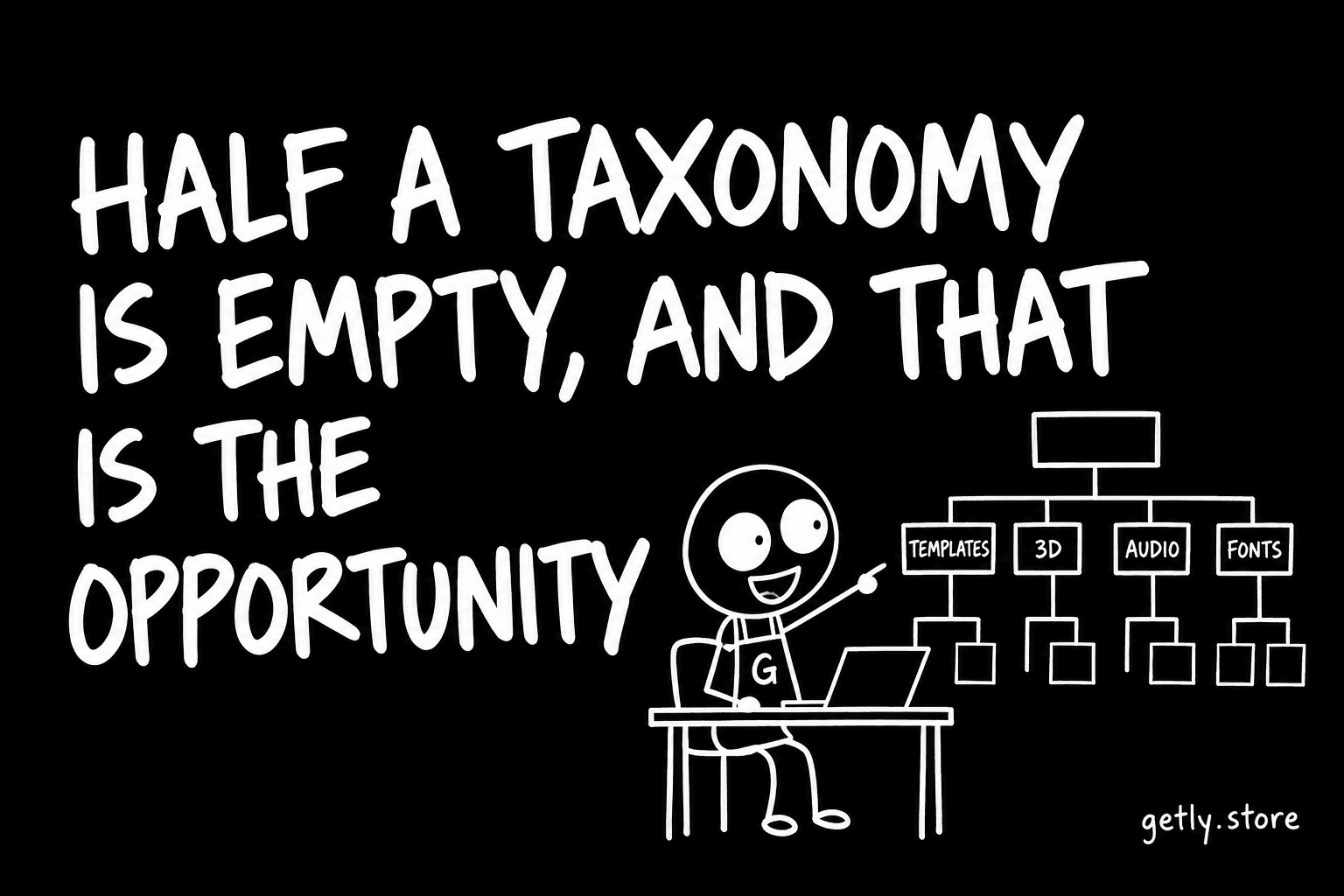
Half a taxonomy is empty, and that is the opportunity
A marketplace with 708 categories has listings in 420 of them. The 288 empty ones are not a failure of the catalogue — they are a map of where a new seller has no competition.
 Article
Pay what you want: who actually uses it
448 of 5,672 live listings let the buyer set the price. We looked at how those listings are built compared with fixed-price ones, and where the model earns its keep.
 Article
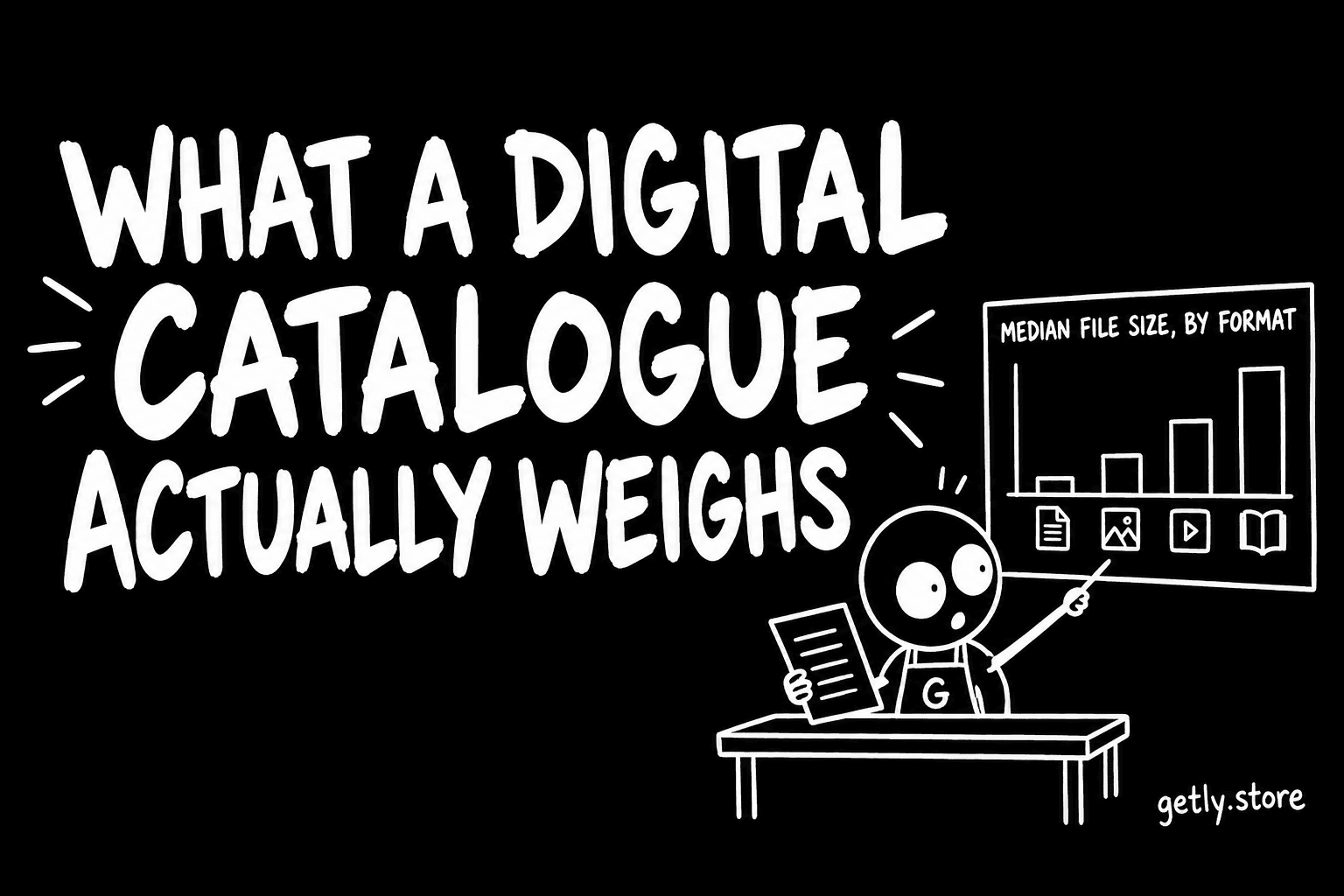
What a digital catalogue actually weighs
117 GB across 5,672 live listings, and the median file is nothing like the average. Measured file sizes by format, and what they mean for the buyer on the other end of the download.
 Article
Subscriptions for your own product: what we built and why
Getly Billing lets a seller charge their own customers on a recurring plan through the API — hosted checkout, card or crypto, five webhooks, a status endpoint. The design decisions behind it, including the one that surprised us in testing.
 Article
Timed access: sell a period, not a file forever
New on Getly: sell 1, 3, 6 or 12 months of access on a one-time payment. Why we built it instead of another subscription, how the end date works, and what your own platform receives by webhook.
 Tutorial
How to add a Getly Buy button to your own website
Sell a Getly product from your own site with one script tag and one button. How to get the widget approved, copy the snippet, check it without paying, and why a sale through it is charged at 10%.
 Tutorial
How to set up crypto payouts on BNB Smart Chain
Get paid in USDT or USDC without a Stripe account. Where the setting lives, why BNB Smart Chain is the recommended network, what the $5 and $15 minimums mean, and when the money arrives.
 Tutorial
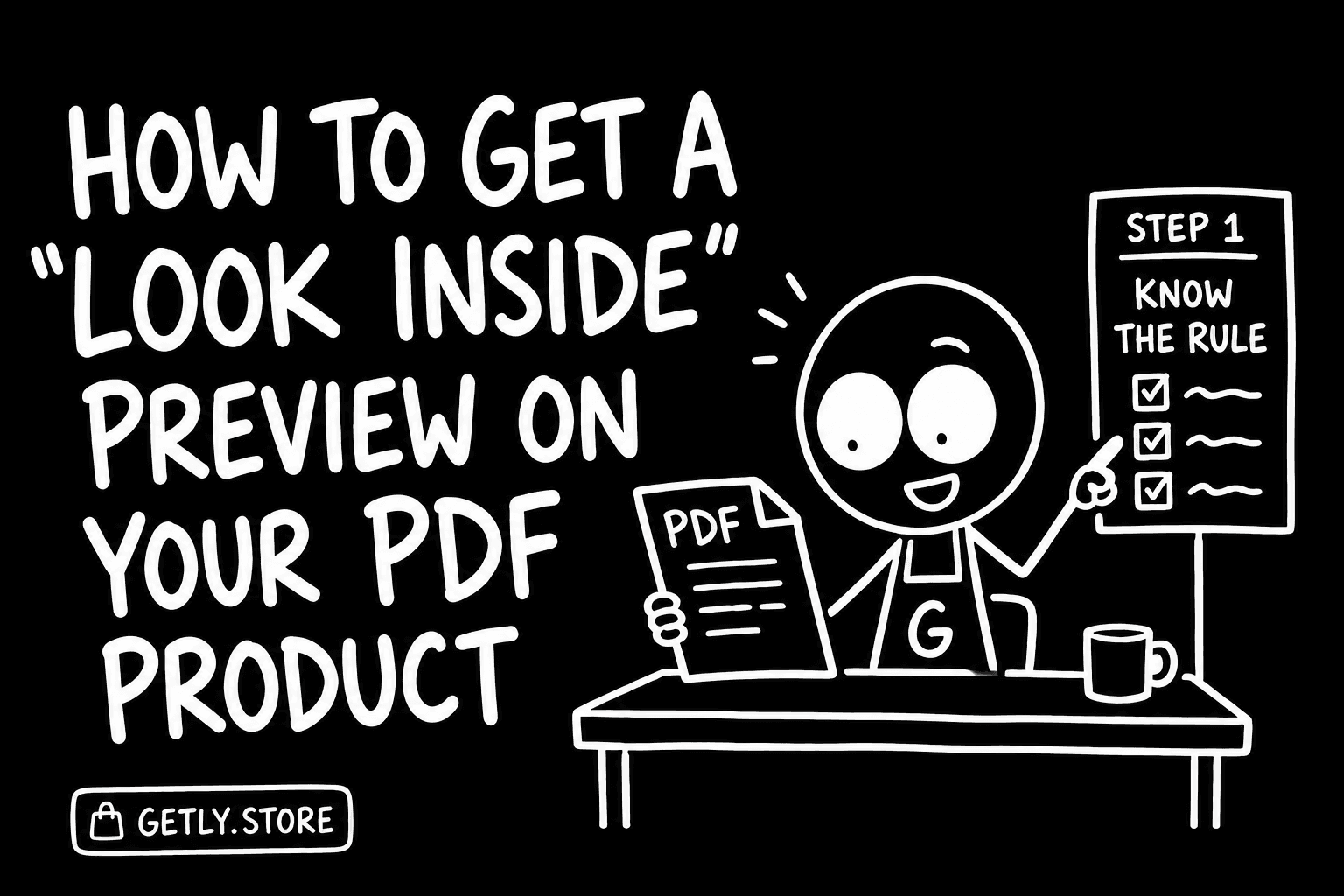
How to get a "Look inside" preview on your PDF product
A PDF product of ten pages or more shows buyers a watermarked excerpt automatically. What the rule is, how to arrange your file so the excerpt sells, and how to check what a buyer will see.
 Article
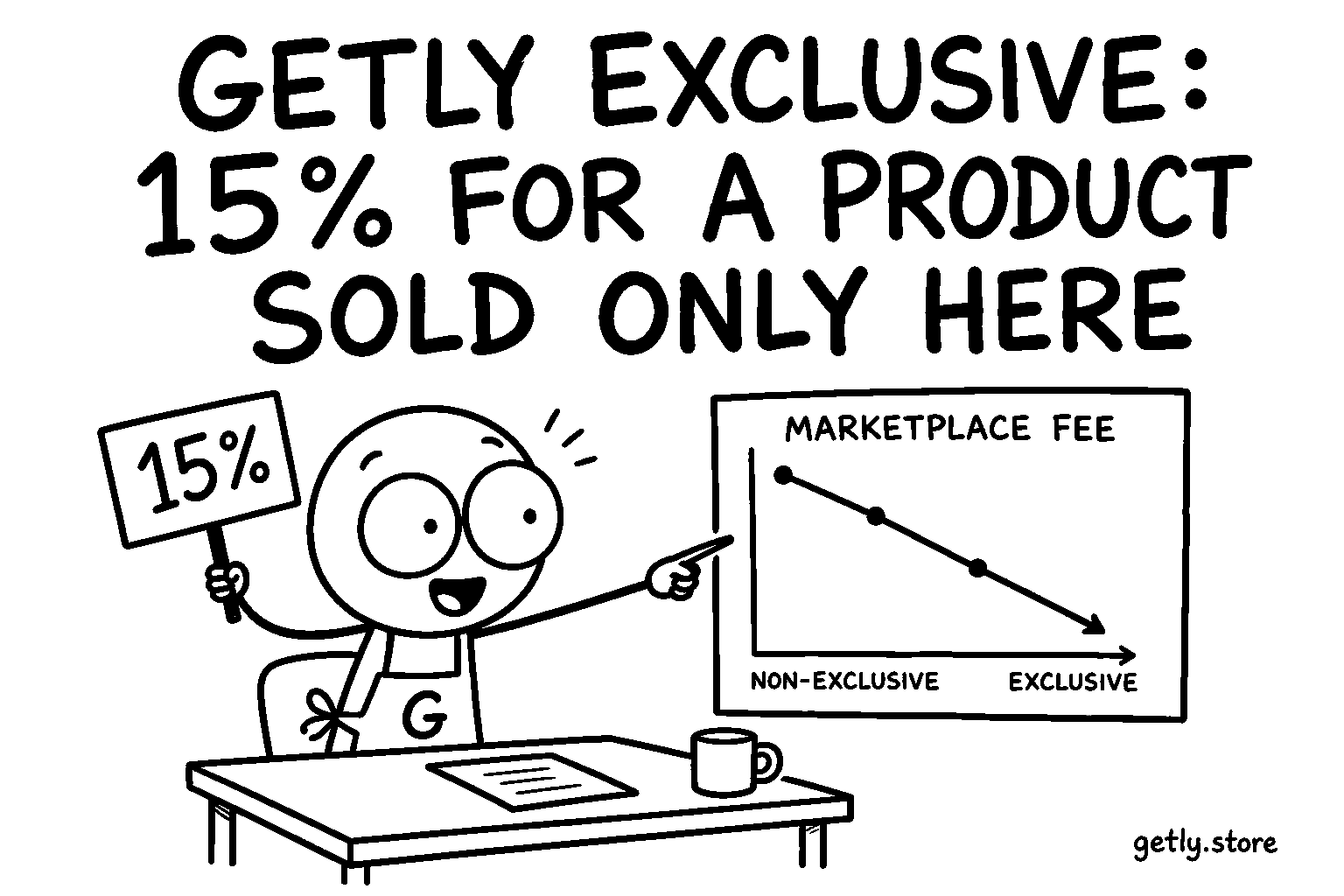
Getly Exclusive: 15% for a product sold only here
A new seller declaration. List a product only on Getly and the marketplace take drops from 20% to 15%. What it is, what it is not, and how it sits next to the other rates.
 Article
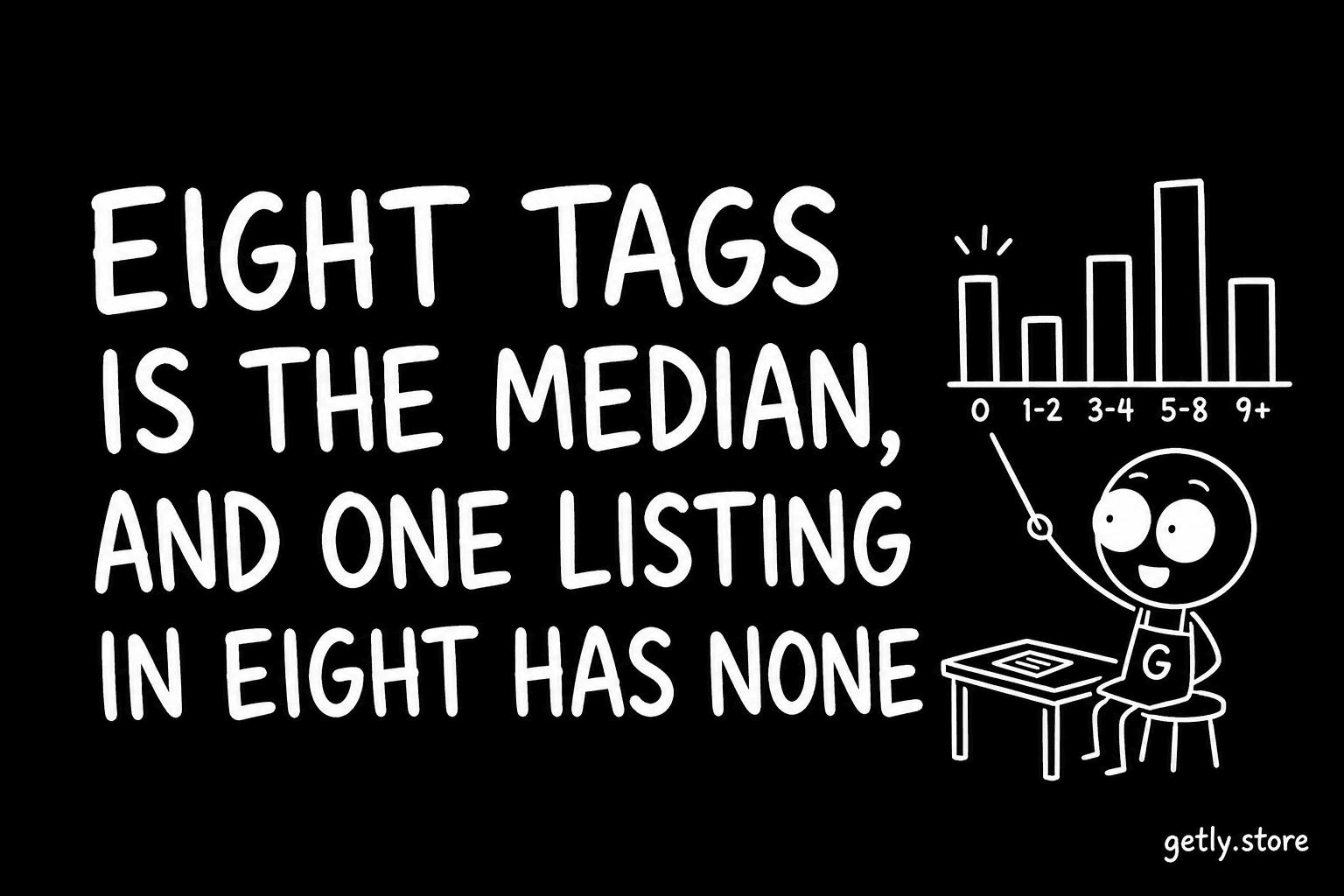
Eight tags is the median, and one listing in eight has none
19,043 distinct tags across the catalogue, 80% of them used exactly once. What tags actually do in search here, why the most common ones tell you about two sellers rather than the market, and which tags are worth typing.
 Article
Every English listing now has a Russian and a German page
4,749 English listings are translated into Russian and German; 136 listings written in ten other languages now get the same treatment. How the translation works, what it changes for search, and the one language it refuses.
 Article
Two in three stores have exactly one product
66% of active stores hold a single listing; 4% hold ten or more. What catalogue size does and does not tell you, why bundles belong to the 4%, and how the marketplace displays them.
 Article
The median PDF for sale is eleven pages
We counted the pages of 2,252 PDFs on sale. Median eleven, a quarter are three pages or fewer, 7% are books of 100+. What the length tells a buyer, and how the new Look Inside excerpt treats each size.
 Article
22% of product titles are longer than Google will show
The median product title is 36 characters; one in five runs past 60, and the longest is 499. What search engines do with the excess, why five characters is now the floor, and how to write the title buyers actually read.
 Article
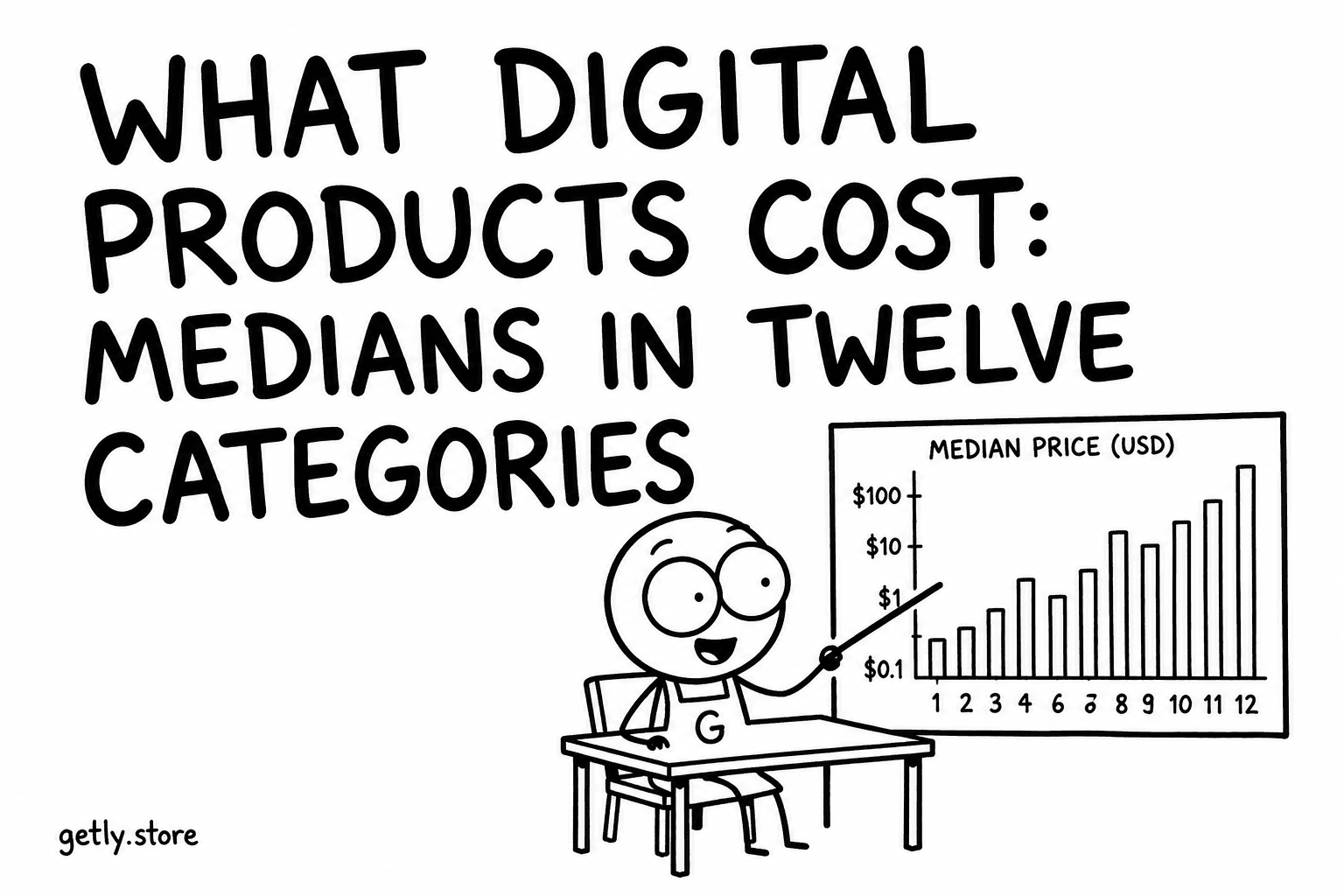
What digital products cost: medians in twelve categories
The median paid digital product is $6.99. We measured the price quartiles of every active listing by category, the share of free and pay-what-you-want items, and how many show a crossed-out price.
 Article
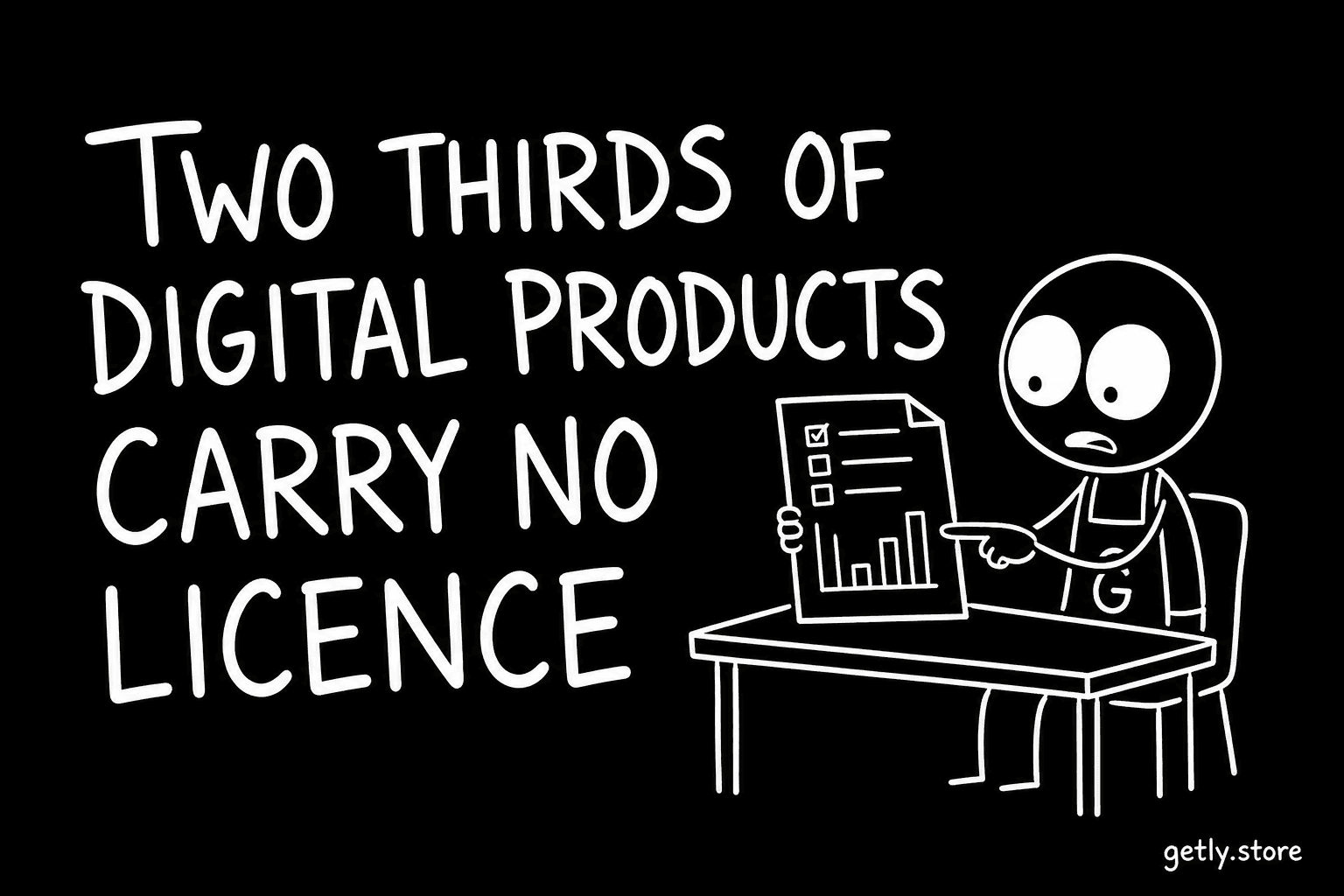
Two thirds of digital products carry no licence
64% of active listings carry no licence type. We measured which licences sellers do choose, explain what each one means here, and show where the field lives.
 Article
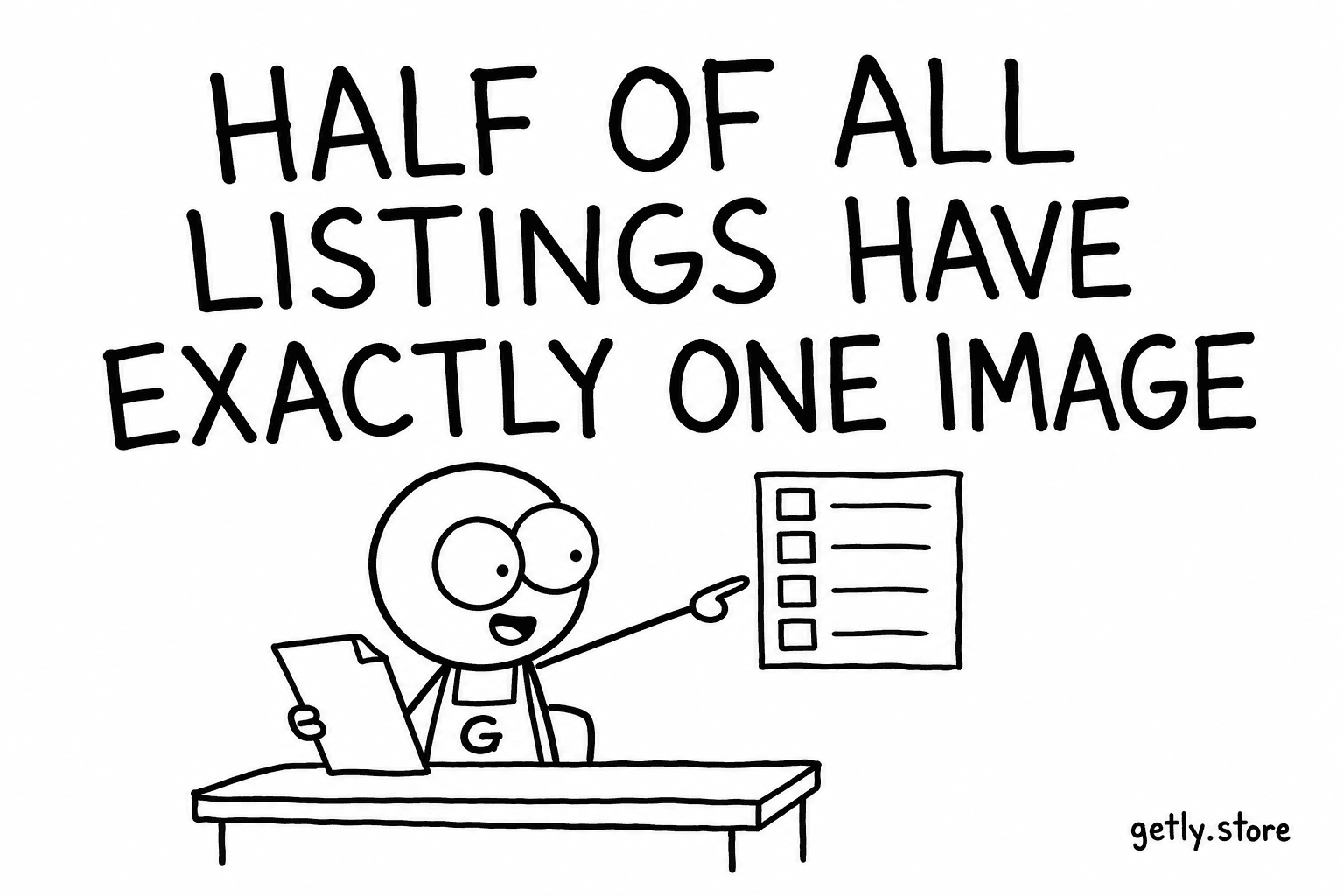
Half of all listings have exactly one image
49% of active digital products show buyers a single picture. We measured the distribution, checked what the image count does and does not change, and wrote down what the second image is for.
 Comparison
Gumroad vs Whop 2026 — which one fits a digital-goods seller
Gumroad and Whop solve different problems. One is a checkout with a storefront attached, the other is a marketplace built around community access. Here is how to tell which shape your product is.
 Article
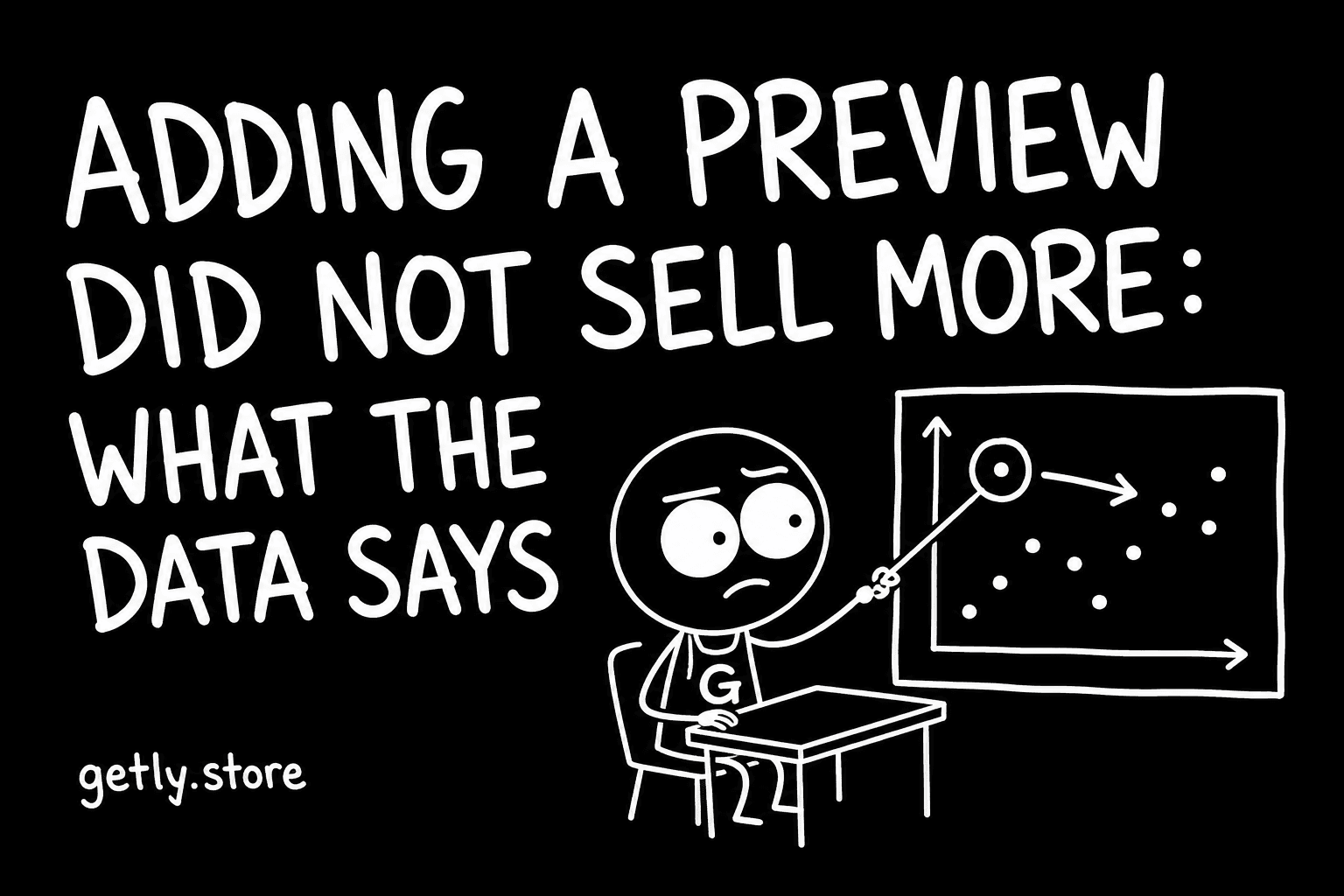
Adding a preview did not sell more: what the data says
Listings with a preview asset convert at 0.21%. Listings without convert at 0.25%. The lesson is not that previews do not work — it is that a link nobody notices does nothing.
 Article
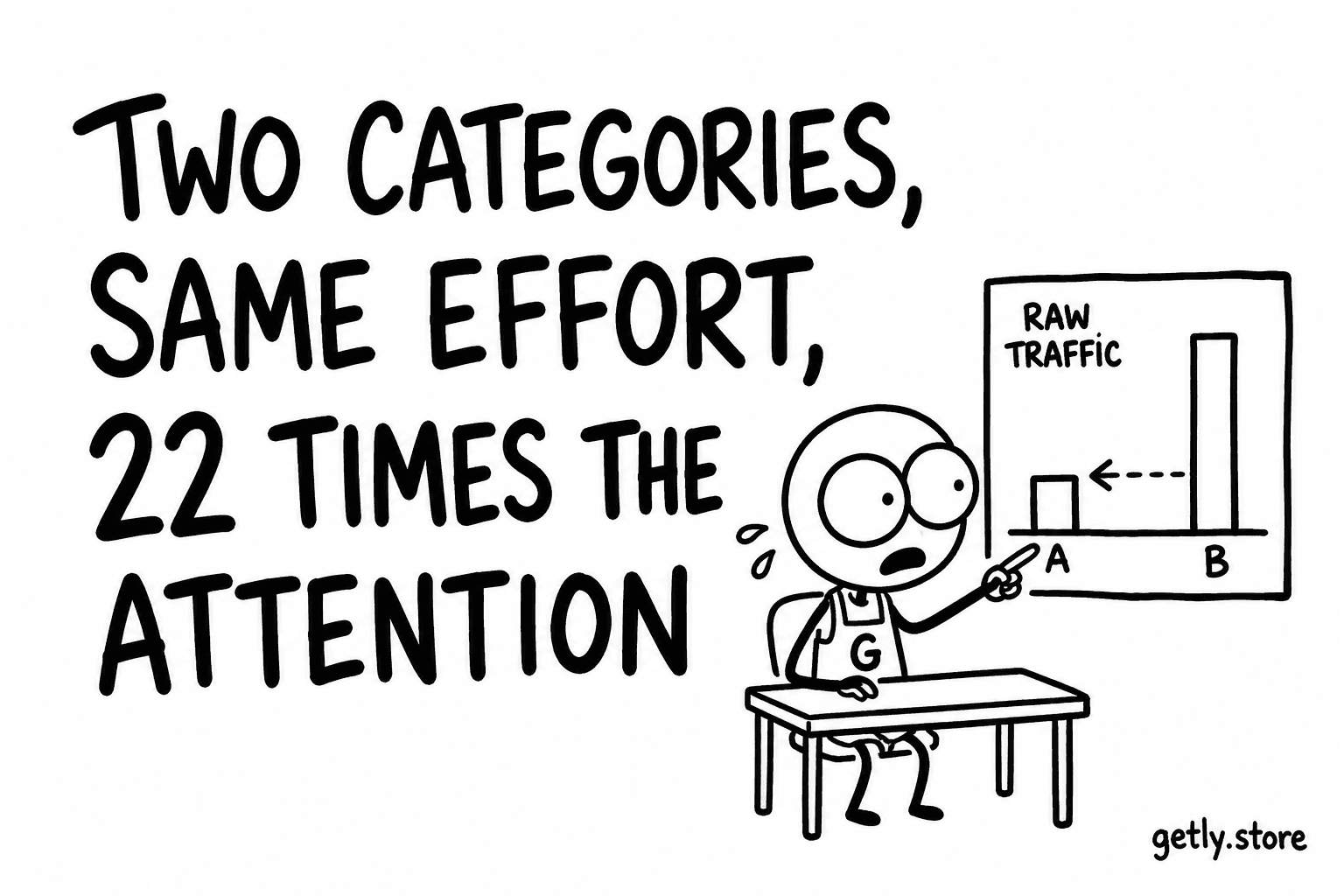
Two categories, same effort, 22 times the attention
Poster templates get 83 buyer views per listing. E-books get 3.7. The work to publish either is identical, and almost nobody checks before choosing.
 Article
The formats a digital marketplace actually sells
Everyone pictures 3D models and game assets. We counted every file in a live catalogue, and 41% of it is PDF. What that means if you are deciding what to make next.
 Tutorial
Build a Personal Prompt Library That Stays Useful
Build a personal prompt library with clear names, practical version rules, repeatable tests, and an archive for prompts that no longer work.
 Article
The first 30 days of a digital store, as the data describes them
Not advice — a description of what actually happens, built from the whole store population and the points where people measurably stop.
 Article
What we learned by reading 5,000 seller files
Getly opens every file attached to a listing to work out what the buyer receives. Five things that showed up across 5,000 of them, including one that was our own bug.
 Article
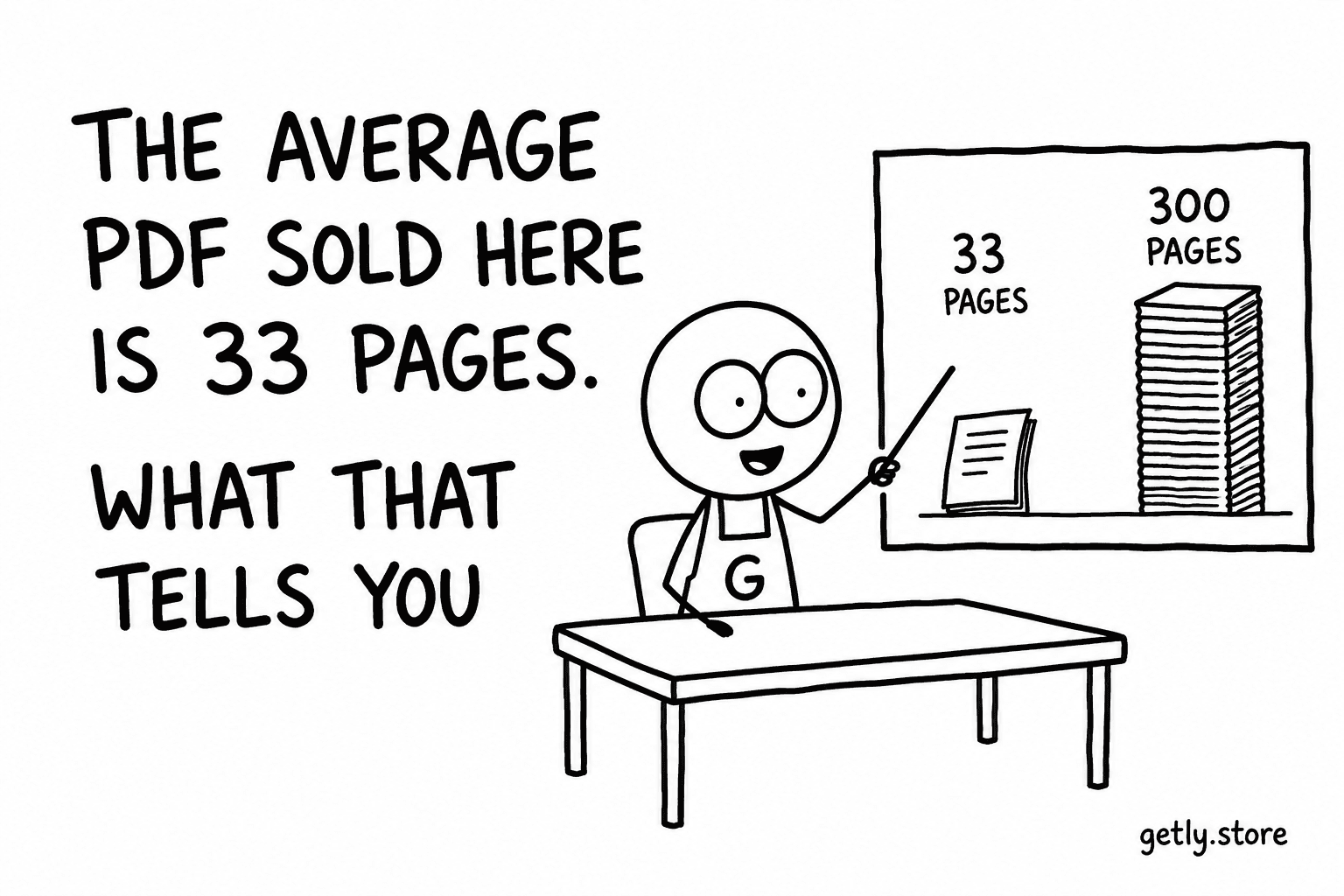
The average PDF sold here is 33 pages. What that tells you about the market.
Across 2,247 PDFs attached to Getly listings, the average is 33 pages. Not a book, not a one-pager — and the size that sits between them is the one that sells.
 Article
What actually causes a refund on a digital product
Refunds run at 3.3% of completed orders here, and four in five are approved. What sits behind that rate, and the two sentences that prevent most of it.
 Article
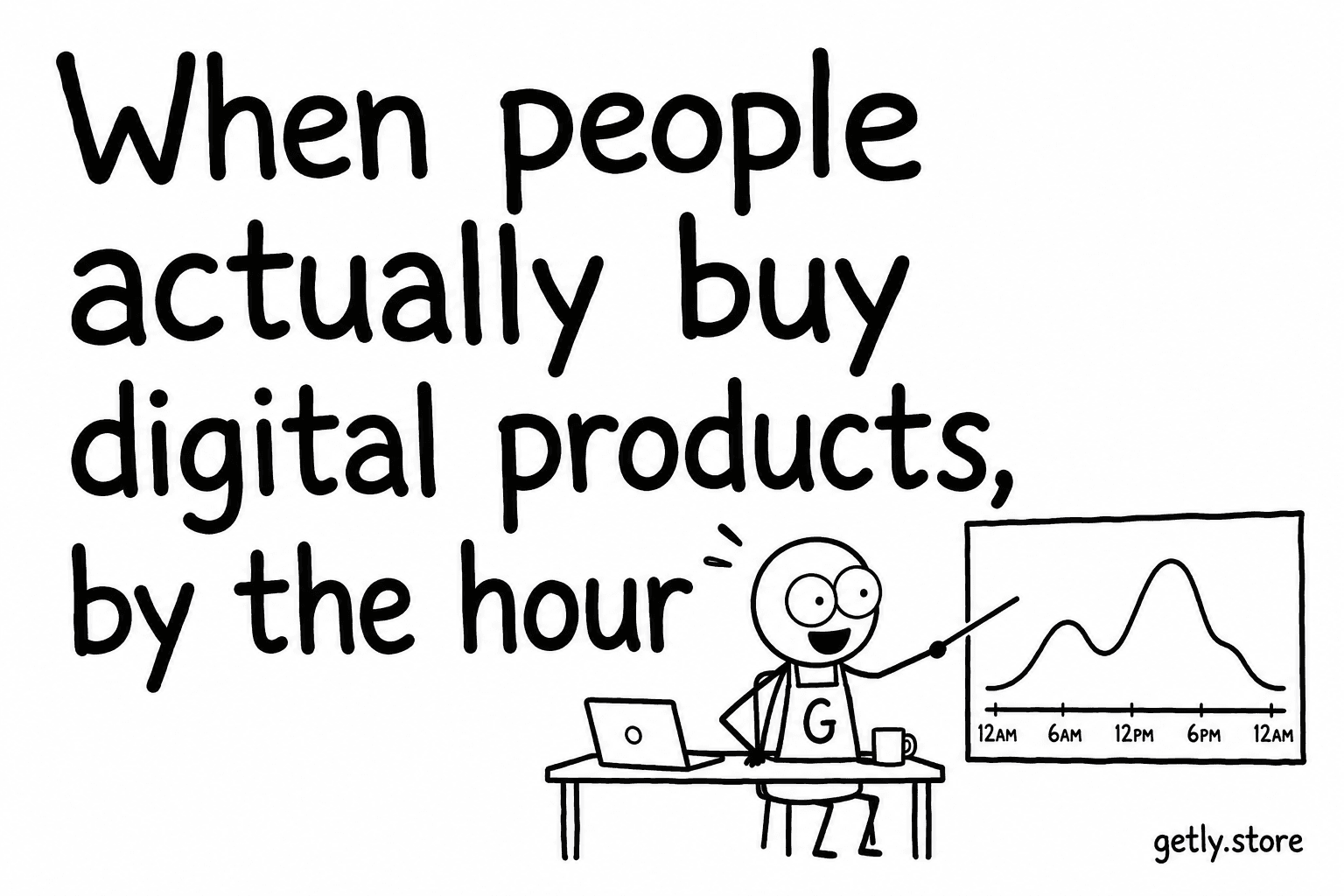
When people actually buy digital products, by the hour
Across every completed Getly order, the busiest hour is 15:00 UTC, followed by 07:00 and 18:00. What a real purchase clock changes about when you publish.
 Article
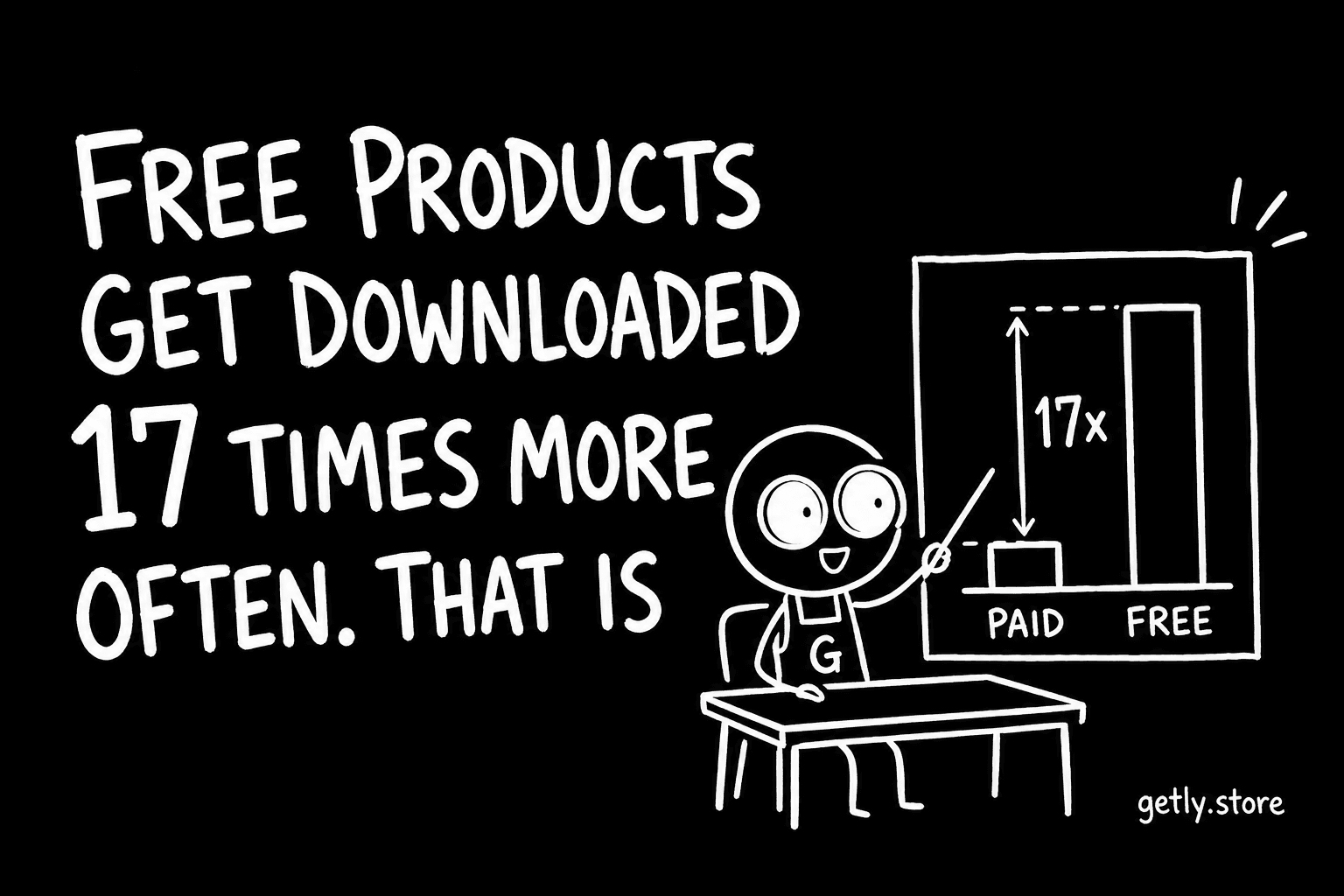
Free products get downloaded 17 times more often. That is not the win it looks like.
89 free listings on Getly average 1.7 downloads each; 4,308 paid listings average 0.1. What the gap actually tells you about pricing a digital product.
 Article
Almost no digital product has a review. Here is what that costs.
Fewer than one digital listing in two hundred carries a single review. What an empty review section does to a listing, and the one thing that actually gets the first one.
 Tutorial
AI Cover Prompts That Produce Readable Thumbnails
Learn to prompt AI covers with clear hierarchy, readable titles, safe margins, and a testing workflow that catches distorted text before you publish digital products.
 Article
93 products, zero sales, one thing in common: no category
Live Getly products with no category made zero sales and zero downloads between them. Not fewer — zero. What a category actually does, and how to pick one.
 Article
Two thirds of stores never list anything. We looked at what happens instead.
Two thirds of stores never publish a product. The gap between creating a store and publishing the first one is measurably the hardest step in selling digital goods.
 Article
What does not separate sellers who sell from sellers who do not
Sellers who have sold write 1,323-character descriptions and upload 2.0 images. Sellers who have not write 1,244 and upload 2.0. The advice everyone gives is measurably not the difference.
 Article
PDF is the format of this marketplace. Here is what buyers cannot see.
PDF accounts for 2,219 of the files attached to Getly listings — more than PNG and JPEG combined. Three things about a PDF a buyer cannot check before paying, and how to tell them.
 Article
Where digital-goods buyers actually are, and what that changes
Across completed Getly orders, buyers came from the US (81), Germany (32) and India (23). What a real buyer map changes about how you write a listing.
 Article
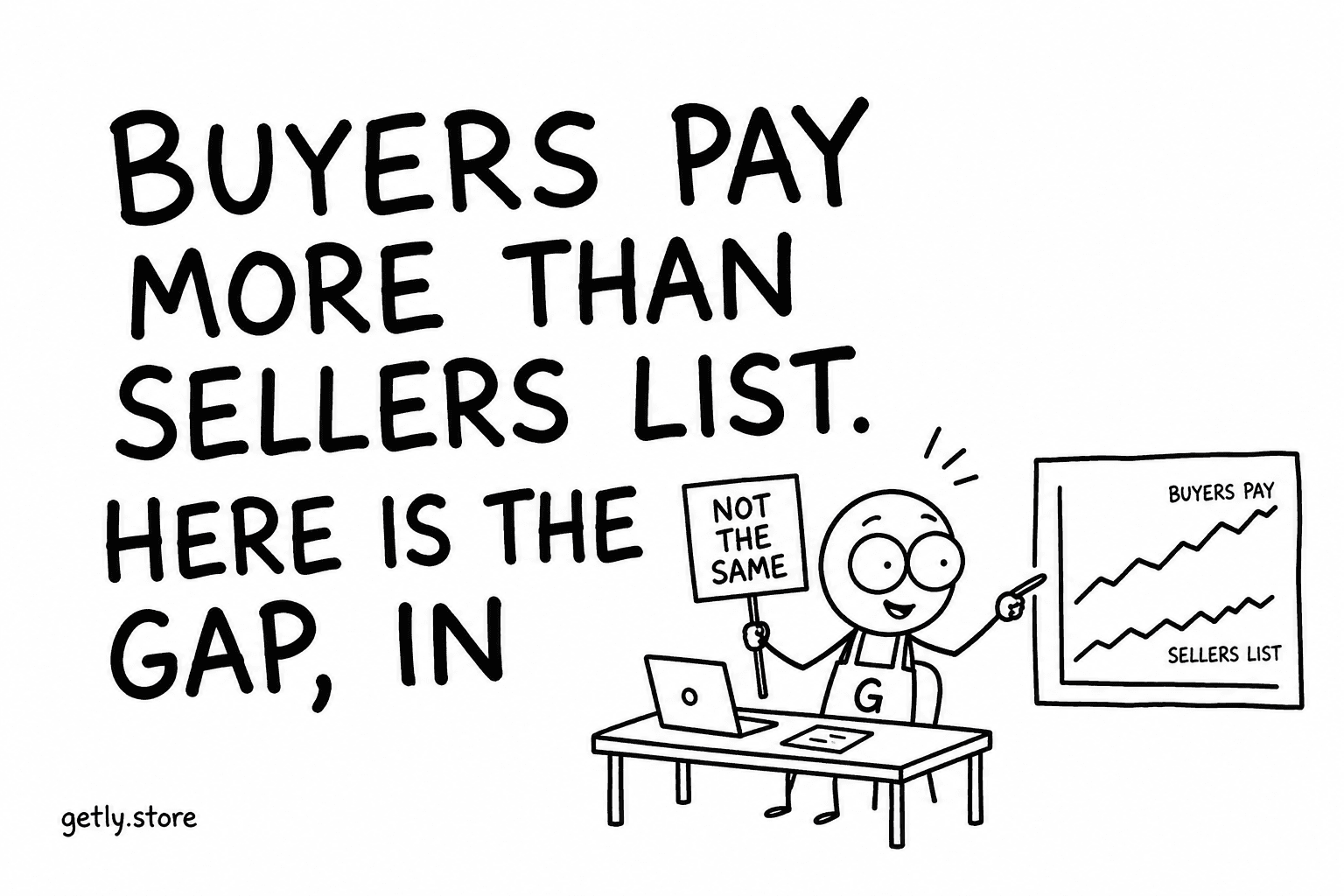
Buyers pay more than sellers list. Here is the gap, in dollars.
The median digital product listed on Getly costs $6.51. The median one that sold cost $9.99. Measured across 693 completed orders and 4,316 live listings.
 Article
How many products does it take to make a first sale? We counted.
Stores that have sold something carry 5.7 listings on average against 2.6 for stores that have not — but the median store made its first sale on its first product. Measured across every Getly store with at least one live product.
 Tutorial
How to Write Specific Product Descriptions with AI
Learn how to brief AI with product facts, buyer context, and proof so your digital product descriptions name real features, limits, and outcomes without fluff.
 Article
Figma Design System in 2026: 9 Files to Standardize Tokens (Plus Free Templates)
Figma design system in 2026: 9-file token architecture. Learn naming, governance, free Figma templates, mockup setup, icon rules, and best Figma plugins.
 Tutorial
Review AI-Written Code Before You Run It
Learn how to review AI-written code for syntax, runtime, and logic bugs before execution, using safe tests, boundary cases, and side-effect checks.
 Article
GPT Prompt Templates in 2026: Titles, Descriptions & FAQs That Sell
GPT prompt templates for product titles, descriptions, and FAQs. Learn best ChatGPT prompts, AI tools for creators, and how to sell AI prompts.
 Tutorial
How Prompt Sellers Should Warn About Untrusted Input
Learn how prompt sellers can label untrusted input, test injection attempts, write buyer warnings, and build safer digital prompt packs for real workflows.
 Article
Font Pairing Guide for Logos in 2026: Best Fonts + Examples
Font pairing guide for logos in 2026. Learn best fonts for logos, modern sans serif combos, and how to choose commercial use fonts when you buy fonts online.
 Tutorial
How to Test a Prompt Like Software
Learn to test prompts like software with fixed inputs, controlled variations, written rubrics, weighted scores, and repeatable review workflows for better outputs.
 Article
90-Day Affiliate Attribution Window in 2026: How Creators Get Credited
Learn how a 90-day affiliate attribution window credits creators in 2026, plus practical strategies for affiliate marketing for creators and digital product programs.
 Tutorial
How to Prompt AI Music Tools with Precise Music Terms
Learn how to prompt AI music tools with genre, BPM, mood, instrumentation, and structure terms that produce clearer songs, beats, and soundtracks.