 Getly
Getly
Digital products can generate steady revenue when you package your expertise into something buyers can download, license, and use immediately. In 2026, the winners stand out less by hype and more by pricing clarity, promotion discipline, and payout reliability. This guide walks you through a practical seven-step system to sell digital products, promote them without guesswork, and get paid on time.
- Set pricing using value and audience fit, then test bundles and license clarity rather than constantly changing everything.
- Use promotions strategically: placements on the product’s own category page, plus click-billed ads that you top up like a budget.
- Choose stablecoin or card payouts based on your workflow. Crypto payouts use USDT or USDC and follow a strict 1st/15th schedule.
- Track performance in your own analytics stack and in product-level views/sales during promo windows.
- Publish assets that actually open correctly and match your listing text to reduce refunds and protect conversion.
What is the 2026 digital products playbook for selling?
The best way to sell digital products in 2026 starts with a simple goal: reduce friction at each stage from discovery to download. Buyers need fast relevance (the right file, the right license terms, the right use case). You need predictable economics (commission model, refund behavior, payout timing) and repeatable promotion decisions.
You also need a realistic view of where “passive income” comes from. Digital product income becomes closer to passive when you stop treating marketing like a one-off launch and start treating it like a loop: publish, measure, promote, improve the listing, then repeat with bundles or new variations.
Passive income digital products come from repeatable funnels
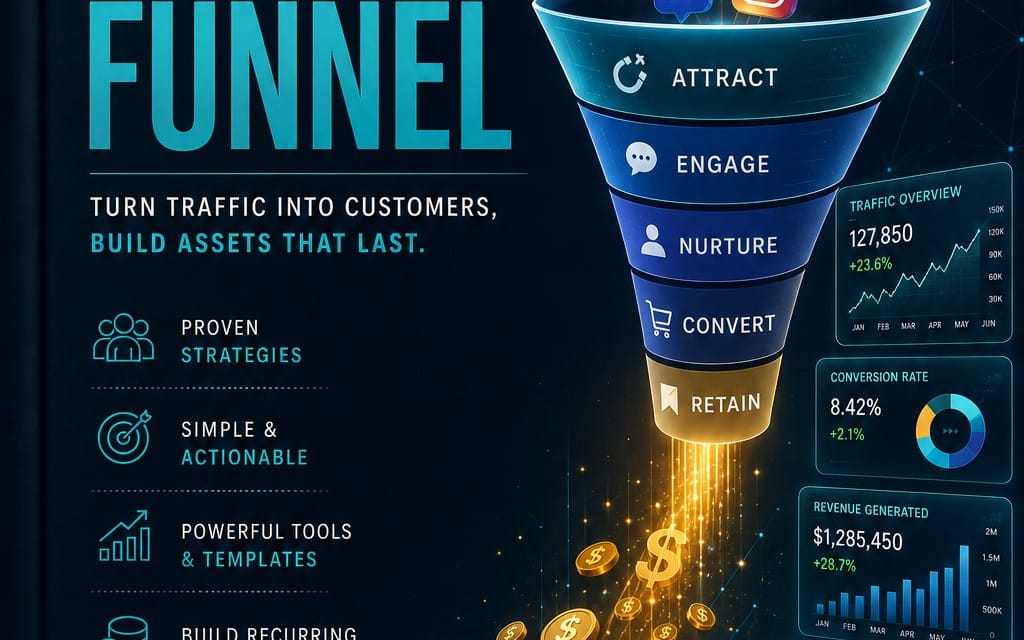
Passive income digital products usually share three traits: they solve a narrow problem, they come with clear files, and they show credibility inside the listing (screenshots, samples, license terms, and a straightforward deliverable). When those pieces align, your promotion spend converts at a stable rate.
For example, a finance template with both Excel and Google Sheets support can sell to students, freelancers, and operations teams without you building separate products for each audience. That single “broad compatibility” choice lowers buyer hesitation.
Gumroad alternative mindset: build for conversion, not just publishing
If you’re looking for a gumroad alternative, focus on the parts that affect buyer behavior: checkout flow, download library permanence, refund handling expectations, and trust signals. A marketplace can list your product, but your listing content and promotion setup determine whether buyers purchase.
Getly supports digital goods delivery after purchase with lifetime access for the buyer’s library. That matters because buyers tend to re-check files later, especially templates and workflow assets.
How to sell digital products with pricing that buyers trust
Pricing decides whether buyers click “Buy” and whether you earn back promotion costs. In 2026, a strong pricing approach relies on clarity first: what’s included, what format they get, and what license terms they can apply to their work.
You also need pricing structure that survives real-world traffic. If you run sponsored placements or click-billed ads, a buyer who lands on your product page expects the offer to match the page instantly. If your pricing feels confusing or mismatched to deliverables, refunds climb and conversion drops.
Use value bundles and “good enough” tiers
Digital product ideas 2026 often win when they combine related deliverables into a bundle. Bundles reduce decision fatigue and raise average order value without forcing buyers to assemble a toolkit from multiple listings.
Examples of bundle logic that sells well:
- Pair an end-to-end workflow with tracking dashboards and templates.
- Add a checklist or planner that helps the buyer implement the workflow immediately.
- Offer a “starter kit” alongside advanced templates so beginners buy in at lower risk.
On marketplaces, you can also use coupons (percentage or fixed-amount) to run controlled experiments around key dates, without rewriting your entire pricing page.
Build pricing around deliverables, not content volume
Buyers don’t pay for “number of files.” They pay for outcomes. Price your product based on how quickly the buyer can accomplish the job: from onboarding to a usable spreadsheet, from problem-solving template to a documented 8D report, or from a checklist to a month of consistent content.
For instance, a finance tracker that works in Excel and Google Sheets reduces tool friction. That compatibility often justifies a higher price than a single-format file, because you remove a compatibility objection.
Pro tip: Price your core deliverable at the “first real use” point. If buyers can open the file, follow instructions, and produce a result within minutes, you’ll sell more and refund less.
How to promote digital products in 2026 without wasting clicks
Promotion works when you control how people discover your listing and when you match the traffic source to the purchase intent. In 2026, “promote everything all the time” stops working. You promote specific products, specific angles, and specific windows.
Think in two tracks: placements that increase visibility and click-billed ads that attract intent-driven traffic. Then measure the results in the same time window before and during promotion so you can adjust quickly.
Use featured placement to boost product visibility
Featured Boost acts like a pinned placement, for paid days it places your product first on its own category page and also shows it in the homepage featured strip. It does not reorder price-sorted lists or change search ranking. That means buyers find it because you place it there, not because you “gaming” the algorithm.
Promotion timing matters. If you publish new assets, update screenshots, or improve your description, align a placement window right after the page becomes stronger so you convert new attention.
Run click-billed campaigns with a real budget
Search/browse sponsored placements use a bid-per-click model with a daily budget. You top up an advertising balance and campaigns pause when the balance runs out, then resume after a top-up. Unused credits never expire, so you can plan consistent testing without surprise bill spikes.
When you run click-billed ads, treat each product like a landing page. Test one variable at a time: keep your file contents stable, adjust your pricing or description angle only when you need to, and compare conversion per product.
- Start with a product that already converts from organic traffic.
- Use ads to scale the products that demonstrate the cleanest buyer journey.
- Pair ads with coupons during short windows instead of permanent discounts.
Common mistake: Promo placement and sponsored ads both drive traffic, but they don’t guarantee relevance. If your deliverables do not match what the buyer expects from your title, images, and license terms, the extra visibility turns into more refunds.
How to publish and package digital product files to reduce refunds
Publishing isn’t just “getting the listing live.” Buyers abandon and request refunds when files fail to open, do not match the promise, or require setup the buyer didn’t expect. Your job in 2026 is to package the product so it works immediately.
Digital marketplaces enforce a baseline requirement: your product needs at least one image and at least one downloadable file before you can go live. That baseline prevents zero-content listings, but it doesn’t replace good packaging and accurate descriptions.
Match your listing text to your files
Listings often include keywords like “PNG” or “transparent,” but buyers care about the actual format they download. Some platforms compare listing words against attached files and quote what you promised so you can correct discrepancies.
For you, that means: put the real deliverables in the listing, show screenshots that reflect what buyers download, and add a brief “how to use” section when the workflow needs steps.
Choose formats buyers already use
Templates sell because they plug into existing routines. Excel and Google Sheets work in many environments. If you create trackers, dashboards, checklists, and planning systems, include whichever formats match your target buyer’s tool stack.
When you offer “Excel & Google Sheets” support, you reduce a friction point that otherwise kills conversion on first click. Buyers see compatibility and proceed without asking questions.
Success pattern: Finance and operations templates convert well when you include both the input layer (templates, forms, planners) and the output layer (dashboards, reports, dashboards that visualize results).
How to get paid: payout steps for selling digital products
Payout timing determines your cashflow. In 2026, you should treat payout setup like part of your product launch checklist, not something you do after the first sale.
Get paid through two payout methods: Stripe Connect for fiat payouts or crypto stablecoin payouts (USDT or USDC) via NOWPayments Mass Payouts. Both methods follow the same payout schedule: the 1st and the 15th of every month at 03:00 UTC.
Pick payout method based on your account workflow
Stripe Connect sends fiat to your connected bank account, while crypto payouts send stablecoins to your wallet address on specific networks you choose in settings. Crypto payouts do not require identity verification on the marketplace side.
That distinction matters when you need speed. If your production workflow already uses stablecoins, crypto payouts simplify onboarding. If you need bank deposits and local reporting, Stripe Connect may fit better.
Understand the payout delay and minimum thresholds
Sales do not pay instantly. Payouts follow a blender-style schedule: a sale made on the 1st–15th pays on the 15th of the next month; a sale made on the 16th–end pays on the 1st of the month after that. Your first payout often takes roughly a month, especially for a new store.
There’s also a minimum payout threshold. Fiat minimum payout equals $10, and crypto minimum payout equals $5. If your earnings sit below the minimum, they roll forward until they clear.
Pro tip: If you’re planning promotion windows, set a simple cashflow rule. Assume payout delay, then promote products that won’t require immediate spending recovery before the next payout date.
How to optimize earnings: commission, traffic, and promotion math
Earnings optimization comes from understanding your economics before you scale traffic. In 2026, marketplaces use a tiered commission model based on your completed sales in the previous calendar month, plus an own-traffic rule.
That means you can improve your margin by focusing on two levers: increase completed sales volume and grow direct traffic that you control.
Commission model you can plan around
Getly uses one commission model that keeps sellers between 80% and 90% depending on performance. The platform take starts at 20%. If your completed sales hit certain volume thresholds in the previous month, the take drops automatically: ≥ $500 sets a 17% take, ≥ $2,000 sets a 15% take, and ≥ $10,000 sets a 12% take. Sellers keep 83%, 85%, or 88% accordingly.
Your own traffic always holds a stronger rate. For purchases within 24 hours of a click on your personal referral link, or through an embed buy widget you add to your site, the take stays at 10% regardless of your volume tier. Sellers keep 90% on their own demand.
Use placements and ads while monitoring refund risk
Promotion lifts visibility. Visibility lifts sales if your product matches the promise. If it doesn’t, refunds rise and conversion drops. Refunds do not count as completed sales, so they don’t push your tier upward, but they still affect your store performance through buyer trust.
In practice, you earn more by combining promotion with product accuracy. Fix the listing that causes confusion, update images that mislead, and ensure your license terms match what buyers expect.
| Step | Goal | What to do in 2026 |
|---|---|---|
| 1. Pricing | Convert on first click | Price by outcome, bundle related deliverables, show license terms clearly |
| 2. Packaging | Reduce refund causes | Match listing promises to actual file types, add screenshots that reflect downloads |
| 3. Featured placement | Increase category visibility | Pin your best-converting product on its category page during a short paid window |
| 4. Click-billed ads | Scale intent traffic | Bid and budget with a controlled top-up, test one product angle at a time |
| 5. License clarity | Prevent expectation mismatch | Use the license field in your listing, and keep it consistent with your deliverables |
| 6. Payout setup | Stabilize cashflow | Choose Stripe Connect or stablecoin payouts and plan for the 1st/15th schedule |
| 7. Earnings loop | Raise margin over time | Target completed-sales volume tiers and grow own traffic |
FAQ: selling digital products in 2026
What is the best way to sell digital products for beginners in 2026?
Start with one narrow problem and ship a product that works instantly. Buyers need clear deliverables and license terms, and you need packaging that matches your listing promises. Bundle related assets only after you confirm the core workflow converts.
Keep your first promotion small and measurable. Use featured placement or click-billed ads to test conversion, then improve the listing instead of launching ten new products at once.
How do payouts work when I sell digital products?
Payouts run on a fixed schedule: the 1st and 15th of every month at 03:00 UTC. Sales made between the 1st–15th pay on the 15th of the next month, while sales made between the 16th and end pay on the 1st of the month after that.
You can choose fiat via Stripe Connect or crypto stablecoin payouts. Crypto payouts require only a wallet address and network choice.
Can I use passive income digital products as a long-term strategy?
Yes, but only if you build a repeatable funnel. Passive income digital products usually rely on evergreen relevance, clear packaging, and consistent promotion windows tied to measurable results.
Update listings when you learn what buyers expect. Keep your files aligned with your title and images to protect conversion over time.
Is there a gumroad alternative that supports selling templates and trackers?
Yes. Many creators look for a gumroad alternative because they want better payout options and a smoother buyer download experience for digital files. The most important difference comes down to checkout, delivery reliability, and payout workflow.
When you compare platforms, focus on how you get paid, how refunds work, and how buyers discover your products.
How can I choose a product idea for digital product ideas 2026?
Pick a problem buyers already pay to solve: workflows, tracking systems, compliance-style templates, and content production checklists. Your product succeeds when it reduces time and mental load for the buyer.
Bundle the assets that move the buyer from start to output. Then price it based on that outcome, not on how many files you included.
- Price by outcome, then bundle to remove decision friction.
- Promote with two levers: featured placements for visibility, click-billed ads for intent traffic.
- Package files accurately to lower refunds and protect conversion.
- Plan for the 1st/15th payout schedule and set your payout method early.
If you want a starting point, pick one workflow product and one promotion channel and run the full loop this week: publish, price, promote for a short window, then adjust the listing based on what converted. When you’re ready, you can expand into bundles and adjacent products with the same audience in mind.
Soft call-to-action: Browse proven templates and trackers to map your next bundle idea, like the 🔍 FactoryOS™ A3 Problem Solving & 8D Template, then adapt the structure to your own niche and audience.