 Getly
Getly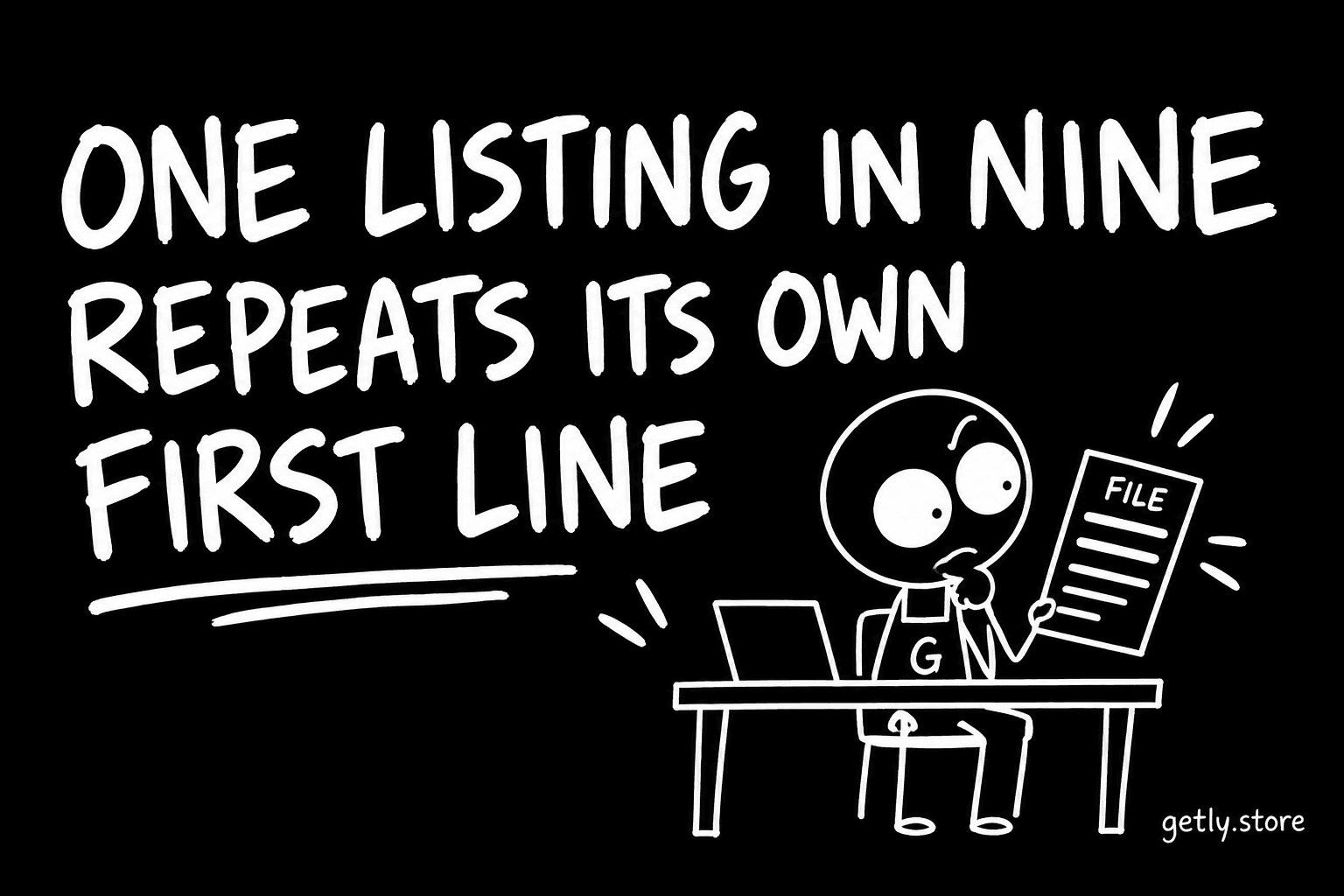
Every listing on Getly has two descriptions. The long one is the body of the product page. The short one is a single line, and it is easy to treat as a formality: fill the field with the opening sentence of the long description and move on.
On 26 September 2026 we compared the two fields across the active catalogue of 7,143 listings. In 11.32% of them, the short description is simply the first line of the long description again. That is roughly one listing in nine.
It looks harmless. It is not quite, because of where that one line goes.
Where the short description is shown
The short description is not a hidden field. It is the line Getly uses whenever the listing has to be described in a sentence rather than a page:
- Under the title on the product page, in two lines, right above the price and the buy button.
- In search results outside Getly. When the short description is long enough (at least 70 characters), it becomes the page's meta description, the grey text a search engine may show under your title.
- In structured data and the shopping feed, where it is the description a search engine reads for the product, with the long description as the fallback.
- In embedded product widgets, as the one line under the product name.
- In marketplace search, where the short description is one of the fields a query is matched against.
So the short description is the text most people see first, and often the only text they see before deciding whether to click.
What the repeat costs
On the product page, a repeated first line means the buyer reads the same sentence twice within a few centimetres: once under the title, once at the top of the description. The second reading adds nothing, and the first two lines of real estate on the page are spent on one idea.
Outside the page, the cost is different. The first sentence of a long description is usually written as an introduction ("This pack is the result of two years of work..."), because it expects more text to follow. As a standalone line in a search result or a widget, an introduction describes the mood of the product rather than the product. It was not written to stand alone, and it reads that way.
There is also a missed opportunity for search. The short description is matched against queries. When it repeats the body, it carries no words that are not already in the description, so it is a field that could hold a useful synonym or format name and holds none.
What the short description should say instead
Treat it as the answer to "what is this, in one line", written for someone who has not read anything else. A reliable pattern is: the thing, the format, and who it is for.
- Instead of "Welcome to my collection of beautiful designs", write "Editable wedding invitation templates for Canva, in US Letter and A5 sizes".
- Instead of "This guide will change the way you think about money", write "A PDF workbook on building a monthly budget, with printable worksheets".
- Instead of "High quality textures for your projects", write "Seamless PBR wood textures with albedo, normal and roughness maps".
If your product has a count, a size or a version that matters, put the real one in. The examples above leave numbers out only because they are not real products.
Aim for 70 to 155 characters. Below 70, the product page falls back to other text for the meta description. Above 155, the meta description is cut off. Inside that range, what you wrote is what appears.
Then let the description do something else
Once the short description carries the one-line summary, the long description does not need to open with it. It can start with the second thing a buyer wants to know: what exactly is inside, or what problem the product solves. The two fields stop competing and start dividing the work.
This is a small edit, but the numbers around it suggest it is worth making together with a few neighbours. Measured the same day, only 23.60% of descriptions spell out what is included and only 9.53% mention software or requirements. A short description that names the format already answers part of the second question before the buyer scrolls.
A check you can run in two minutes
Open one of your product pages. Read the two lines under the title. Then read the first line of the description. If they are the same sentence, or nearly the same, this article is about your listing. Now search the web for your product name with our domain and look at the grey text under the result, if a search engine shows one: that text often comes from the same field.
We are not claiming a measured effect on sales from rewriting it. We are pointing at a line that is shown in five places and, in one listing in nine, says nothing new in any of them.
What to do today
Open the edit page of each listing where the short description repeats the first line. Replace it with one sentence of 70 to 155 characters that names the thing, the format and the buyer. Then reread the opening of the long description and, if it now repeats the new short line, cut that sentence and start the body with what is included.