 Getly
Getly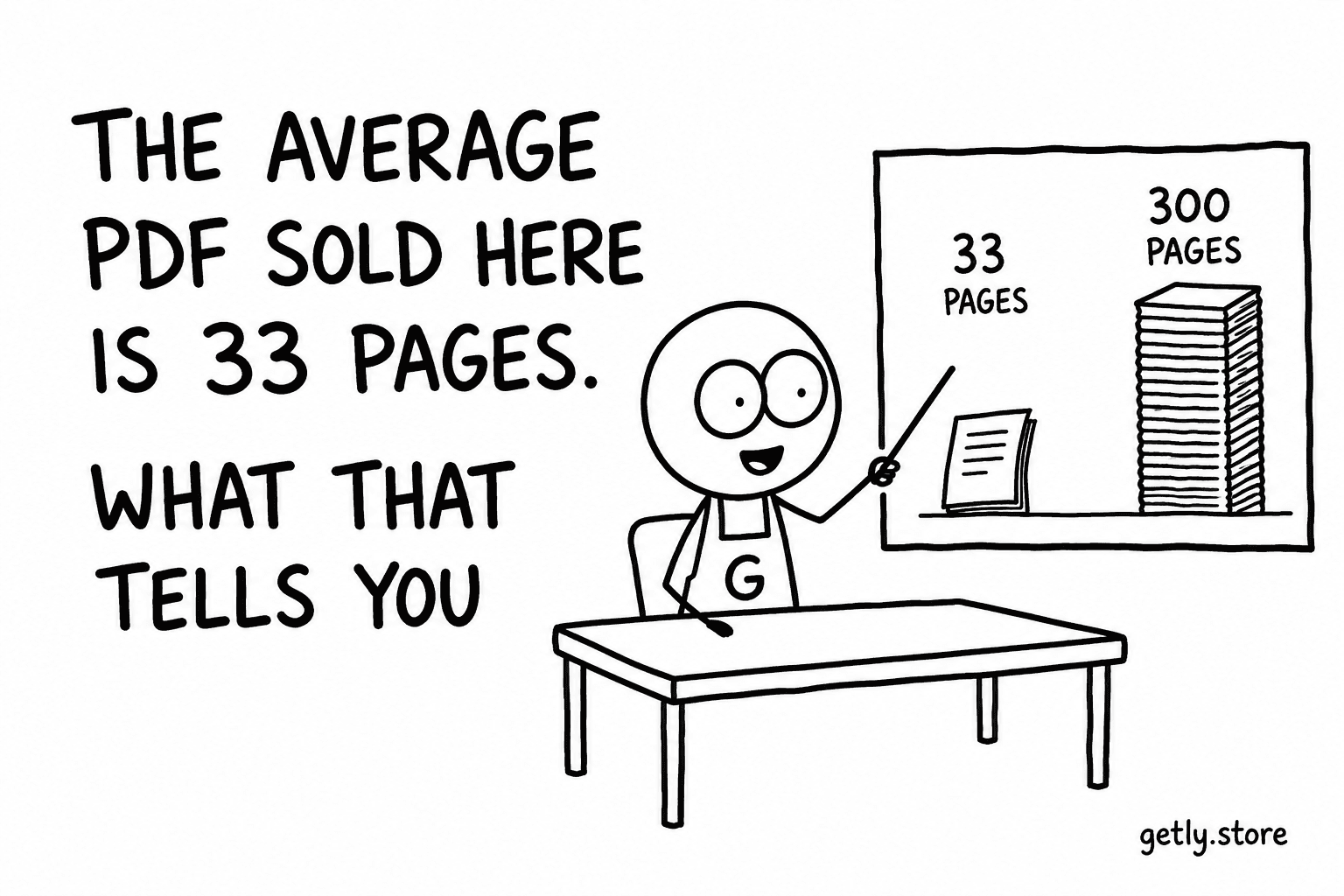
We read every file attached to a listing, which means we can say something most marketplaces cannot: what size a digital document actually is when someone decides to sell it.
Across 2,247 PDFs in the Getly catalogue, measured 30 August 2026, the average is 33 pages.
Not a 300-page book. Not a one-page checklist. Something in between, and the in-between is the interesting part.
Why 33 and not 300
A 300-page book is a project. It takes months, it has to be edited, and it competes with every publisher on earth. A one-page checklist takes an afternoon and is hard to charge for, because the buyer can see the whole thing is one page.
Thirty-odd pages is the size where a specific problem gets solved completely. A workbook for one process. A guide to one tool. A course companion for one module. It is long enough to be worth paying for and short enough that a person actually finishes it - which is what makes them come back for the next one.
The category medians line up with this. Guides & Tutorials sit at $24.99 and E-books at $7.99: the same page count sells for three times as much when it is framed as solving a problem rather than as reading material.
What a buyer cannot see, and how the number helps
A PDF is opaque until it is open. Page count is the closest thing a document has to a size, and it is the single most common question in support about any document product.
Getly reads it from the file and shows it on the product page - the seller does not type it, so it cannot be wrong by accident or optimistic on purpose. That mattered more than we assumed: until 29 August the count came from reading only the start of a file, and a seller wrote in because his 295-page book was listed as 10 pages. 1,426 listings carried a count taken that way. All of them understated the file; they have been recounted.
Using the average as a design constraint
If you are planning a document product and cannot decide on scope, 33 pages is a useful anchor - not as a target, but as a reference point for what the market treats as a complete thing.
Three ways to use it:
Below 15 pages, the page count works against you and something else has to carry the value: a template that gets used repeatedly, a reference someone keeps open, a printable that gets printed weekly. Say what that is in the first line of the description.
Around 30 to 50, you are in the normal range and the question is no longer size but specificity. "Marketing guide" competes with everything; "the 30-page workbook for pricing your first digital product" competes with nothing.
Above 150, you have a book, and books are sold on the author rather than on the contents page. Expect to need a sample, and expect the first chapter to do more selling than the description.
One thing the count does not measure
Whether the text can be selected. A scanned or flattened PDF cannot be searched, copied from, or read aloud by a screen reader - and for a reference document that is most of the value gone, at the same page count.
Getly shows that too, on the same line, because it is a fact about the file and not an opinion about it. If you export from a design tool, check the setting before you upload: it is the difference between a document and a picture of a document.