 Getly
Getly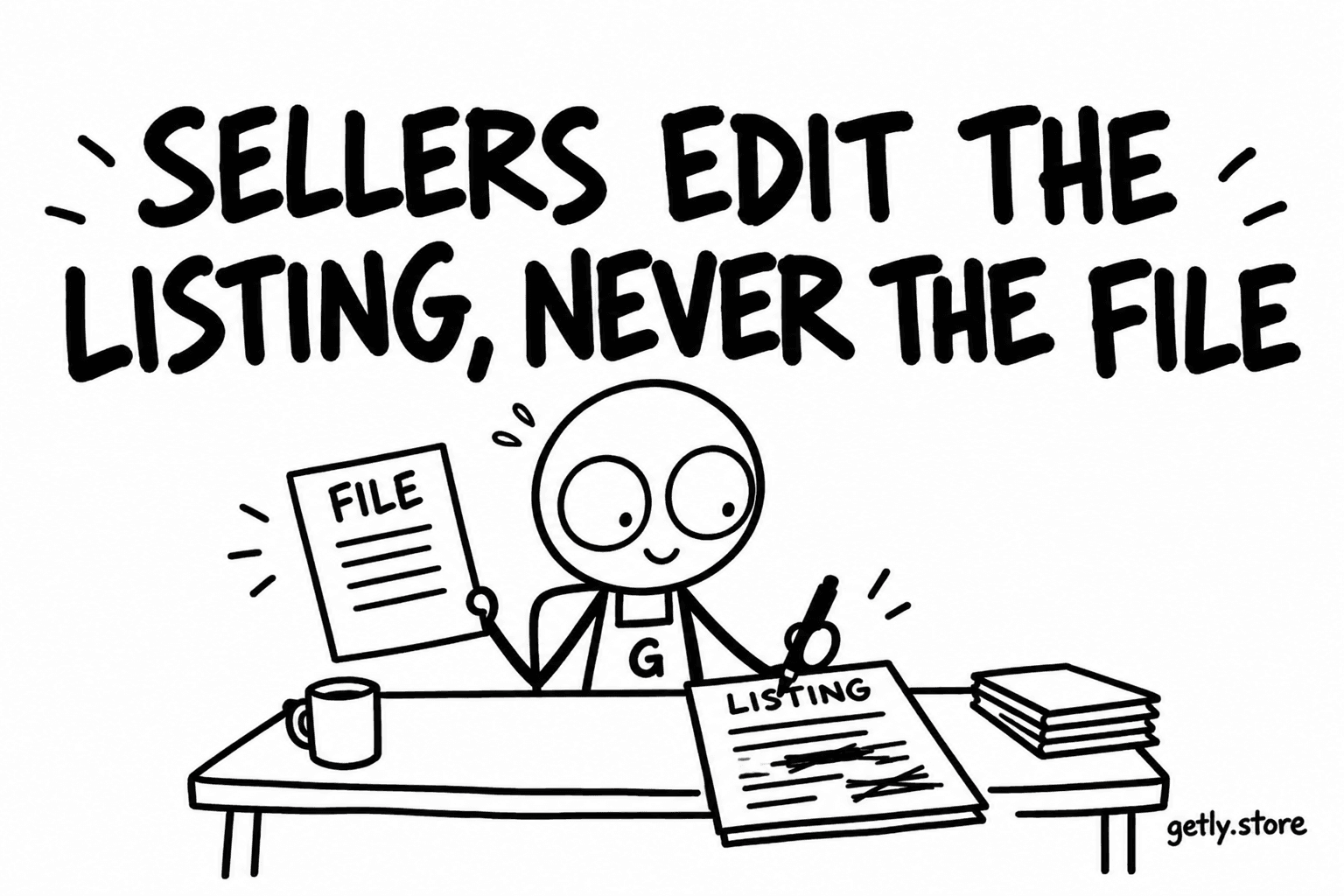
A digital product has two halves: the page that sells it and the file that arrives. We measured how often each half changes after a listing goes live, across the 6,519 active listings in the Getly catalogue on 19 September 2026. The page is revised for months. The file is shipped once and frozen.
The page gets edited, and keeps getting edited
- 89.94% of live listings — 5,863 of them — have been edited at least once since going live. Only 10.06% (656) were published and never touched again.
- 54.27% (3,538) were still being edited more than seven days after publishing, so this is not launch-day tidying.
- The median gap between publishing and the last edit is 14.03 days. At the 90th percentile it is 87.8 days — close to three months of revisions on a page that was live the entire time.
On its own that is a healthy picture. It means the description, the price, the images and the category get treated as things you learn about rather than things you decide once.
The file does not
Now the other half. Counting distinct file version strings attached to a listing:
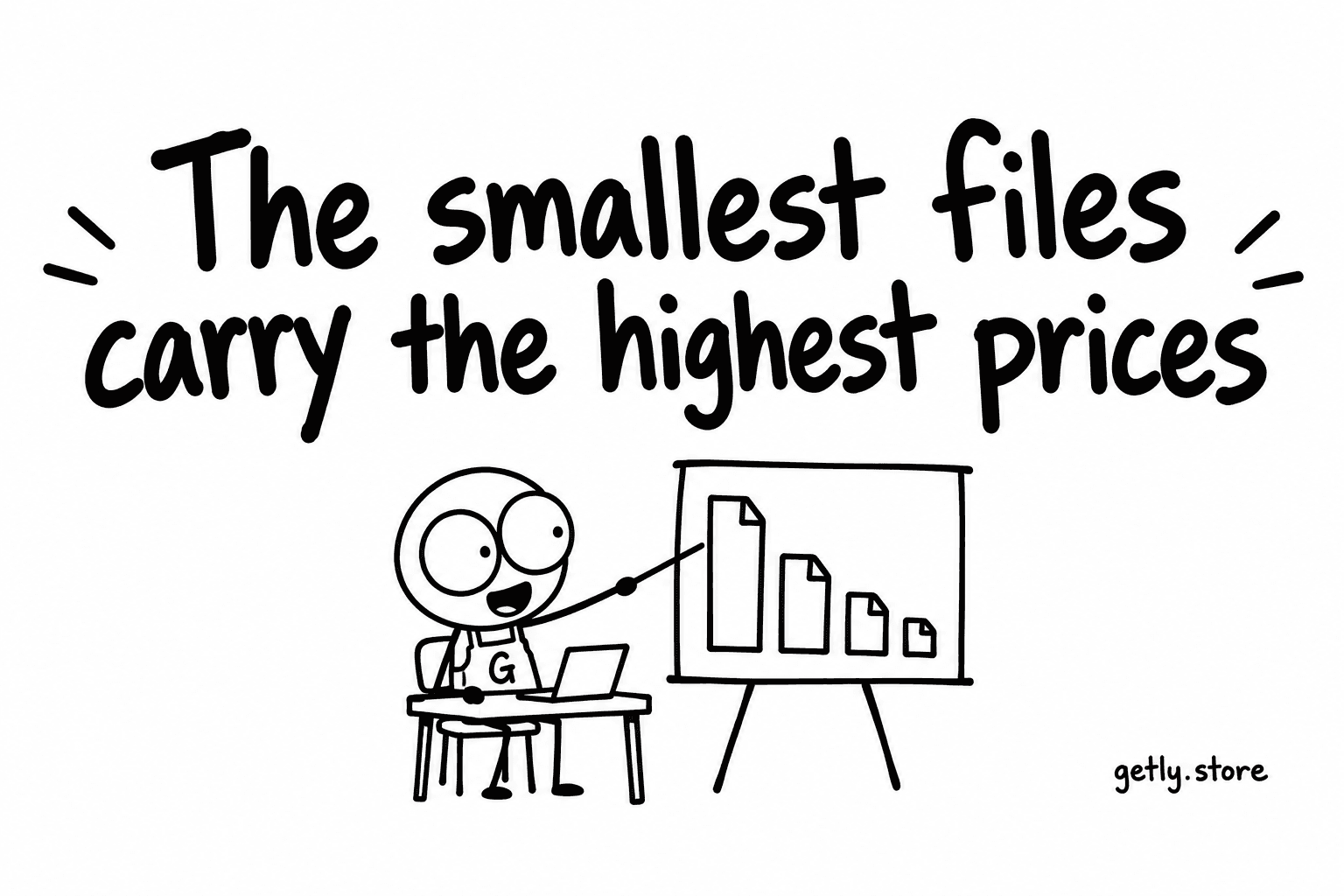
- 9 listings — 0.14% of the catalogue — have ever carried more than one version of their file.
- 922 listings (14.18%) hold more than one file row, but that is nearly always a bundle delivering several assets at once, not a product on its second edition.
So while more than half of live listings were being edited a week or more after launch, fewer than two in a thousand have ever replaced what the buyer receives. Nine listings, in a catalogue delivering 138.5 GB across 9,508 files.
The honest reading comes first
Most of this is not a problem, and saying so matters more than the headline does. A great many digital products genuinely are finished at upload. A set of 40 vector icons is done. A wedding invitation template is done. A photo pack is done. There is no version two of a photograph, and a seller who never touches that file again is not neglecting anything — there is nothing there to neglect.
The ratio only turns into a finding for the products where that is not true, and the catalogue holds plenty of those.
Where a frozen file costs something
Three kinds of product have a shelf life measured in months, and all three are well represented across the 425 populated categories.
Templates for software that ships updates. A Notion dashboard, a Figma kit, a Blender scene, a spreadsheet model. The host application moves and a file built against last year's version picks up small breakages the seller never sees, because the seller is not a new buyer opening it in a clean install.
Prompt packs and model-specific assets. A prompt written against one model and run against its successor produces different output. The description still says what it said in spring.
Anything with a date inside it. A 2026 planner, a tax worksheet, a compliance checklist. These expire on a schedule everyone knows in advance, which makes them the easiest case to handle and the most awkward one to miss.
For these, the 14.03-day median edit gap is doing something slightly uncomfortable: the page keeps getting polished while the thing behind it ages. Someone reading a description revised last week reasonably assumes the file behind it is also from last week.
Ten minutes, quarterly
Decide which kind of product you have, once. If it is genuinely finished, say so on the page. "Made in 2026, no updates planned" is a fact, not a weakness, and it sets the expectation at the point where it matters.
If it is not finished, put a date on the file. A version line in the description and a dated filename cost nothing and tell a buyer what they are getting. They also tell you, six months from now, which of your own products you last touched.
Open your own file as a buyer. Download it from the live listing, open it in a clean install, and check that it still does what the page claims. Nobody runs that check, and it is the only one that catches a file which broke quietly while the page around it was being improved.