 Getly
Getly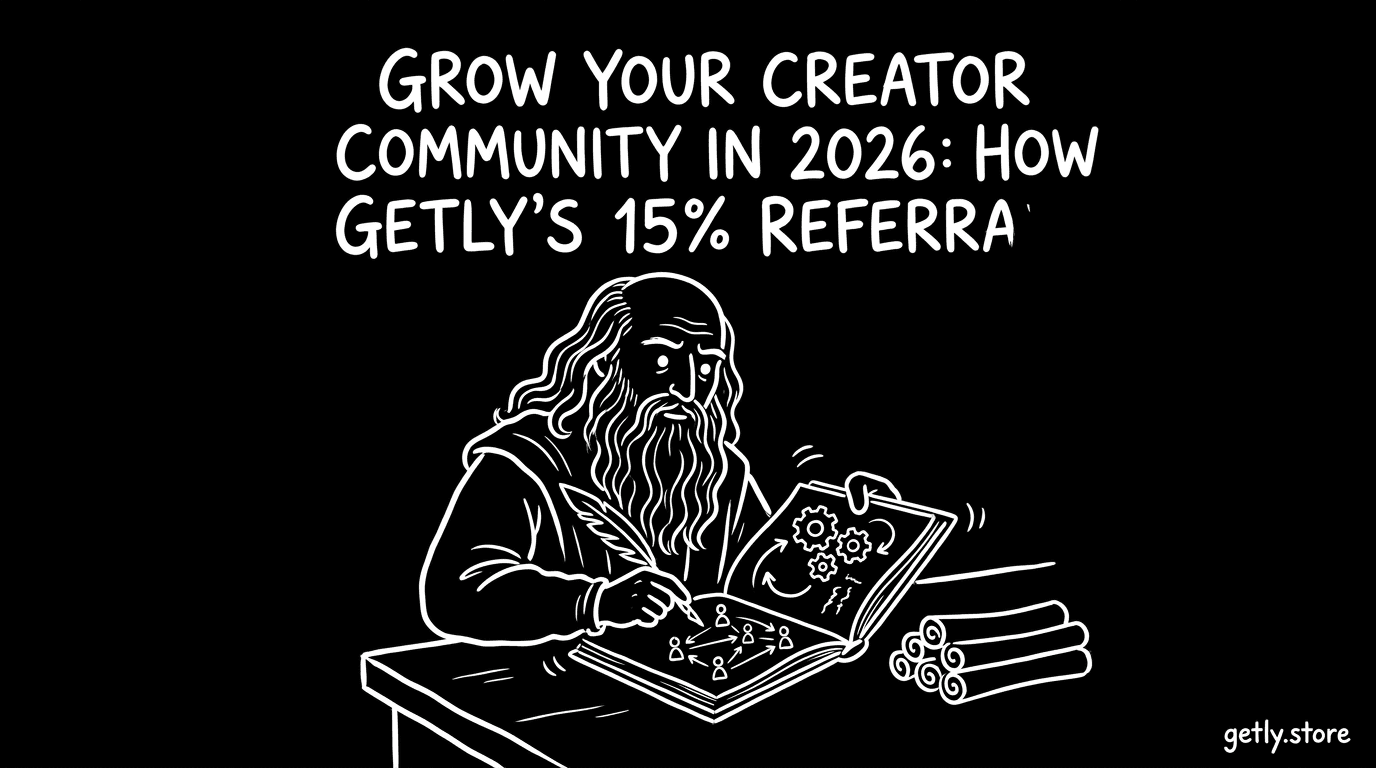
Creators grow fastest when their audience turns into collaborators. A referral program gives you a repeatable way to build that pipeline, reward your network, and increase downloads without begging for attention. In this guide, you will learn exactly how Getly’s 15% referral credit works in 2026 and how to use it for community-driven marketplace growth.
- Getly’s platform-wide referral credits 15% of a referred user’s first purchase to your affiliate balance.
- You get credited when the referred buyer makes a purchase within 90 days of clicking your link.
- Per-product affiliate commission sets the creator rate, while the platform referral credits are separate and tied to the first purchase.
- Community growth works best when you connect the referral offer to a clear starter product experience.
What is a referral program for creators in 2026?
A referral program for creators helps you earn credit when your audience buys through your shared link. In practice, it turns your community into a distribution channel because each recommendation can lead to measurable purchases.
On Getly, creator-to-creator growth happens through two main mechanics: per-product affiliate programs and a platform-wide referral credit for the first purchase. Those two layers support different goals, so you should treat them like separate tools in your creator marketing toolkit.
Pro tip: Use per-product affiliate links when you want people to buy a specific template, preset, or tool. Use the platform-wide referral credit when you want to onboard new community members who will explore multiple categories after their first successful purchase.
How does Getly’s 15% referral credit work?
Getly’s platform-wide referral credit rewards you when someone new makes their first purchase after clicking your referral. In 2026, that credit equals 15% of the referred user’s first purchase.
The referral attribution window gives the program its “momentum.” Getly tracks affiliate attribution with a 90-day cookie window. That means if your referred buyer purchases within 90 days of your click, your referral balance receives the credit.
What counts as a “first purchase”
The platform-wide referral credit applies to a referred user’s first purchase. Your audience does not need to buy the exact same product you promoted. They only need to arrive via your referral link and complete their first transaction within the attribution window.
This matters because creator networks rarely convert on the first recommendation. People often need time to explore. The 90-day window turns “I’ll check it out later” into “it converted later.”
How you should position your referral message
Write your referral posts to reduce decision friction. New buyers hesitate when they think they need to commit to the “right” product immediately. Your job is to make the first purchase feel safe, clear, and easy to start with.
Use a simple promise: a concrete outcome, plus an entry-level item that matches their current skill level. For example, you can point first-time creators to a small, low-risk resource rather than asking them to jump into advanced workflows.
Success pattern: Creators who grow their community faster share “starter wins.” They recommend one product that delivers a quick result, then invite buyers to explore deeper collections after the first purchase.
What is creator network building with a community-driven marketplace?
Creator network building means turning your followers into a connected group that shares workflows, resources, and product recommendations. A community-driven marketplace grows when creators consistently bring qualified buyers, and buyers return because they trust the guidance.
Getly’s structure supports this loop: creators sell digital goods, buyers discover resources across categories, and your referral link measures when your audience converts. The platform benefits from new buyers. You benefit from the referral credit and the reputation you earn when your recommendations work.
Why marketplaces reward relationships
Digital goods convert on clarity. Buyers need proof that a file works, a template fits their workflow, or a preset speeds up results. When you share your own “before and after” outcomes, your community reduces perceived risk.
That is why network building beats one-off promotions. If people trust your taste, they click your link for the next problem you solve, not just the current product.
Where referral-driven growth fits in a funnel
Referral programs sit early and late in the funnel. Early, they bring new buyers to the platform. Late, they re-activate existing buyers who want the next upgrade.
Build a two-step community motion. First, use the platform-wide referral credit to onboard new creators who purchase their first item. Second, switch to per-product affiliate promotion to monetize when they need a specific upgrade.
| Goal | Referral mechanic | Best for |
|---|---|---|
| Onboard new members | Platform-wide 15% referral credit | First purchase inside the 90-day attribution window |
| Monetize a specific need | Per-product affiliate program | Templates, presets, tools matched to one workflow |
| Scale with trust | Repeat recommendations over time | Community-driven marketplace growth strategies |
How to promote a referral link without annoying your audience
You grow your creator network when you share referral links with context, not with copy-paste sales energy. People click when they understand what they get and why it matters to their next project.
Start with a workflow story. Explain the moment you needed the asset or tool, show the result, then include your referral link as the fastest path to recreate that outcome.
Use content formats that map to digital product buying
Digital goods do not ship in a box. They ship as results. So you should present them as outcomes: a 10-second transformation, a screen recording, or a before/after clip.
These formats reduce “guessing.” Viewers can see the quality. They can also predict compatibility with their tools and pipeline.
- Text-to-visual proof: show the animation and export settings you used.
- Preset sanity check: demonstrate the exact edit you apply to a timeline.
- Template walkthrough: show how you customize sections, fonts, and layers.
- Tool demo: record the conversion process step-by-step.
- Product description teardown: explain what you would search for if you were new.
Promote with “starter product” sequencing
A referral strategy performs best when you guide buyers through a learning curve. New creators need a low-friction first win, then a targeted second purchase after they understand what to ask for.
Here is a practical starter sequence you can adapt across niches. You match the content to the buyer’s goal, not your catalog:
- Choose an onboarding-friendly product in your niche.
- Explain the outcome in one sentence, then show 20 to 30 seconds of the workflow.
- Invite the referral click as “the quickest way to get the same starting point.”
- Follow up later with one specific upgrade product based on what they attempted.
Common mistake: Don’t blast a referral link without showing the result. If you only post a URL, viewers treat it as spam and ignore future posts, even when your recommendations improve.
Which digital products convert best for referrals?
The best referral-friendly products feel like shortcuts to an outcome, not like chores. When buyers see immediate value, they justify their first purchase faster, and the referral credit can trigger within the attribution window.
Pick products that match your audience’s current skill level and tool stack. Then package them into a clear “first win” offer.
Concrete product ideas by creator niche
Here are examples you can use as the anchor for your referral onboarding content. Each one supports a different path into creation, so choose the one that best fits your community.
- AI motion and face-free video: “Product Title AI Text Animation Mastery: Create Viral Videos Without Showing Your Face” can help newcomers create short-form content quickly.
- Editing presets: “99+ Alight Motion Preset XML” suits creators who want speed while staying consistent across edits.
- Copy and listings: “AI Product Description Generator — Bulk GPT Tool” targets creators who want to publish faster with better product text.
- 3D material pipeline: “Unreal to Unity Material Converter” fits creators who need reliable conversion in a real production workflow.
- Design storytelling for niche buyers: “Perfume Blueprint” can work well for creators who sell, brand, or market in specialized categories.
- Animation and workflow templates: “Escape the Paycheck Trap” can become a community “starter mindset” item paired with a practical build.
- Specialized asset categories: “Manny Post Process logic corrective joints - file Maya 2024” serves a narrower but high-intent buyer base.
Some categories also require clear audience targeting. For example, “NSFW video” works best when your community already understands the context and the platform where they will use it.
Make one referral promise per post
Each referral post should answer one question: “What will I achieve after I buy this?” If your post tries to cover five goals, buyers feel uncertain and delay the first purchase.
Keep your promise measurable. For a preset, promise a style consistency. For a converter, promise a pipeline step. For an AI description tool, promise publishing throughput.
Tip: Pair your referral with a “search phrase” your buyer would use. If you tell them what to type, you reduce their uncertainty and make your product feel easy to find later, too.
What marketplace growth strategies tie to referrals?
Marketplace growth strategies work best when you treat referrals as an acquisition channel, not just a rewards program. The referral credit pushes conversions for the first purchase, which then increases marketplace activity and content circulation.
Use the 15% first-purchase credit as a lever for repeatable community onboarding. Then reinforce retention with curated recommendations and learning paths.
Run a “new buyer” onboarding loop
New buyers behave differently than seasoned buyers. They need guidance on what to buy first, how to use it, and how to avoid mismatched files.
Create a simple onboarding loop inside your community. You share one product, one short tutorial, and one follow-up question. When the buyer responds, you recommend the next step based on their answer.
- Week 1: share the first win product and a short demo.
- Week 2: ask what they tried and what broke.
- Week 3: recommend one compatible upgrade resource.
- Week 4: invite them to share their result with their own audience.
Use A/B testing on your recommendation angle
You can improve conversion rates by testing how you frame the same asset. Change one element at a time: the hook, the outcome promise, or the demo length.
Get consistent data by comparing posts that share the same product but target different angles. Example angles you can test: “fastest setup,” “best for beginners,” or “clean export workflow.”
Pro result to aim for: When your first post drives enough clicks, your community members often return for your next recommendation. That repeat behavior fuels both referral-driven onboarding and later per-product affiliate conversions.
FAQ: Referral program for creators and community growth
How long does the 15% referral credit attribution last?
Getly credits the platform-wide referral when a referred user makes a purchase within 90 days of clicking the affiliate link. That window determines whether your referral balance receives the credit for the referred buyer’s first purchase.
Does the 15% referral credit require the same product I promoted?
No. The platform-wide referral credit applies to the referred user’s first purchase after they click your referral link. The referred buyer can complete their first purchase on any product, not just the one you named.
Can I combine platform referrals with per-product affiliate commissions?
Yes. Getly supports per-product affiliate programs where sellers can set commission rates on specific products, and it also supports the platform-wide referral credit for first purchases. Treat them as two layers: onboarding with the referral, then monetizing with targeted product recommendations.
Do buyers need to submit anything for referrals to work?
No special buyer submission is required for referral attribution to function. The attribution works through the affiliate click tracking within the 90-day cookie window.
How do I start growing my creator network with referrals?
Start with one clear starter product recommendation that delivers an immediate outcome. Share a short demo, keep your referral message contextual, and follow up with a question that helps you recommend the next compatible item.
Key takeaways for creator network building
If you want a referral program for creators that actually builds community, focus on onboarding. In 2026, Getly’s platform-wide 15% referral credit rewards your recommendations when a referred user makes their first purchase within 90 days of clicking your link.
Then use community-driven marketplace growth strategies to keep momentum: sequence starter wins, test your recommendation angle, and build a learning loop that turns buyers into future promoters.
- Getly credits 15% of a referred user’s first purchase to your referral balance.
- Attribution runs for 90 days after your link click.
- Per-product affiliate programs and platform referrals work together when you match recommendations to buyer stages.
- Conversion rises when you show outcomes, not just links.
If you want to build your creator network with a consistent referral pipeline, pick one starter product, post a real workflow demo, and invite your audience to click through with a clear promise. That single post can become the start of a community flywheel.
Getly Sellers Team