 Getly
Getly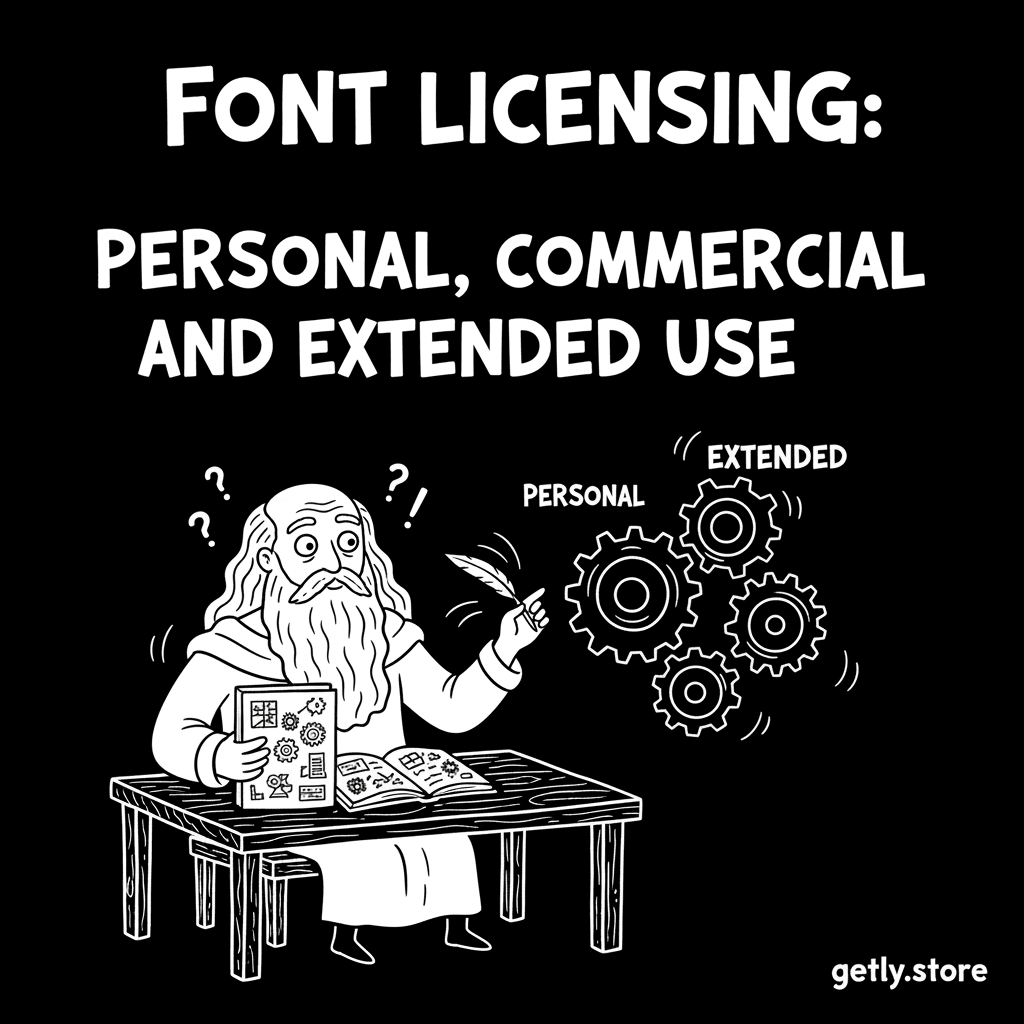
By the end of this guide, you can match a font license to a real project, check the terms that control your use, and spot a license gap before you publish. You can also explain what personal, commercial, and extended licenses usually cover without relying on the label alone.
Start with the project, not the license label
Write down what you plan to make, who will see it, and how money connects to it. A birthday invitation for your household creates a different licensing question from a paid ebook, a client logo, or a product you sell.
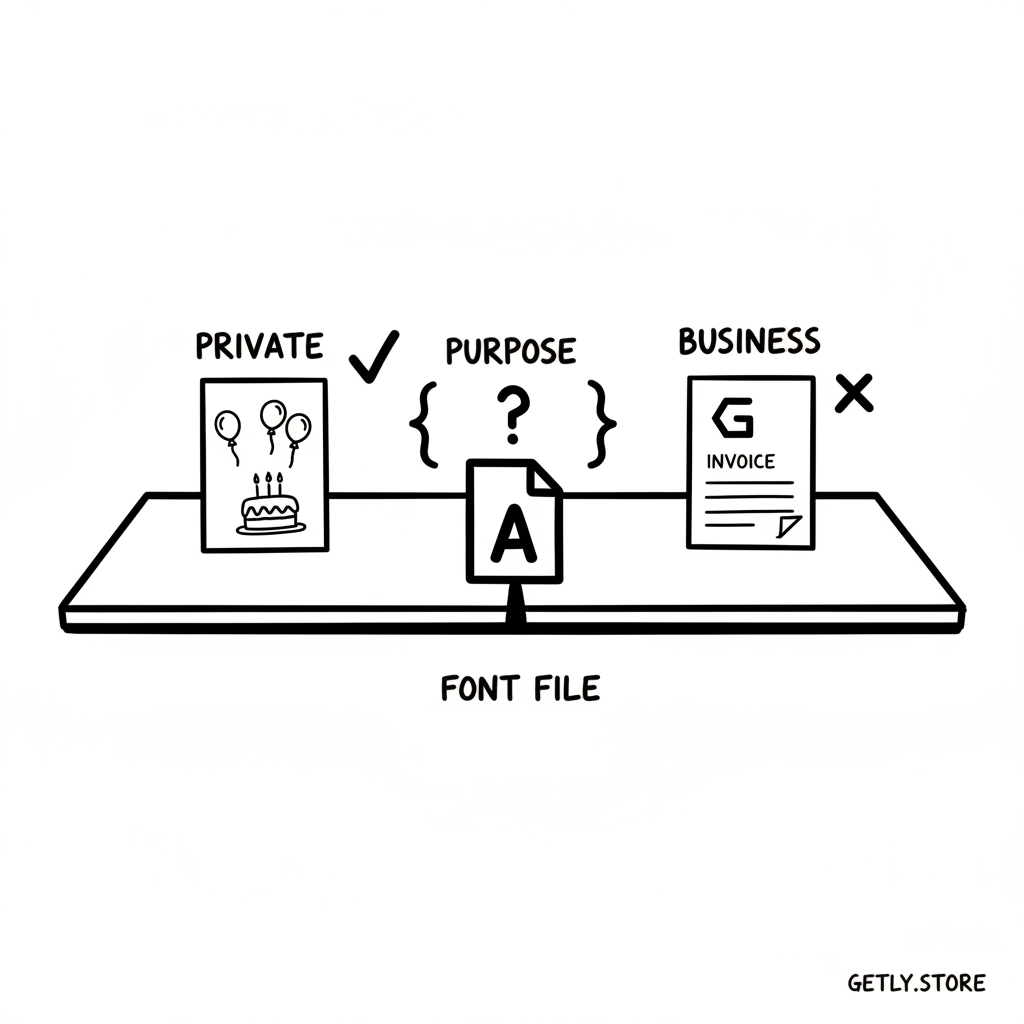
- Personal use: A private, non-business project such as a family invitation or a school assignment.
- Commercial use: Work that supports a business, promotes a service, earns revenue, or serves a paying client.
- Extended use: A broader permission set for higher-volume production, resale products, templates, apps, games, or other uses that the standard commercial license limits.
These labels describe common market practice, not a universal legal system. A font creator or foundry writes the actual rules in the license agreement. Two fonts can use the same label and grant different rights, so treat the license text as the controlling document.
Name the deliverable
Record the exact item, such as a logo, poster, website, ebook, template, or app.
Name the audience
Decide whether you, a client, a buyer, or the public will receive or access the finished work.
Name the distribution
Count the places and formats involved, including print, web, video, downloads, and editable files.
Personal licenses: keep the use private
A personal license usually covers projects that do not promote a business, sell a product, or generate income. You might use the font for a personal journal, a party invitation, a school presentation, or artwork that you keep for yourself.
A personal license usually does not cover a logo for your side business, a monetized social post, a wedding invitation service, or a printable you sell online. A nonprofit, student, or small business does not automatically qualify for personal use. The project’s purpose controls the analysis.
Check the license for limits on the number of devices and people who may install the font. If a designer creates a personal invitation for a friend, the designer may need a commercial license because the designer provides a paid service, even if the friend will use the invitation at a private event.
Commercial licenses: use the font in business work
A commercial license usually allows you to create business-facing designs with the font. Common examples include brand graphics, advertising, packaging, client work, social media artwork, printed brochures, and finished digital documents.
Commercial permission often covers the finished artwork, not every way you might distribute the font itself. You can usually send a flattened PDF or image to a client or customer. You may not be allowed to send the original font file, include it in an editable template, or let a customer edit text with the font.
Review four details before you rely on a standard commercial license:
- Users: Does the license cover one designer, a team, or a named business?
- Media: Does it cover print, websites, video, social platforms, and digital documents?
- Scale: Does it cap impressions, copies, sales, page views, or physical products?
- Embedding: Does it permit the font inside a PDF, website, app, game, or other file?
For example, a commercial license may cover an ebook cover and a flattened promotional image. It may require a separate web license for live website text. If you are preparing an ebook design, check both the exported format and the editable source file before delivery.
Extended licenses: ask what extra use you need
An extended license usually addresses a use that the standard license limits or excludes. The extra permission might cover a large production run, physical merchandise, resale templates, digital products, app or game embedding, or a larger group of font users.
“Extended” does not mean “everything allowed.” One foundry may use the term for merchandise, while another may use it for app embedding or a high number of installations. Read the specific clause that matches your project instead of buying the broadest-sounding option by habit.
Look for these triggers:
- Resale: You sell a template, printable, design asset, or product that includes text the buyer can change.
- Merchandise: You put the font into goods such as shirts, mugs, posters, labels, or packaging for sale.
- Embedding: You place the font file inside software, a game, an app, a website, or an interactive document.
- Scale: You produce quantities or reach audiences above the standard license limit.
- Team access: More employees, contractors, offices, or client organizations need to install the font.
A logo can create a separate question. Many licenses allow you to use a font to draw lettering in a logo, but they may restrict distributing the font file or claiming exclusive rights to the typeface. Keep the original font private and confirm that the license supports trademark or logo use if your brand needs registration.
Do
- Save the license with your project records.
- Buy coverage for each separate use the agreement identifies.
- Deliver outlined or flattened artwork when the client does not need editable text.
Don't
- Assume a commercial license includes web, app, or template embedding.
- Share the font file with a client or contractor without checking user rights.
- Call a resale product personal because you made it at home.
Apply the license across a real workflow
Creators can prevent most licensing problems by checking the font at four points: purchase, production, delivery, and publication. Each checkpoint catches a different kind of mistake.
- At purchase: Save the font name, creator, receipt, license text, and purchase date. Record the exact project you had in mind. This record helps you compare the license with later changes.
- During production: Keep the font files in a controlled project folder. Limit installation to the people the license covers. Ask contractors to use their own licensed copies when the agreement requires individual seats.
- At delivery: Separate finished exports from editable working files. A client may receive a PNG, PDF, or outlined SVG while the font remains with the licensed designer.
- Before publication: Check every channel. A printed poster, a web page, a downloadable template, and an app can trigger different permissions even when they use the same design.
Font conversion deserves extra care. Converting a desktop font into a webfont, app asset, or other format does not create permission. Conversion changes the file, not the license. Use a separate web, app, or embedding license when the agreement requires one.
Client work also needs a clear handoff. Tell the client whether the deliverable includes only finished artwork or includes font files and editable files. If the client needs ongoing edits, price and obtain the license that gives the client the required access. Do not transfer your copy unless the license permits transfer.
Common mistakes that create licensing problems
“I paid for the font, so I can use it anywhere.” Payment usually grants a license, not ownership of the typeface or unlimited rights. The agreement sets the boundaries.
“The client owns the logo, so the client owns the font.” A client can own the finished logo while the designer or client keeps a separate license to the font software. Those rights do not merge automatically.
“I converted the letters to outlines, so the license no longer matters.” Outlining can reduce the need to send the font file, but it does not erase restrictions on creating the artwork, using the font in a logo, or selling the result.
“A free font needs no review.” Free can describe the price, not the permission. A free font may allow personal use but require a commercial license, prohibit redistribution, or require attribution.
“One license covers my whole team.” Some agreements count installations, seats, companies, or locations. Count the people and devices that need access, then compare them with the stated limit.
When the wording leaves a business-critical use unclear, pause before publication and seek a written interpretation from the font creator or licensing authority. Keep that response with your project records.
A practical decision rule
Choose personal use only when the project stays private and noncommercial under the agreement. Choose commercial use when a business, client, paid service, promotion, or revenue-generating product enters the picture. Choose extended coverage when you need resale, merchandise, embedding, higher scale, or broader access and the standard terms do not include it.
Then check the exact license for users, media, quantity, embedding, transfer, and resale. That short review gives you a defensible workflow and tells you what to buy before the font reaches a customer, client, website, or product.
Frequently asked questions
Can I use a personal font license for a business logo?
Usually not. A business logo supports a commercial activity, so you generally need a commercial license that permits logo use. Check the creator’s license for any trademark or logo restrictions.
Does a commercial font license allow website use?
Not always. A desktop commercial license may cover artwork created for a website but exclude live webfont embedding. Check for a separate web license or an explicit web-use clause.
Can I send a font file to my client?
Only if the license permits sharing or transfer and covers the client as an authorized user. A flattened PDF, image, or outlined vector often avoids sending the font file, but the project still needs the correct creation rights.
Do I need an extended license for merchandise?
You may need one when you sell products that feature the font, especially at a stated quantity or when the license limits physical goods. Read the merchandise and production clauses before manufacturing.
What does an extended font license cover?
The term varies by creator. An extended license may cover resale templates, merchandise, app or game embedding, higher production limits, or more users. The individual agreement defines the permission.