 Getly
Getly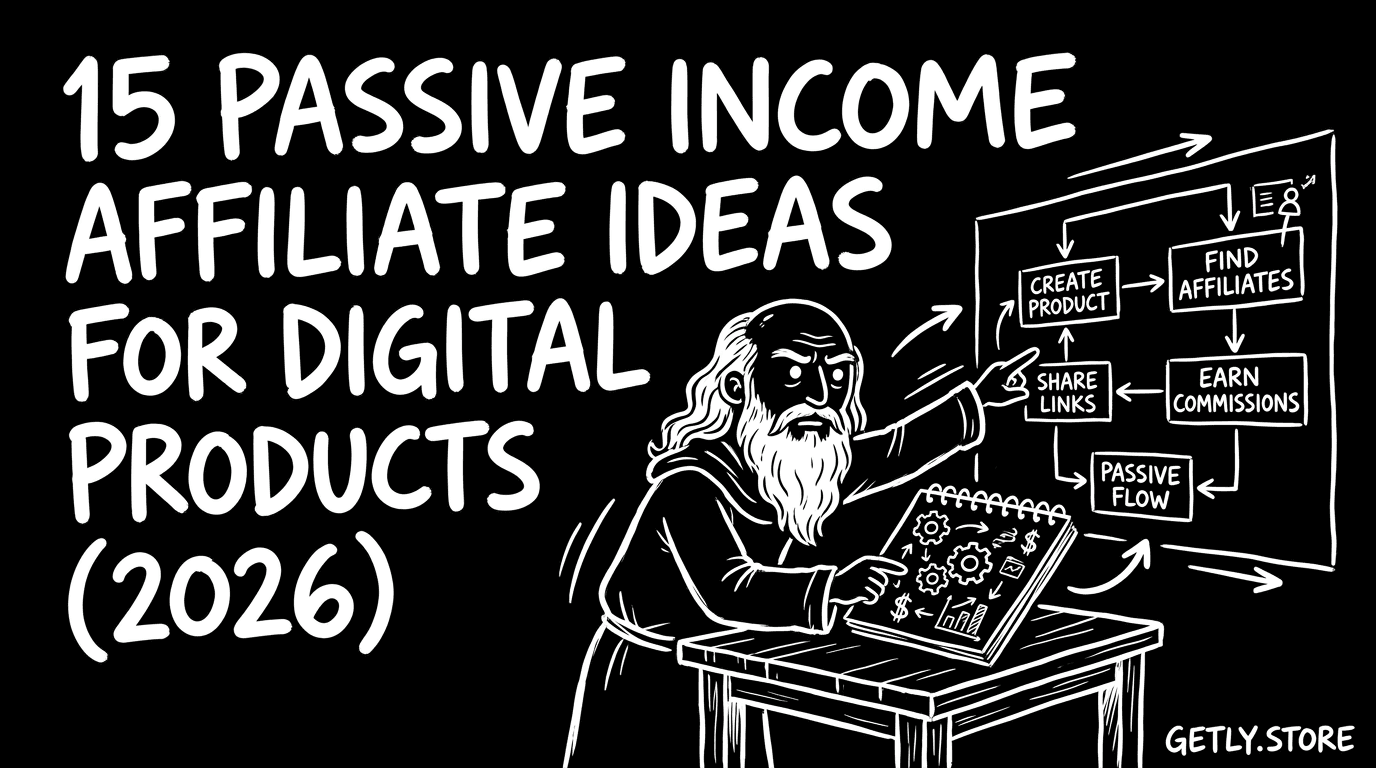
Affiliate marketing for creators can look effortless on the outside, but the “passive” part comes from smart product choices, repeatable distribution, and tracking that doesn’t break after the first week. In 2026, digital product affiliate programs reward anyone who builds a library of evergreen content and places offers where buyers already search.
This guide gives you 15 practical affiliate marketing ideas for digital products that can compound over time. You will also learn how to package your recommendations into creator monetization strategies that fit real audience behavior, not generic tactics.
- “Passive income” works best when you reuse evergreen content assets and pair them with relevant digital product affiliate programs.
- Creators convert faster when they match offers to clear buyer intent (planning, templates, tracking, setup, optimization).
- Use multi-angle promotion: SEO posts, playlists, tool lists, communities, and comparison pages.
- Pick one niche workflow and build a repeating series (calendar, profile kit, launch kit, prediction tracker, etc.).
- Track conversions with a stable attribution window so you can improve what already performs.
What is affiliate marketing for creators in 2026?
Affiliate marketing for creators means you promote digital products and earn a commission when someone buys through your referral link. In 2026, the winning pattern looks less like one viral post and more like a steady system: content that answers questions plus offers that solve a specific job-to-be-done.
For creators, the best digital product affiliate programs connect to a repeatable content format. For example, if your audience asks for “growth,” you promote profile optimization or posting calendars. If your audience asks for “operations,” you promote Notion-based systems or templates. When your content matches the buyer’s next step, conversions rise.
What “passive income digital products” really means
Passive income from digital products usually means you publish once, then earn repeatedly as long as your content stays discoverable and the product remains relevant. You keep updating your pages when platforms change, but you do not start from zero each month.
That is why affiliate marketing for creators works best with evergreen assets: guides, checklists, templates roundups, and use-case walkthroughs that remain useful beyond a single trend cycle.
Why attribution timing matters
Digital purchases take time to decide, especially for templates and trackers. You need attribution that credits you when a buyer returns weeks later. A common approach in affiliate ecosystems uses a 90-day attribution window for referred buyers, which helps you earn from “delayed buy” behavior.
When you design your content funnel, build for the buyer journey, not the first click.
How to choose digital product affiliate programs that convert?
You convert when you promote products that match buyer intent and reduce uncertainty. In practice, that means you choose digital product affiliate programs where the product outcome feels clear: planning, scheduling, optimization, tracking, or a ready-to-use kit.
In 2026, creators increasingly buy because they want time savings and fewer mistakes. Your affiliate pitch should reflect that by emphasizing what the buyer gets immediately (files, workflows, templates, and instructions) rather than generic promises.
Match the offer to the buyer’s job-to-be-done
Pick affiliate products that solve a single workflow. Buyers trust recommendations that map to a moment: “I need a content calendar,” “I need a profile plan,” “I need a launch deck,” or “I need a tracker for predictions.”
When you align offers to job-to-be-done, your content becomes a guide, not an ad.
Test commission isn’t the only lever
Commission rate matters, but conversion beats payout math. A smaller commission on a highly specific product can out-earn a higher commission on something vague. You should prioritize product clarity, buyer confidence, and how quickly the buyer can start using it.
When you test ideas, measure not just clicks, but how often clicks turn into purchases.
Pro tip: Build your affiliate content around the moment of decision. A “best calendar for X” post converts better than a broad “how to grow” post when your audience already feels the need.
How to build creator monetization strategies with evergreen affiliate content?
Creator monetization strategies work when you turn your knowledge into assets that rank, get shared, and stay useful. Evergreen affiliate content does not rely on constant virality. It relies on search intent and repeatable formats.
In 2026, the easiest evergreen formats for digital products include templates roundups, tool comparison pages, and step-by-step “setup in 20 minutes” guides. Each one gives your audience a next action and makes your affiliate link feel like a shortcut.
Use a content “series” approach
Create a repeating series tied to a workflow your audience already follows. For example, if you serve growth-focused creators, publish monthly posts like “Profile refresh checklist,” “Bio rewrite prompts,” and “7-day posting plan.” Each post can naturally recommend a relevant kit or bundle.
When you structure your strategy like a series, your content library becomes a self-reinforcing funnel.
Build comparison pages that buyers actually want
Comparison pages work because buyers want to reduce risk. You can compare different use cases, not brand names. “Beginner vs. advanced calendar” or “Tracker for predictions vs. tracker for standings” gives readers a clear decision path.
Keep the comparison factual and include what changes after purchase: file type, setup time, and what the buyer uses weekly.
Create “starter” and “power user” recommendations
Digital buyers often start small, then upgrade after they see results. You should build two tiers of recommendations: a quick starter and a deeper bundle.
That way, your audience can choose a product that fits where they are in their journey, while you earn from both first-time buys and later upgrades.
15 passive income affiliate ideas for digital product affiliate programs
You can turn affiliate marketing into a compounding system by designing distribution around repeatable buyer needs. The following 15 passive income affiliate ideas focus on digital product affiliate programs that align with clear outcomes.
Use them as a menu. Pick 3 ideas to start, publish consistently for 6 to 8 weeks, then double down on what brings purchases.
1) “Calendar + posting plan” niche pages
Many buyers search for content calendars when they feel behind. Build a landing article like “Football or soccer content calendar for matchweek” and connect it to a ready-to-use bundle.
SOCCER / FOOTBALL SOCIAL MEDIA CONTENT CALENDAR BUNDLE Complete Digital Product Package (Ready for Sale) fits well because the promise matches the weekly planning job.
2) Profile optimization “before you post” guides
Creators decide to buy when they notice low conversion from profile to follow. Write a checklist-based post: “Turn your profile into a landing page” and include your affiliate offer at the exact step where they need a structure.
Social Media Growth Accelerator Bundle Premium Profile Optimization Kit works naturally for this intent because it targets optimization planning.
3) Instagram or short-form growth workflow breakdowns
“Rapid Instagram profits” style products often perform when you translate them into a weekly routine buyers can follow. Create content around the routine, then recommend the product as the organized shortcut.
Rapid Instagram profits pairs well with posts like “My 7-step weekly Instagram routine” and “what to do before you chase reach.”
4) Notion operations templates for builders
Notion templates convert because they reduce setup friction. You can teach a simple workflow, then recommend an OS-style template that makes the workflow feel complete.
FactoryOS™ Starter- Lightweight MES-Style Industrial Performance OS in Notion fits articles about “industrial performance tracking in Notion” and template-based planning.
5) Notion “consultant setup” mini-courses
If you write for consultants or operations consultants, create posts like “How to onboard clients with a repeatable MES-style system.” Then recommend a consultant-oriented version of the template.
FactoryOS™ Consultant - Lightweight MES-Style Industrial Performance OS in Notion matches that client onboarding story.
6) Operations automation for teams: “lightweight MES” explainers
Operations people often ask what a “lightweight MES-style OS” means. Publish a glossary-style guide plus an example implementation outline, then add your affiliate product as the concrete blueprint.
FactoryOS™ Plant - Lightweight MES-Style Industrial Performance OS in Notion fits best when you frame the guide as “plant-level performance tracking.”
7) Web3 founder launch kit walkthroughs
Web3 founders need materials that help them move faster. Create a guide titled like “Launch a Web3 product with a ready-to-present kit” and show what each file or section solves.
Web3 Founder Launch Kit A complete, ready-to-use toolkit for Web3 founders to plan and present a launch professionally. aligns with the exact “ready-to-use” promise.
8) “What to include in a launch” checklists
Turn your launch knowledge into a checklist article and place the kit at the point where readers want to avoid missing sections. This content stays relevant across quarters.
Make it action-focused: “If you have tokenomics, include X. If you have a roadmap, include Y.” Then connect the checklist to the kit.
9) Sports season trackers for evergreen engagement
Sports prediction trackers convert when the content creator community already talks about match outcomes and standings. Build an evergreen page about “how to track betting and predictions” with a clear weekly use plan.
WORLD CUP 2026 BETTING & PREDICTION TRACKER Premium Google Sheets Digital Product suits this format because it turns speculation into a repeatable tracking workflow.
10) “Template of the month” email series
Affiliate buyers often come from email because emails reach people when they already trust you. Publish a monthly roundup: one template, one use-case, and one “how to apply today” example.
Your passive income starts when old emails keep sending and new subscribers get an archive they can browse.
11) YouTube tutorial chapters that lead to downloads
Record tutorials that teach the outcome, not the product itself. Add chapters like “set up the tracker,” “build the calendar,” or “create the profile plan,” then mention your affiliate offer in the description.
When viewers search later, your affiliate link stays tied to the exact step they want.
12) Community posts that answer specific “which one should I buy?” questions
Community content works when you answer a recurring question with structure. Instead of “here is my link,” write “If your goal is A, use this. If your goal is B, use that.”
Then add one relevant product recommendation for each goal.
13) “Tool stack” posts for creators
Creators want a stack: planning tool, posting calendar, optimization checklist, and tracking method. Write a “stack for weekly execution” post and include your affiliate links where the tools fit.
Even if you only publish once, the post can earn steadily because readers reference it when they build systems.
14) Niche landing pages for search intent
Make small landing pages that focus on one intent. Examples: “Football soccer content calendar for matchweek,” “Profile optimization kit for growth,” or “Web3 founder launch kit for presentations.”
These pages stay targeted and make your affiliate link feel like a precise solution.
15) “Case study” style walkthroughs
Turn your own workflow into a mini case study: what you started with, the process you followed, what changed after a week, and how the product helped you execute faster.
Readers trust case studies because they show decision points and outcomes. Keep the story grounded in concrete steps.
Success pattern: The best passive income affiliate pages bundle three elements: a specific buyer goal, a step-by-step workflow, and one clear product recommendation that matches the workflow.
What conversion tactics make digital product affiliate marketing “stick”?
Affiliate marketing sticks when you remove doubt and make the next step easy. Your audience should understand what they get, how they use it, and why your recommendation fits their situation.
Digital product affiliate programs reward clarity. Your job is to translate “this template is useful” into “here is how you use it in the first 10 minutes.”
Optimize for buyer confidence, not just clicks
Use language that explains setup and expected time. Mention what the buyer downloads or how the content works inside the workflow. Include examples, screenshots, or short walkthrough notes.
Also, show who the product works for. A product that targets consultants converts better when you state “for consultants who need repeatable client onboarding” rather than “for everyone.”
Use a simple funnel: guide, then recommendation
Design your content so readers follow a path. Start with the problem, show the workflow, then place the product at the step where it saves time.
When you do this consistently, you reduce cognitive load. That pattern increases the chance that readers buy through your affiliate link.
Write “handoff” sentences around your affiliate offers
Replace hype with handoff language. Examples include “If you want the same structure ready to use, start here,” or “Use this kit if you want a complete launch presentation workflow.”
This style keeps your content helpful and makes the affiliate link feel like the logical next step.
| Idea | Best for | Evergreen angle | What you link |
|---|---|---|---|
| Content calendar pages | Sports and creator brands | Matchweek planning each season | Soccer/football calendar bundle |
| Profile optimization guides | Growth-minded creators | Profile refresh cycles | Growth accelerator profile kit |
| Workflow tutorials | Notion and ops builders | Repeatable systems | FactoryOS starter/plant/consultant |
| Launch kit walkthroughs | Web3 founders | Launch prep across quarters | Web3 founder launch kit |
| Prediction tracker content | Sports audiences | Game-week prediction habits | World Cup 2026 tracker |
Common mistake: Don’t paste affiliate links into low-value posts. If your article teaches nothing and offers nothing specific, readers skip buying. Build the workflow first, then recommend the kit or tracker as a shortcut.
How to promote digital products without killing your credibility?
Credibility drives long-term affiliate sales. People buy when they trust you to recommend products that actually match their use case. In 2026, creators avoid “link dumps” and instead publish structured content that helps readers decide.
You also protect trust by being specific. Mention who the product fits, what stage of progress it supports, and what the buyer can do immediately after purchase.
Use “stage-based” recommendations
Stage-based recommendations sound like: “If you need a ready-to-use system now,” “If you run client onboarding,” or “If you want weekly matchweek structure.” These labels make your affiliate content feel like guidance.
They also prevent you from recommending an advanced kit to beginners who will churn quickly.
Write honest, workflow-focused reviews
Even when you do not claim personal results, you can review the product based on its structure and how it supports a workflow. Mention how it reduces planning time, organizes files, or standardizes execution.
When you keep reviews grounded in practical use, readers treat them as decision support.
Bundle your recommendations across formats
To grow passive income, you need distribution variety. Publish blog-style guides, short tutorials, and community answers that all point back to the same core resource.
When multiple channels reinforce the same workflow, your affiliate sales compound because buyers encounter you at different decision moments.
How Getly supports digital product affiliate workflows (when relevant)?
Getly supports digital product affiliate programs with platform-level tracking and referral attribution. If you already run creator monetization strategies, affiliate links and commissions help you turn content into repeatable revenue without changing your core publishing habits.
Getly also includes tools that reduce friction for creators selling the digital products you recommend, like bundles, multi-license tiers, reviews with verified purchase flags, and direct messaging between buyers and sellers for questions.
Affiliate attribution that helps delayed purchases
Affiliate attribution commonly uses a 90-day cookie window. That matters because buyers often research for weeks before buying digital templates or kits. When your content remains evergreen, the referral credit window gives you a fair chance at sales.
For creators, that means you can publish once and still earn when the reader comes back later.
Digital delivery and refund handling matter to trust
Affiliate links convert better when buyers know they will receive the file and that refunds follow a predictable policy. Getly uses a default 30-day refund window unless a seller configures a different window, with admin approval for refunds.
Even as an affiliate, you benefit indirectly because smoother buyer experiences reduce chargeback anxiety and improve purchase confidence.
- Pick one workflow and build evergreen affiliate content around it: calendars, trackers, templates, kits.
- Write stage-based recommendations so beginners do not buy power-user products.
- Publish content that teaches the setup, then recommend the digital product at the exact step it saves time.
- Use structured comparison and checklist formats to reduce decision friction.
- Design for delayed purchases using an attribution window like 90 days.
FAQ: digital product affiliate programs and passive income ideas
How do I find the best digital product affiliate programs?
Choose programs where the product outcome matches a specific buyer intent, like “content calendar,” “profile optimization,” “launch kit,” “ops template,” or “prediction tracker.” Then confirm your content can teach a workflow around that intent, not just describe the product.
That pairing usually outperforms higher commissions on vague offers.
What content types create passive income digital products sales?
Evergreen guides, template roundups, comparison pages, checklists, and tutorial chapters tend to keep generating traffic. You should also build a repeatable series so you keep adding assets that reinforce the same affiliate offers.
When you keep the pages specific, they keep converting beyond trends.
Do affiliate links work if buyers purchase weeks later?
Yes when the affiliate attribution window covers delayed purchases. A common structure uses a 90-day attribution window, which credits referred buyers who purchase within that period after clicking.
That lets your evergreen content earn even when readers take time to decide.
Which affiliate ideas work best for creator audiences?
Creator audiences respond to offers that reduce execution time: profile optimization kits, posting calendars, content workflow templates, and “ready-to-present” launch materials. You should pair each offer with a checklist or workflow post.
This approach makes your affiliate recommendations feel like tools, not ads.
How many affiliate ideas should I start with in 2026?
Start with 3 ideas and publish consistently for 6 to 8 weeks. Pick ideas that share the same audience workflow so you can reuse your understanding and improve your conversion pages faster.
Once one idea proves traction, expand it into a series.
If you want to build a passive income affiliate system in 2026, choose one workflow, create evergreen content for it, and link one clear digital product that solves the exact problem. If you want a strong place to start, build your first page around a content calendar or a profile optimization workflow.
Soft call-to-action: Browse and compare digital products in your niche, then turn your top pick into a step-by-step affiliate guide you can publish once and keep improving over time.
Getly Sellers Team