 Getly
Getly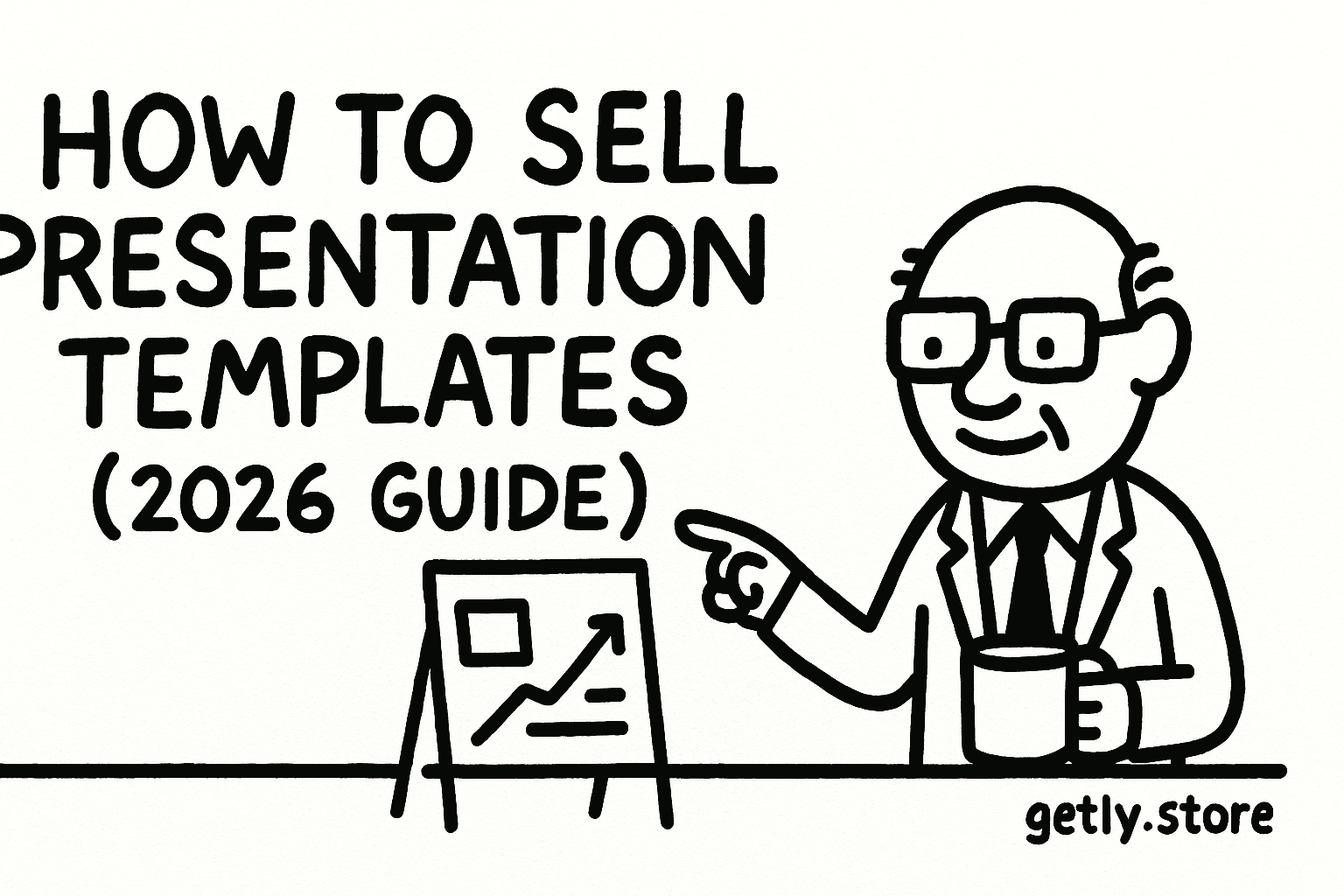
How to sell presentations — a 2026 guide for creators. This guide shows you how to productize your deck into files buyers can use immediately, price it so it converts, and package it with the right documentation and licensing notes. You will also learn which marketing moves tend to work for presentations, and how to use Getly’s checkout and payouts to reach buyers beyond card-restricted regions. Finally, you get a practical first-sale plan built around previews, bundle structure, and rapid listing iterations.
Who's selling presentations right now?
Solo creators sell presentation templates when they treat slides like design assets: consistent typography, reusable layouts, and decks that look polished even before you edit a word. This group often ships templates for recurring needs like investor updates, agency proposals, HR onboarding, SaaS product pitches, and course presentations.
Agencies and boutique studios sell decks when they turn client work into a repeatable product. They usually win by packaging “edit-ready” systems instead of one-off slide decks, then they add optional variations like light and dark themes or different pacing for the same narrative.
Side-project sellers often start with one strong niche: founders pitching, classroom teaching, or event keynote packs. They build a small library first, then expand by bundling decks that share a visual system and a story arc.
What buyers expect
Buyers expect presentation templates to feel “ready to use.” They want consistent spacing, readable font choices, clean icon and chart styling, and layouts that survive quick edits. They also expect the template to come with enough guidance so they can swap text without breaking the design.
File format matters because presentation buyers often edit fast. Provide the editable source when you can, plus export-friendly copies when you cannot guarantee the same software setup. If you include assets like logos, charts, or icon packs, document what you used so buyers can replace anything they need.
- Editable deck files plus export formats (so buyers can present immediately).
- Clear screenshots showing what changes and what stays consistent.
- Documentation that explains how to use the template, not just the files.
- A visible license statement in the listing, matching what your deck actually permits.
- Fast, practical support for the first edit questions after purchase.
Pricing playbook
You can sell presentation templates profitably with simple price bands. Use $15–60 for a single deck, and price pitch-deck bundles in the $80–200 range, since bundles for founders tend to convert well.
Structure your catalog like a tiered offering even if you do not change quality. Keep an intro tier for one-deck templates, a mid tier for themed systems (slides, charts, and sections), and a premium tier for founder bundles that include multiple variations such as standard pitch plus follow-up versions.
Bundle decks when they share the same visual language and story logic. Example bundles that sell well in practice: “Seed Pitch Pack,” “Product Demo Deck,” and “Founder Update Bundle.” Bundles reduce buyer decision fatigue because the buyer gets a set that matches each other.
Licensing matters for buyer confidence. Get specific in your listing license, since Getly requires a license field in the product setup. If your template supports commercial use or client work, make sure your listing states that license accurately.
Packaging your presentations
Package a presentation like a product, not a download. You want buyers to open it, understand it, and edit it without guessing which files go where.
- Provide deck source files and at least one export format so the buyer can present immediately.
- Include a folder structure or naming convention for icons, charts, and background assets.
- Add a README with: what each deck contains, how to replace colors and fonts, and any slide-by-slide notes.
- Attach a separate license note that matches the license field you set in the listing.
- Record version notes so you can update a deck without breaking buyer expectations.
- Create preview images that show the template in a “real deck” composition, not just isolated slides.
- Keep your template system consistent across the bundle so buyers trust edits across decks.
Marketing channels that actually work
Presentations buyers browse where design and pitch creators already compare templates. Start with communities that focus on investor decks, startup marketing, and creator workflows. Post screenshots of your template pages with a short “what you get” breakdown, then point to your Getly listing.
Use the channels below to drive intent, not generic design traffic:
- YouTube tutorials around “pitch deck breakdowns,” “founder deck examples,” and “how to present a startup.” Turn your template into a walkthrough: one slide before and after editing.
- Twitter/X threads from founders and pitch coaches. Share a slide-specific improvement tip, then attach your preview.
- Creator and startup Discord servers where people swap resources for decks and templates. Drop your bundle when someone asks for “a clean investor deck.”
- Subreddit communities for founders, pitch decks, and startup presentations. Share examples that show structure, not only aesthetics.
- Landing pages on your own site that embed a Getly Pay Widget, so buyers can buy directly from your pitch-deck resource page.
Why Getly?
Getly pays creators in USDT or USDC stablecoins, alongside Stripe fiat. That setup matters if you want presentations creator income without relying on payout rails that can block sellers in parts of Russia and CIS, or other regions where some platforms struggle.
On earnings, Getly keeps a tiered take that starts at 20% and drops as your completed sales volume grows, and sellers keep 80–90% depending on volume and traffic source. If you drive your own sales, Getly applies an own-traffic model where it takes 10% (you keep 90%).
Next step: pick one audience you can serve clearly, build one deck template system and one pitch-deck bundle, then list them with clean preview images and a simple README. Price the single in $15–60, and put your founder bundle in the $80–200 range. Run marketing through walkthrough content and community posts, and iterate based on buyer questions inside the platform messaging.