 Getly
AI Tools & Scripts
Eval Dataset Builder: A Clean, Labeled Test Set from Your Raw Examples
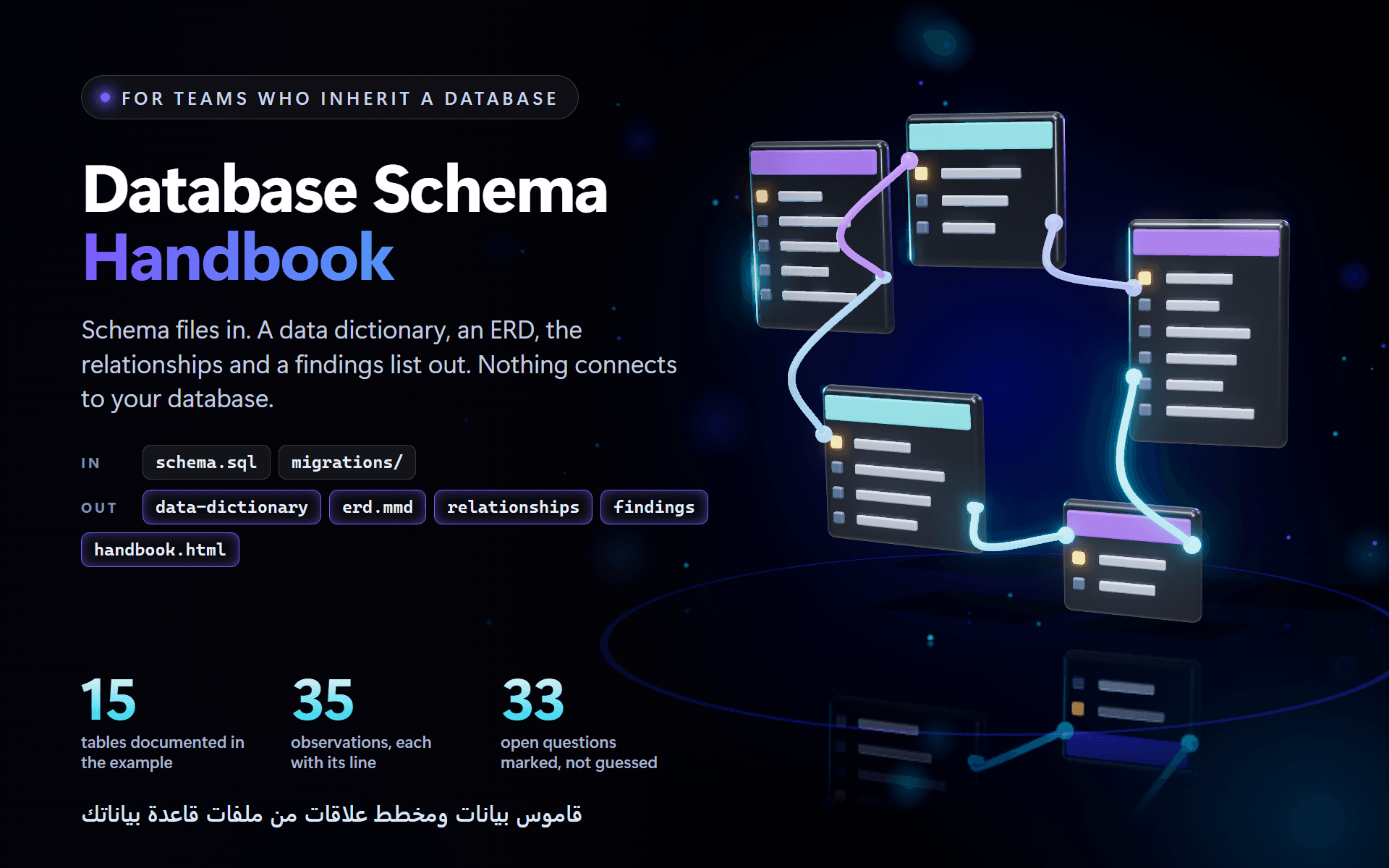
For ML engineers and teams testing an LLM feature: point your agent at raw tickets, chat logs or CSV and JSON exports and get dataset.jsonl with stable ids, labels and splits, a card with exact counts and known gaps, and a reason for every dropped item. مجموعة اختبار من بياناتك أنت.
What you get: 1 file · 60.39 KB · ZIP
See purchase optionsProduct description
English
For ML engineers and product teams who need a test set they can explain, built from data they already have.
Point your agent at raw material: support tickets, chat logs, CSV or JSON exports, a folder of prompts and answers, bug reports. The agent builds an evaluation or fine-tuning dataset for your team to review, with a card that states what is in it, how it was built and what it cannot show.
What it writes each run
dataset.jsonl: one record per line with a stable content-hash id, the masked input, the expected output or a list of true/false grading criteria, labels, a pointer back to the source row, and a split.dataset_card.md: purpose and task, a count after every pipeline step, label definitions, counts per label and split, input lengths, rejects by reason, known gaps and biases, and how to run an eval with the set.rejects.jsonl: every dropped item, whole, with its reason (duplicate of which record, auto-reply, unreadable and so on).labels.jsonandlabel_schema.md: the label values with written definitions, edge-case rules and a tie-break order.
Counted by script, not typed by hand
Two bundled Python scripts (standard library, no network calls) do the mechanical work. prep_tools.py converts flat CSV, JSON arrays and JSONL into candidate records and assigns splits, keeping similar inputs in the same split. dataset_tools.py masks emails, phone numbers, long digit runs, IP addresses and key-shaped strings, removes exact and near duplicates by a similarity threshold, validates the finished file, and prints the tables the card uses.
Only your material
The skill instructs the agent to invent no examples and to write synthetic records only when you ask, flagged "synthetic": true and counted apart. Inputs keep their typos and mess; only personal data is masked. A label that depends on a policy you did not give is marked [NEEDS: ...] with low confidence.
The arithmetic closes
The agent is instructed to check that raw units equal records kept plus rejects and to show the count at each step in the card. The validate command reports errors and warnings on the finished file.
Honest about its limits
Labels and criteria are one pass by the agent with a re-read by the same labeler. The card says so and recommends a human spot check. Masking of names and addresses depends on the agent's read-through. Near-duplicate detection compares wording, not meaning. No eval harness or scoring code is included.
Arabic
On request the card, label schema, criteria and notes are written in Arabic. JSON keys, label values and file names stay in English so tools keep working, and the agent is instructed to leave dialect inputs as they are. Arabic output was tried on one test case and was not reviewed by a second native reader; check it before sharing.
In the download: SKILL.md, the two scripts, four reference files (method, labels and criteria, coverage and splits, Arabic notes), templates, and one complete example: 96 raw support tickets in, 78 labeled records and 18 rejects out, with the pipeline log.
How it was tried: Tried on two cases (an English support ticket routing set, an Arabic pharmacy chat set); the download includes one worked example in English. The bundled scripts have 31 unit tests.
بالعربي
لمهندسي تعلّم الآلة والفرق التي تختبر ميزة مبنية على نموذج لغوي.
وجّه وكيلك إلى موادك الخام: تذاكر دعم، أو سجلات محادثات، أو ملفات CSV وJSON، أو بلاغات أعطال. تستلم مجموعة بيانات للتقييم أو للتدريب، ومعها بطاقة تشرح ما فيها وكيف بُنيت وما لا تستطيع إثباته.
ماذا تستلم
- ملف
dataset.jsonl: سجل في كل سطر بمعرّف ثابت، ونص حُجبت منه البيانات الشخصية، وإجابة متوقعة أو معايير تصحيح، وتصنيفات، وإشارة إلى مصدره. - ملف
dataset_card.md: العدد بعد كل خطوة، وتعريف كل تصنيف، والثغرات المعروفة، وطريقة استعمال المجموعة. - ملف
rejects.jsonl: كل ما استُبعد مع سبب استبعاده.
الأعداد من السكربت
سكربتان بلغة بايثون يعملان على جهازك بلا اتصال بالشبكة: يحجبان البريد وأرقام الهاتف والمفاتيح، ويحذفان المكرر، ويتحققان من الملف النهائي، ويطبعان جداول البطاقة.
حدود واضحة
تنص التعليمات على ألا تُضاف أمثلة مؤلَّفة إلا بطلب صريح، وأن تُعلَّم وتُعدّ منفصلة. والتصنيفات مرور واحد من الوكيل، فهي تحتاج مراجعة بشرية لعيّنة منها قبل الاعتماد على النتائج. وحجب الأسماء والعناوين يعتمد على قراءة الوكيل.
العربية
عند الطلب تُكتب البطاقة ومخطط التصنيف والمعايير بالعربية، وتبقى أسماء الحقول وقيم التصنيفات بالإنجليزية لتعمل الأدوات.
Questions / أسئلة
Does it invent examples? / هل يخترع أمثلة؟
The skill instructs the agent to use only your material and to write synthetic examples only if you ask, flagged in the file and counted apart in the card. Review the set before relying on it. التعليمات تقصر الأمثلة على موادك، والمؤلَّف منها يُعلَّم ويُعدّ منفصلًا.
How reliable are the labels? / ما مدى موثوقية التصنيفات؟
They are a careful first labeling: one pass by the agent against a written schema, then a re-read of ten records by the same labeler. The card says so and recommends a human spot check. تصنيف أول بمرور واحد، ويحتاج مراجعة بشرية لعيّنة.
What happens to personal data? / ماذا عن البيانات الشخصية؟
The script masks emails, phone numbers, long digit runs, IP addresses and key-shaped strings. Names and addresses are collected by the agent's read-through into a terms list and masked on a second run. يُحجب البريد والهاتف والمفاتيح آليًا، والأسماء بقراءة الوكيل.
Which inputs can it read? / أي ملفات يقرأ؟
Flat CSV, JSON arrays and JSONL go through the convert command. Nested exports such as threads are flattened by the agent, one record per unit. ملفات CSV وJSON وJSONL، والتصديرات المتداخلة يسطّحها الوكيل.
How does it keep splits from leaking? / كيف يمنع التسرب بين الأقسام؟
The split command keeps similar inputs in one split, and validate checks for leakage. It cannot know that two different-looking records share a customer or thread; those groups are moved by hand when your data has such a key. المتشابه يبقى في قسم واحد، والتحقق يفحص التسرب.
Does it run the evaluation? / هل يشغّل التقييم؟
No. It stops at the dataset and the card, which explains which field goes in, which is compared and which split to report. لا، يتوقف عند المجموعة والبطاقة.
Can the card be in Arabic? / هل تكون البطاقة بالعربي؟
Yes, as an added option: the card, label schema, criteria and notes in Arabic, while JSON keys and label values stay in English. نعم، مع بقاء أسماء الحقول بالإنجليزية.
What you get
1 file · 60.39 KB
- eval-dataset-builder-1.0.0.zipZIP · 60.39 KB
AI Tools & Scripts
Eval Dataset Builder: A Clean, Labeled Test Set from Your Raw Examples
For ML engineers and teams testing an LLM feature: point your agent at raw tickets, chat logs or CSV and JSON exports and get dataset.jsonl with stable ids, labels and splits, a card with exact counts and known gaps, and a reason for every dropped item. مجموعة اختبار من بياناتك أنت.
Tags
Frequently asked questions
Do I get access instantly?
Yes. This is a digital product - you can download it right after checkout, straight from your library.
Can I use it for commercial projects?
Yes. Commercial use is allowed: use it in your own business and in things you sell. You may not resell or redistribute the file itself.
What's your refund policy?
You can request a refund within 30 days. If something isn't right, request it from your order and the Getly team reviews it.
What file formats and sizes will I get?
You'll download 1 file - ZIP - 60.39 KB in total.
Do I get free updates?
Yes - when the seller ships a new version, you can re-download the latest files from your library at no extra cost. Check the changelog for recent updates.
Price
$7.00