 Getly
Getly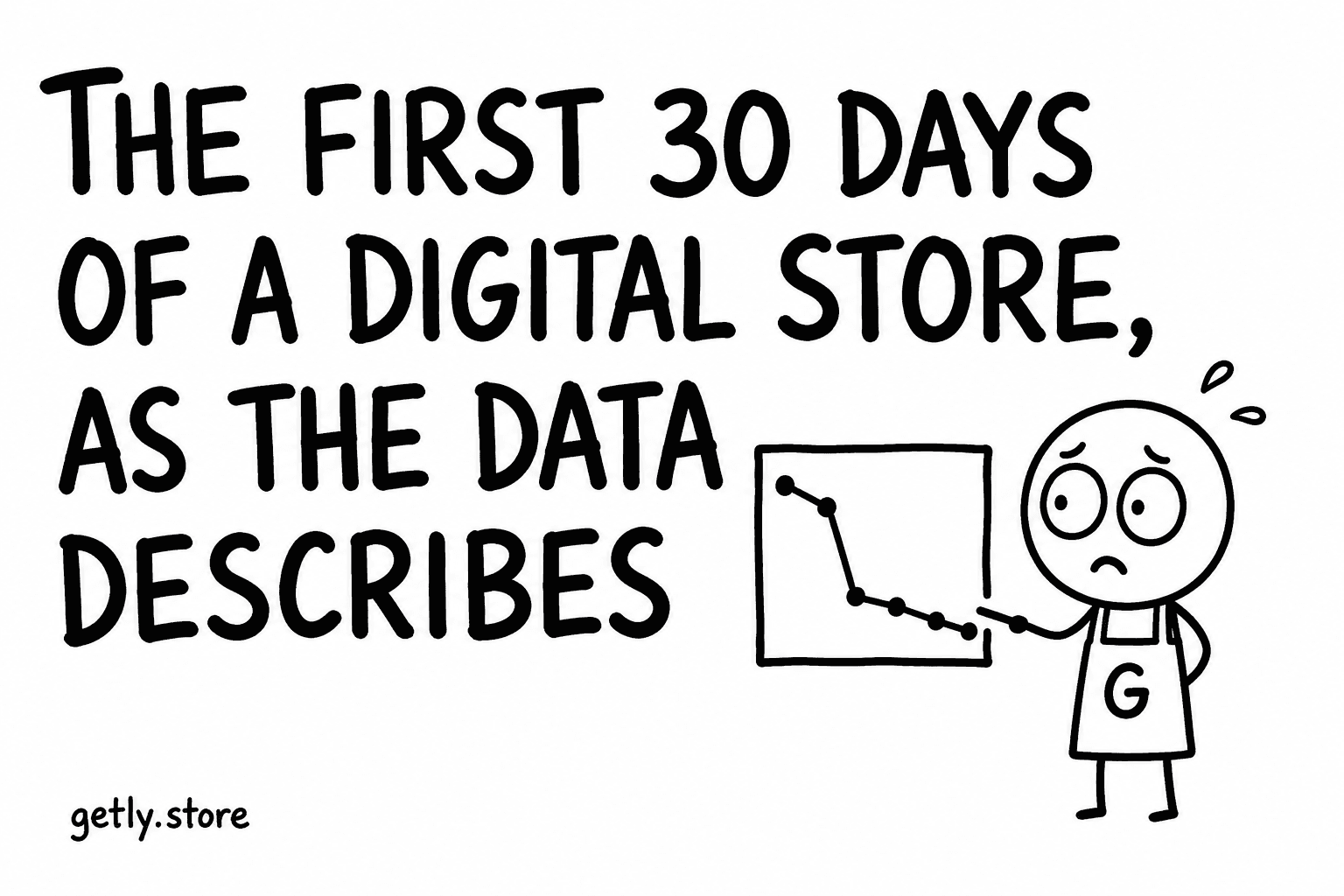
This is not a plan. It is a description of what the numbers say happens, assembled from the Getly catalogue on 30 August 2026, including the parts that are unflattering to us.
Week one: most stores end here
Almost two thirds of the people who create a store never list anything.
Some of that is ours. The publish button used to be disabled until a file was attached — and a disabled button emits no click, runs no validation and says nothing, so people pressed it repeatedly and nothing happened: 198 such presses from 60 sessions in 14 days, and zero error messages shown. That is fixed.
Most of it is not ours. A store costs nothing to create, which is deliberate, and the flip side is that creating one means very little. If you are in week one, the whole gate is: a file, one image, a category, 150 characters of description, a licence type.
Week two: the first product, and the price
The median store that has ever sold something made its first sale holding a single product. Not a catalogue. One thing, listed.
Two numbers to have in mind while setting the price. The median live paid listing costs $6.51; the median product that actually sold cost $9.99. Sales are not happening in the cheap half of the shelf, so the instinct to price low as a safety measure is not supported here.
And check the shelf you are filing onto: category medians run from $1.99 for wallpapers to $27.00 for illustrations. The category does a lot of the pricing work before you type a number.
Week three: nothing happens, and that is normal
This is the week people quit, so it deserves plain treatment. A digital product does not sell in its first week. Search does not know it exists yet, the category page ranks it low with no downloads or reviews, and you have no audience.
What the data shows is that the stores which have sold now carry 5.7 products on average, against 2.6 for those that have not. The catalogue grew after the first sale, not before it — so the difference is not a launch tactic, it is that one group kept publishing and the other stopped.
Week four: the things that are actually broken
Rather than a checklist of optimisations, here are the failures that measurably cost sales, in the order they cost the most:
No category. We found 93 live products with none. Between them: zero sales and zero downloads. Not fewer — zero. A product with no category is on no category page and in no breadcrumb; only someone who already knows it exists can find it.
No payout method. Measured earlier this year, 79.8% of store owners could not have been paid if they had sold something. The money accrues and sits there.
A description that does not say what the file is. Not length — 1,323 characters against 1,244 is the entire difference between sellers who sell and sellers who do not, which is to say no difference at all. What matters is whether the buyer can tell what they are getting: format, size, what software, what language the contents are in.
What the first 30 days do not require
Bundles, coupons, upsells, a custom domain, an affiliate programme, a Getly Page, a social media presence. All of it exists and all of it can wait. None of it appears anywhere in the difference between the 59 stores that have made a paid sale and the 1,544 that have not.
Publish the thing. Price it like it is worth something. File it where someone looking for it would look. Then publish the next one.