 Getly
Getly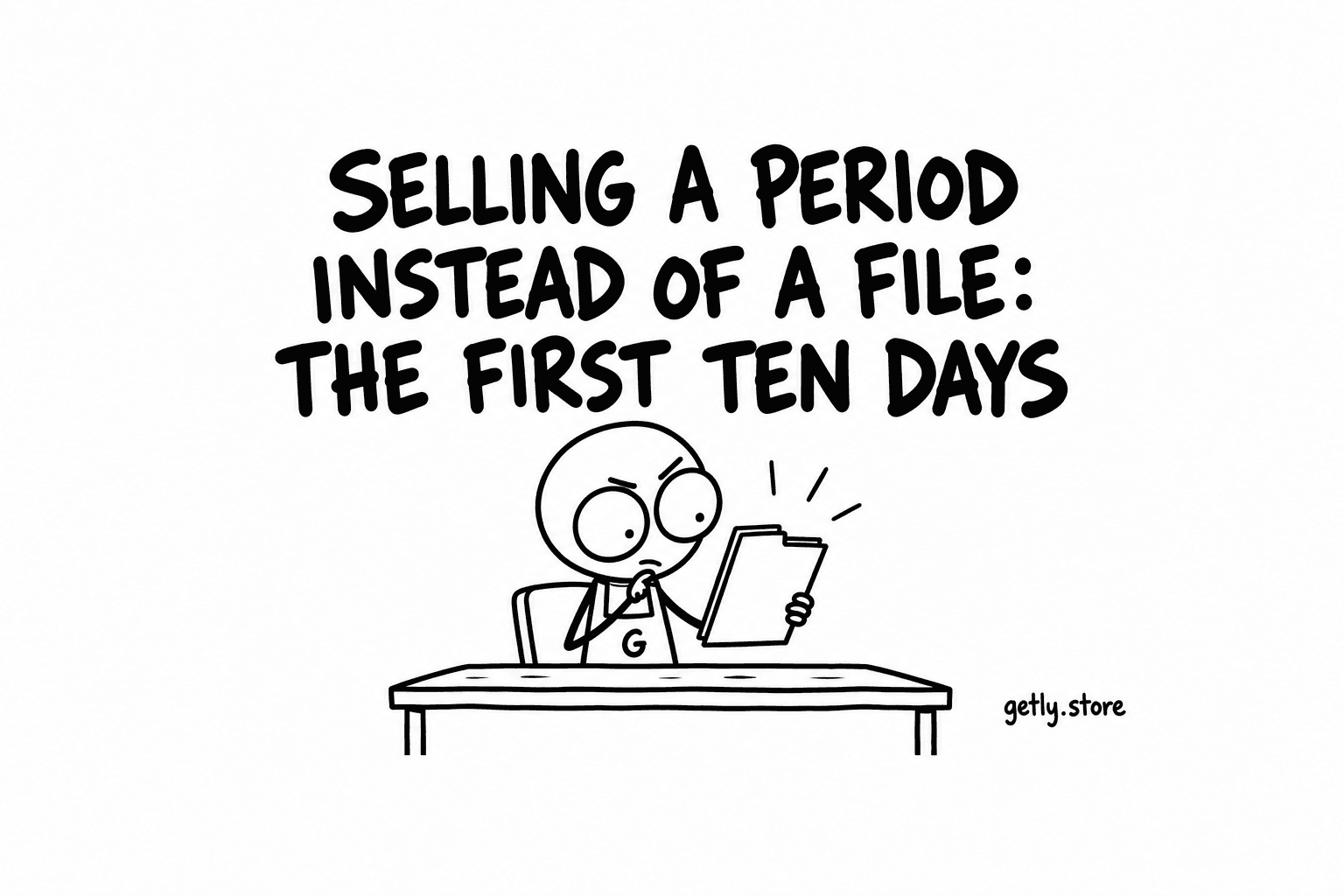
Most digital products are sold once and owned forever. That is the right model for a font or a template, and the wrong one for anything a seller keeps maintaining.
Timed access, launched on 5 September 2026, lets a listing sell a period — a buyer pays for three months, or six, or twelve, and the access ends on a date. Ten days later, 44 of 5,672 live listings use it.
What it is, mechanically
A product set to timed access carries one or more periods, each with its own length and price. The buyer picks one at checkout. When the period ends, the download access and any licence key issued with it stop working.
Buying again extends rather than restarts: a renewal bought before expiry stacks on top of the remaining time instead of discarding it. That detail matters more than it sounds, because the alternative punishes the buyer for renewing early — which is exactly the buyer you want to encourage.
Why it was built
Not because anyone asked for subscriptions. Recurring billing already existed here and had never been used: member plans had twenty-one active plans and no subscribers at all.
What was actually happening was different. 179 live listings across 69 stores were selling access to a service using words in the description — "three months of updates", "includes a year of support" — with no mechanism behind the promise. The seller was tracking it by hand or not at all. And one store had published five separate products named Starter, Standard, Premium, Enterprise and Full Access, which is a duration ladder with no feature to express it.
So the gap was not a missing subscription product. It was a missing way to sell a duration once.
What the 44 have in common
They are things that keep changing. Tools with updates, libraries that grow, services with an ongoing component, access to something maintained rather than something finished.
The pattern that does not suit it is a finished artefact. Selling a period of access to a static PDF is a worse deal than selling the PDF, and buyers can tell. Forty-four listings out of 5,672 is a sign that sellers are, correctly, applying it narrowly.
The pricing decision it forces
A timed listing makes you answer a question a one-off price lets you dodge: what is this worth per month?
The usual arrangement is three rungs — one month, three months, twelve — with the longer ones cheaper per month. The saving should be visible on the page; if a buyer has to calculate whether the annual option is worth it, most will take the short one and you have traded revenue for nothing.
What happens at the end
A reminder goes out seven days before expiry, and an expiry notice on the day. Both are automatic. The seller's webhook receives matching events, so an integration can react.
That machinery exists because the worst version of this model is the one where access simply stops and the buyer discovers it when they need the file. A product that ends on a known date, with warning, is a product. One that goes quiet is a complaint.