 Getly
Getly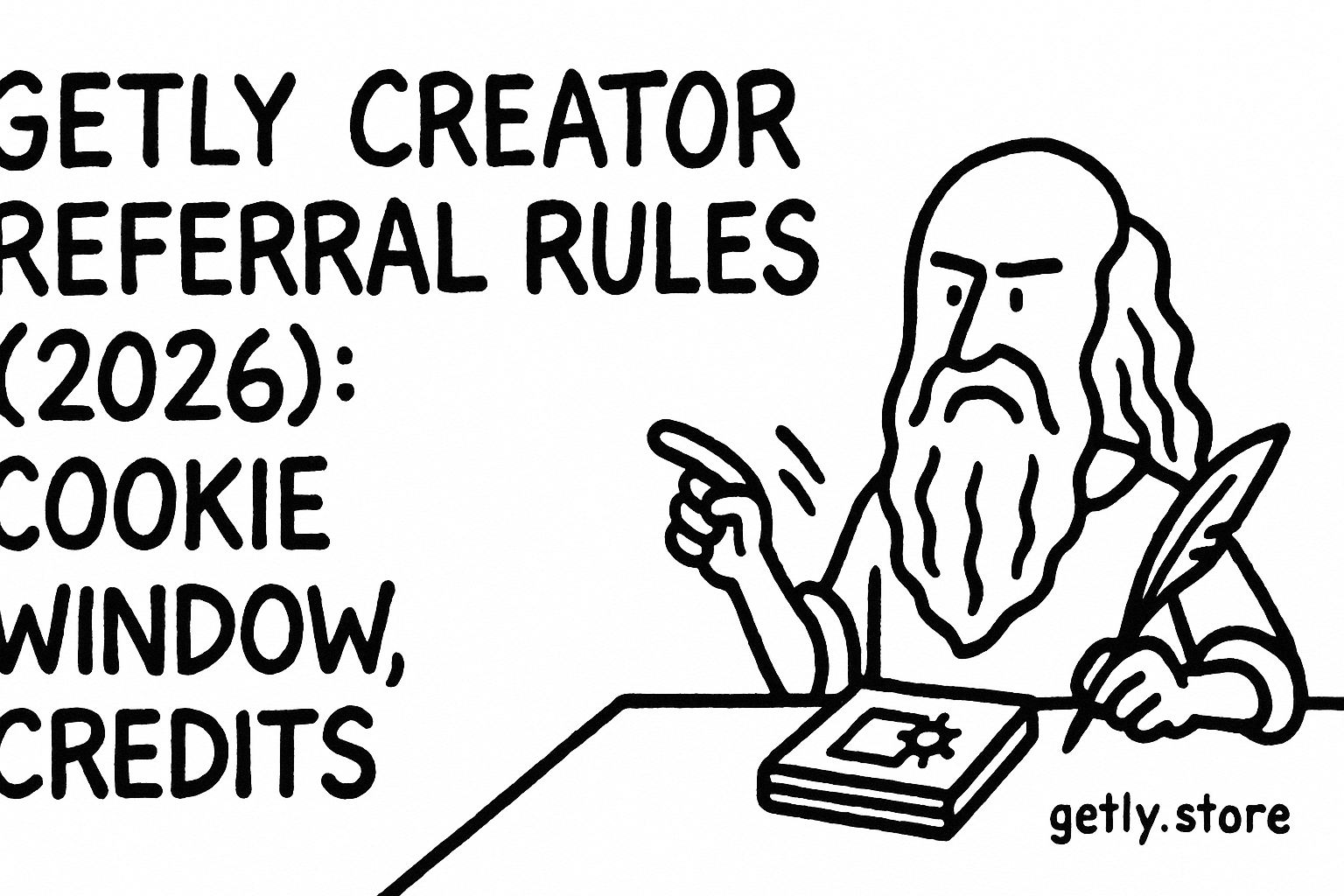
Referral rules decide whether your community grows by design or by luck. In this guide, you will learn how Getly credits referrals in 2026, how the attribution cookie works, and which growth strategies actually compound for creator network building.
We will also map referral math to practical workflows so you can turn one shared link into a steady pipeline of new buyers and creators.
What is the Getly referral program for creators in 2026?
The referral program for creators on Getly credits you when a person you refer makes their first purchase. Getly credits 15% of that referred user’s first purchase into your referrer affiliate balance.
Getly also supports per-product affiliate programs, where a seller can set commission on specific products. That means you can promote a portfolio of resources with different payout expectations, not one generic link.
- Getly’s platform-wide referral credits 15% of a referred user’s first purchase.
- The referral attribution cookie lasts 90 days from the click.
- Creators can grow a creator network by pairing referrals with product-focused recommendations.
- Use product-specific affiliate commissions for predictable performance across your catalog.
How does Getly referral cookie attribution work for creators?
Getly attributes a referred purchase to your referral link when the buyer completes a purchase within 90 days of clicking your link. That 90-day window defines your practical “success timeline” for community-driven marketplace growth.
In other words, the click creates the attribution opportunity, and the purchase decides whether the referral credit triggers. If the buyer purchases after the cookie window closes, Getly credits that purchase to no one under the referral model.
What triggers the credit
Getly credits referrals based on the referred user’s first purchase. The key constraint for creators: you only get the 15% first-purchase credit once per referred buyer’s onboarding moment, then the model moves on to normal marketplace attribution paths.
For creators, this pushes you toward referral content that gets viewers to act quickly enough to stay inside the 90-day window. You do not need instant conversion, but you do need momentum.
How to plan your referral cadence around the 90 days
Think of the 90-day window like a calendar you can actively fill with community touchpoints: onboarding posts, tutorials, updates, and limited-time bundles or highlights from your catalog.
Instead of posting once and waiting, schedule your best-performing referral message to reappear at intervals that stay inside the cookie window. You want your referred audience to remember why your link exists when they finally decide to buy.
- Week 1: introduction post with one clear outcome (what they get after buying).
- Week 3: tutorial post that teaches a workflow tied to the product.
- Week 6: social proof and a quick “results checklist.”
- Week 10: new release or updated template spotlight.
- Week 12 to 13: final reminder before the window closes.
If you promote across your own workflow content (not generic “buy now” links), your referrals convert more consistently inside the cookie window because buyers already trust the use case.
How do referral credits work: 15% first purchase and beyond?
Getly’s platform-wide referral credits you with 15% of the referred user’s first purchase. This credit lands in your referrer affiliate balance, and you can withdraw it via Stripe Connect.
Getly also lets sellers run per-product affiliate programs. In those setups, the commission comes from the seller-set rate (capped at 50%) applied to the seller’s share of the sale (which defaults to 80% unless your volume tier changes it).
Referral credit vs affiliate commission: know the difference
The platform-wide referral (15% of first purchase) works like a community growth mechanic. It rewards the person who brought a new buyer in, especially useful for grow creator community strategies where you build trust before selling.
The per-product affiliate commission works like a sales performance tool. It matches your audience to specific products, so you can align content with the exact resources people want.
| Mechanism | What triggers credit | When | Who sets it |
|---|---|---|---|
| Platform referral | Referred user’s first purchase | At purchase, within the referral cookie window | Getly (fixed 15%) |
| Per-product affiliate | Affiliate conversion on a specific product | At purchase, if attribution matches | Seller (commission percentage) |
Do not assume every referral payout comes from the same commission rule. The 15% platform referral and per-product affiliate commissions work differently, so you must match your content strategy to the credit type you want.
What commission math should creators use in marketplace growth strategies?
If you want creator network building to scale, you need math that stays readable. For platform referrals, Getly credits 15% of the referred buyer’s first purchase into your affiliate balance.
For per-product affiliate programs, the commission equals the seller-set affiliate rate (capped at 50%) times the seller’s share of the sale (typically 80% by default). That means the more you understand how your recommended products affect seller economics, the better you can forecast your own outcomes.
A practical way to forecast referral outcomes
Start with conversion expectation inside the 90-day cookie window. Then assign a value to each referral click based on your historical click-to-first-purchase rate.
Creators often ignore the time lag. Getly’s referral credit depends on purchase timing, not click timing. You can still run campaigns with longer arcs, but you must track them across the full 90-day window.
- Track click dates (so you know where you are inside the 90 days).
- Separate first-purchase referrals from affiliate conversions.
- Pick product categories that “solve problems,” not just entertainment or aesthetics.
Match products to referral intent
Referral audiences convert when you send them to products that match a specific moment in their workflow: planning, compliance, maintenance, or data dashboards.
Here are examples of how to pair content hooks with product recommendations. Use these as templates for your own creator community posts.
- Writer’s workflow hook. Point readers to Short Drama Script Creator Notion Template | AI Story Organizer Pack when they ask how to structure a short script.
- Creator monetization hook. Recommend HookForge — Instant Hook & Caption Generator (EN/ES, No AI Subscription) when your audience needs captions now, not after they set up an AI subscription.
- Ops and maintenance hook. Point industrial creators to FactoryOS™ Preventive Maintenance & Spares Tracker when they discuss uptime, spares planning, and documentation.
Pro tip: write your referral message around one measurable output (a dashboard view, a compliance checklist, a maintenance log). Buyers click when they can predict what changes after they buy.
How to grow a creator network using referral rules and community loops
Creator network building works best when your referral content turns community members into repeat participants. You do not only want first-time buyers. You want referred buyers to share your link when they find success.
That “success share” loop makes a community driven marketplace strategy durable. It also helps you keep conversions within the 90-day attribution window because people return to promote again and again.
Build a referral loop with content types that compound
Use content that people can reuse and remix. Tutorials, templates walkthroughs, and workflow checklists invite sharing, which creates more referral clicks and more first purchases later.
When you tie these pieces to products with clear licensing statements, you reduce friction. Buyers trust what they can do with the asset because the listing includes the required license field.
- Workflow posts: show the steps, then link the template or tool.
- Before-and-after screenshots: keep the transformation obvious.
- Community challenges: weekly outcomes that require a resource purchase.
- FAQ-driven content: answer “how do I use this” questions before people ask.
Use per-product affiliate programs to segment your audience
Per-product affiliate programs let you set different commission rates per item. That means you can run targeted campaigns: one for compliance templates, another for data dashboards, another for script planning.
Segmentation reduces “wrong product” clicks. It raises your chances that referral visitors actually complete a first purchase inside the 90-day window.
What marketplace growth strategies work best with referral programs?
Referral programs reward trust and timing. Marketplace growth strategies succeed when creators design for the full referral cycle: attraction, click, purchase, then community-driven sharing.
Getly’s referral rules give you two levers: the 90-day cookie window and the 15% first-purchase credit. Your job is to design community actions that move people through that window.
Strategy 1: “Use-case funnels” instead of one-size referral posts
Creators waste referrals when they post a single link to all audiences. Instead, write a short funnel that starts with a problem and ends with one specific product.
For example, if your audience includes both operators and analysts, you can split content into maintenance tracker vs Excel automation templates. Each post points to the most relevant product in your affiliate ecosystem.
Strategy 2: Partner with adjacent creators for creator network building
When two creators overlap in audience needs, they can swap referral content. The best collaboration looks like knowledge sharing, not like direct promotion.
To keep referrals within the 90-day window, set a schedule: the partner posts first, you reply with a tutorial, and both of you include your referral link in the same thread or series.
Strategy 3: Measure inside the attribution window
Track clicks and conversions by week rather than by “all time.” That approach helps you see whether your audience converts early or late, and it helps you adjust reminders before the 90-day cookie window closes.
If most first purchases happen close to day 80 to 90, you should shift your reminder content earlier and reduce the time between value content and the referral link.
- Design referral content around a predictable workflow outcome.
- Keep reminders active across the 90-day cookie window.
- Segment affiliate promotions by use-case to reduce mismatched clicks.
- Measure weekly so you can tune the referral cadence before attribution expires.
FAQ: Getly referral rules, cookie window, and creator credits
What is the referral cookie window on Getly?
Getly attributes referred purchases if the referred buyer completes a purchase within 90 days of clicking your referral link. That window controls whether your referral credit triggers.
How much do I earn from the Getly creator referral program?
Getly credits 15% of the referred user’s first purchase into your affiliate balance. This applies to the platform-wide referral model.
Do per-product affiliate programs work the same way?
Per-product affiliate programs work with a seller-set commission rate on a specific product. Getly credits conversions based on affiliate attribution, and the seller-set rate applies with an affiliate cap.
Can I grow a creator community with referrals alone?
You can grow a referral-driven audience, but you will move faster when you combine referrals with repeatable value content. Tutorials and workflow posts keep people inside the 90-day window and encourage sharing.
Where do referral credits go and how do I withdraw?
Referral credits accumulate in your affiliate balance. Getly supports withdrawals via Stripe Connect, with a minimum withdrawal threshold.
Conclusion: build a referral system that compounds in 2026
The best referral rules for creators in 2026 boil down to two mechanics: a 90-day attribution cookie and a 15% credit on first purchases. When you design community content that keeps people engaged across that time horizon, referral credits stop feeling random.
If you want one next step, pick one product category you know your audience needs, then build a 3-post mini-series that leads to a single referral link. That simple loop usually creates the fastest momentum for grow creator community goals.
Getly Sellers Team