 Getly
Getly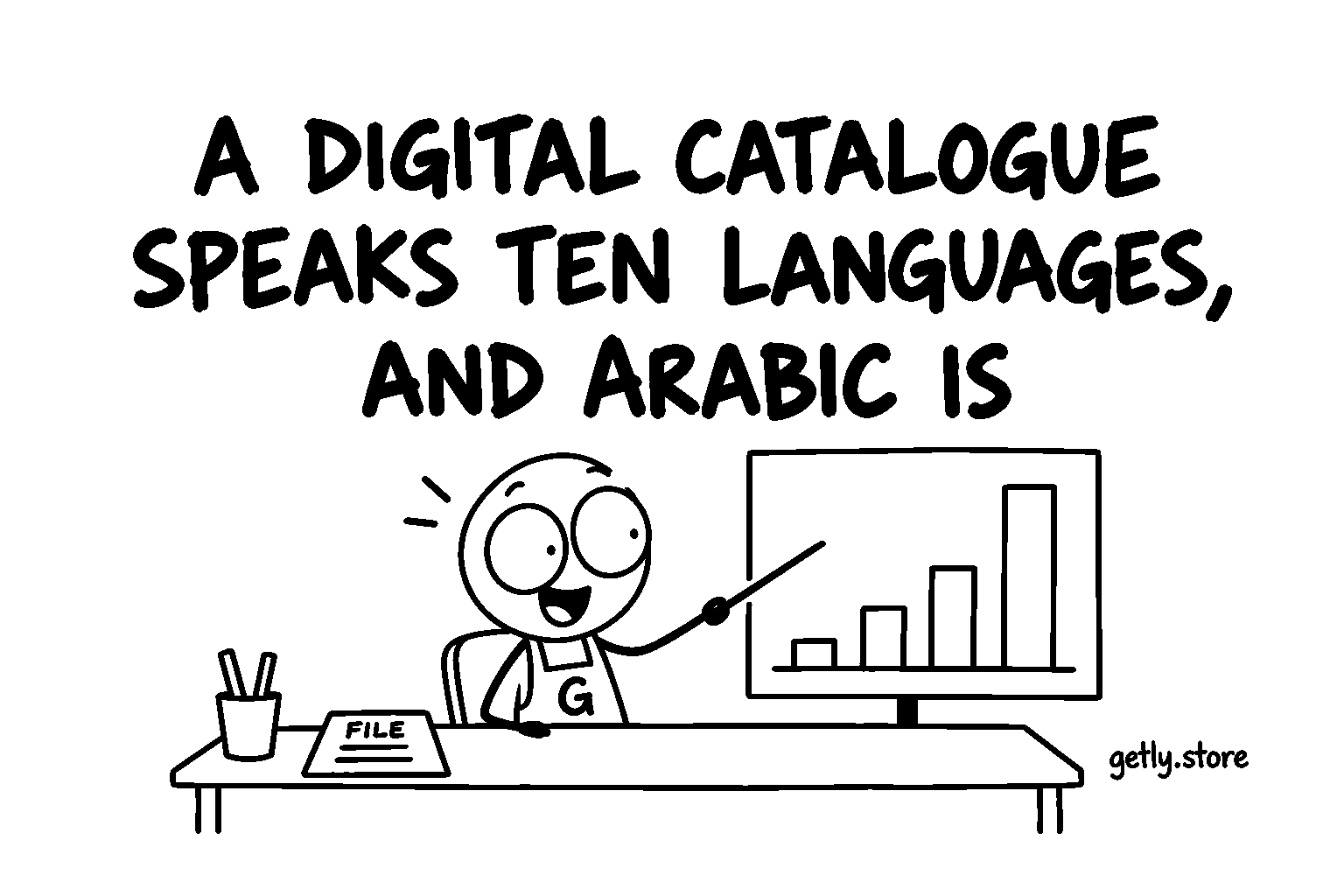
Every Getly listing records the language it was written in. On 14 September 2026 the distribution across 5,672 live listings looks like this:
- English — 5,495
- Arabic — 85
- French — 31
- Spanish — 23
- Russian — 18
- Polish — 3
- Turkish — 2
- Chinese, Japanese and Portuguese — one each
- Recorded as "other" — 8
English is 96.9% of the catalogue, which surprises nobody. The interesting part is the remaining 177 listings, and specifically which language comes second.
Arabic, by a factor of nearly three
Arabic listings outnumber French, Spanish and Russian ones — the languages a European marketplace would expect to see next. Eighty-five listings is not many in absolute terms, but the ordering says something real about where digital sellers are coming from.
The likely explanation is not about language preference at all. It is about payment. A seller in a country where card processors do not operate, or where opening a business account with a payment platform is a months-long process, is a seller looking for somewhere that will pay them. Marketplaces that pay in stablecoins without an identity check are a shorter list than marketplaces in general, and sellers find them.
The language distribution is, in that reading, a map of who has been excluded elsewhere.
What we do with a non-English listing
Every listing gets a Russian and a German page, translated automatically, regardless of what it was written in. That used to be untrue: the translation sweep only picked up listings marked as English, so those 177 had no localised pages at all — a Russian buyer landing on an Arabic listing saw the Arabic, under a page marked not to be indexed.
The sweep now reads from any language we can name in the prompt. The one deliberate exception is the eight listings recorded as "other": translating from "other" is a guess, and a guess published as a product page is worse than no page.
Why it is worth writing in your own language
The instinct for a non-English seller is to write bad English rather than good Arabic or good French, on the theory that English reaches more people.
That trade is worse than it looks. A description written in a language you command carries the specifics — what exactly this is, what exactly it is for — and specifics are what turn a browser into a buyer. A description written in a language you are fighting tends to collapse into generic phrases, which is precisely the failure mode that makes a listing indistinguishable from a hundred others.
Write it properly in the language you think in. The translation layer will handle the rest, and it will do a better job translating good source text than you will do writing directly into a second language.
The wider point
A marketplace's language distribution is usually treated as a localisation statistic. It is more useful as a demand signal: it tells you which sellers found their way here, and by extension which sellers were not being served somewhere else.