 Getly
Getly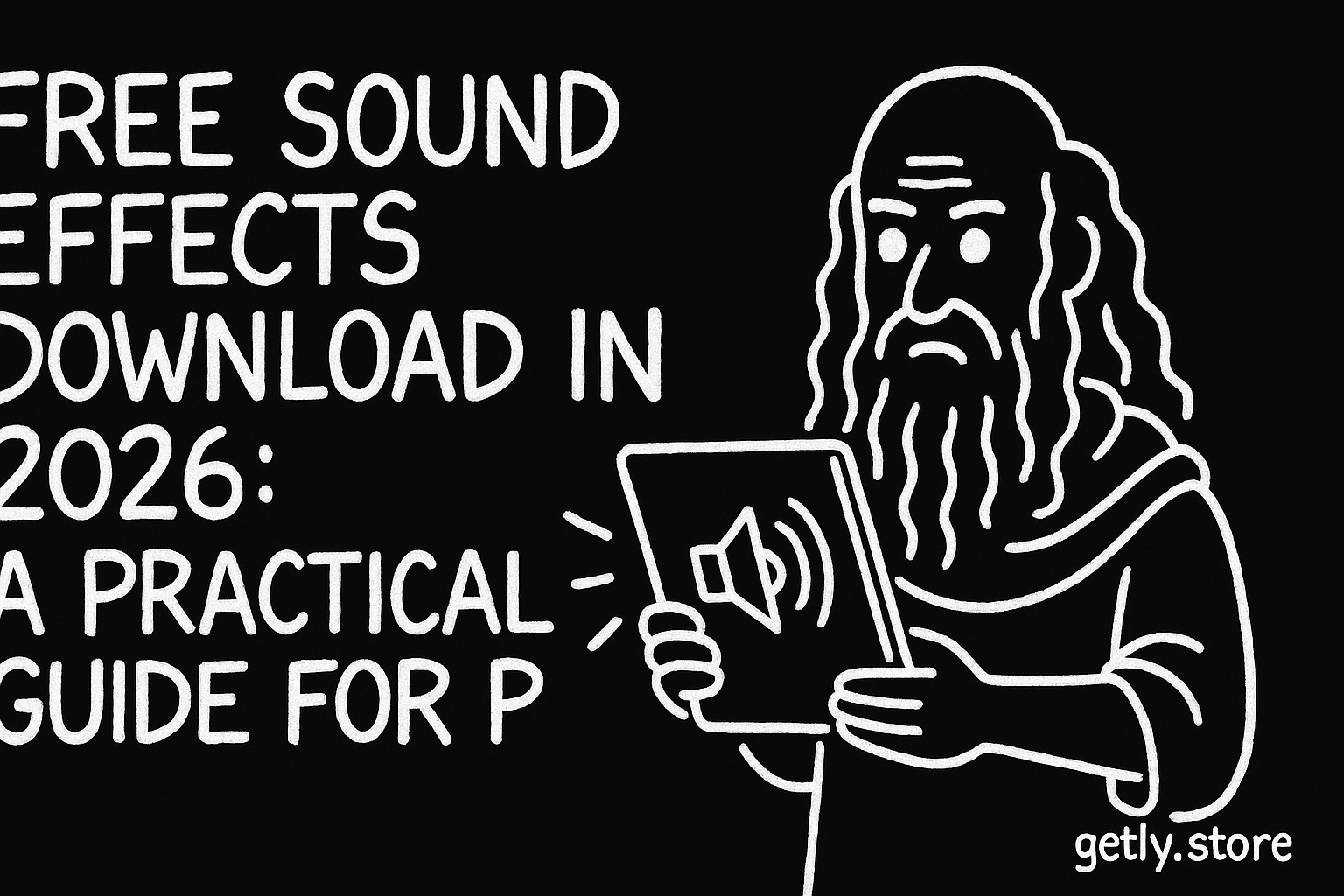
Need a free sound effects download for your next podcast, game trailer, or YouTube edit, but you do not want copyright headaches? In 2026, the fastest path comes from combining smart searching, licensing discipline, and a few production-friendly file workflows. This guide shows you exactly how to source usable audio and assemble it into mixes you can ship.
Below you will also find specific Getly product ideas that match common needs like SFX hits, whooshes, foley, and background music style assets. Treat them as starting points, then verify each file’s license in the listing before you publish.
- Always check the product’s license field on the listing before you treat any asset as “free to use.”
- Build a repeatable SFX workflow: organize by type (UI, hits, impacts), then test in your mix at the right loudness.
- For podcast intros and music beds, pick tracks tagged for your intended use (intro music free options still need license checks).
- For games, choose consistent asset formats and loopability so your audio engine does not fight you later.
- Use semantic search and visual search to find sound-alikes when you only remember the vibe, not the exact keyword.
What is a free sound effects download (and what “free” really means)?
A free sound effects download means you can download audio without paying for that specific file at the moment of access. On marketplaces, “free” almost always refers to price, not permission. The permissions come from the license written in each product listing.
In 2026, content creators keep getting burned when they treat “free” as “royalty free music” by default. You need to read the license field for the product and match it to how you publish: personal, commercial, client work, or CC0-style public domain.
Licenses decide whether you can ship work publicly
Many creators say “I downloaded it free” and then release on Spotify, Steam, or monetized YouTube. If the listing says personal-use only, your release can violate the license even if you paid zero dollars.
On Getly-style listings, the license field usually appears next to the buy button as a required field when the seller created the product. If the license field does not show on a listing, you should not assume permissions. You need to ask the seller via the platform messaging before you rely on it for a release.
Download cost vs royalty expectations
Royalty free music typically means you do not pay ongoing royalties after purchase or download, but it still depends on the license terms. Some royalty free music licenses allow commercial releases. Others limit you to non-commercial use.
When you search for royalty free music, your real target is not just “free sound effects download.” Your real target is “a license that matches my distribution model.”
How to find game sound effects pack assets in 2026
The best way to find a game sound effects pack in 2026 starts with three filters: what the sound is (whoosh, impact, UI click), where it runs (game engine vs video), and the license scope (personal vs commercial). Then you narrow by audio behavior: transient length, tail, and loop style.
Most game audio libraries feel “usable” only after you audition them in your scene. That audition matters because the same impact SFX can sound muddy when you stack it with footsteps, voice lines, and music.
Search by sound function, not by genre
Instead of “attack sounds,” search for “whoosh and impact,” “weapons foley,” or “UI click.” Sound function queries match how SFX get organized in real libraries.
If you only remember the vibe, use semantic search. For example, “whoosh” finds motion textures, while “impact” finds the transient punch. Then you test them together and keep a short shortlist.
Audit formats and loudness before you integrate
Even if you download fast, your audio pipeline still needs consistency. Use the same sample rate and a predictable loudness range across your SFX set. Loudness mismatches make your impacts either disappear or overpower voice tracks.
For looping ambiences, listen for seam artifacts when you scrub through the loop point. If you plan to loop in-game, choose files that already behave well at the boundaries, not files that only “sound okay” once in a trailer edit.
Pro tip: Build an “SFX audition sheet.” Put 10 candidate whooshes into one project and trigger them over a simple rhythm track. The ones that cut through without masking your music become your real selection, not the ones that only impress in isolation.
Where to get free background music for videos without licensing risk
For free background music, you need a two-step process: first find music that fits your pacing, then verify license permissions for your distribution channel. “Free background music” should not mean “free to publish anywhere.” Your license determines that.
In 2026, creators also expect fast iteration. You should build a small music folder strategy: one folder for intros, one for beds, and one for transitions. Then you swap tracks while keeping your project structure stable.
Match music to the role it plays in the edit
Background music for videos usually plays one job at a time: set mood, support dialogue, or underline a visual payoff. When you pick the track, choose the role first, then pick the style.
For example, if your video has frequent talking segments, choose a track with space in the midrange so speech stays intelligible. If your edit has hard cuts, choose music with clear downbeats that sync to your edit points.
Turn “free” into “royalty free music for my use case”
Royalty free music still comes with rules. Some creators use content on YouTube and Twitch. Others build client work, ads, or courses. You need to pick a license scope that covers the publishing type you actually do.
If the listing’s license reads like it supports commercial work, you can proceed. If it reads like personal-use only, treat it as a scratch track. If the license field does not show, message the seller before you publish.
Success pattern: Many podcasters start with intro music ideas, then keep a second track as a looping bed. That workflow helps them stay consistent across episodes while avoiding license surprises when they go from “test” to “launch.”
How to get podcast intro music free while staying consistent
Podcast intro music free works best when you design the intro around your brand timing. Your audience does not care about the file name. They care about the first 10 seconds. Pick intro music that lands the hook early and keeps a clean bed under your voice.
When you download, set your intro structure immediately in your session: music lead-in, voice landing point, and an outro tail that lets your logo sound separate from the bed.
Build an intro template you can reuse
Create a template project in your DAW. Put placeholders for the intro track, voice track, and a transition element. Then swap only the audio files when you need a new vibe.
This approach saves time and improves quality. You keep your gain staging constant and you avoid chasing loudness every episode.
Pick intro tracks with room for dialogue
Intro music often fails because it fights speech. Look for tracks with controlled bass and less dense midrange. If you can, high-pass the intro bed when you record voice so the speech stays intelligible.
Also, confirm the license matches podcast usage. A lot of creators treat podcasts as “personal,” then monetize later. Licensing does not care about your intention. It cares about how you distribute.
“A great free intro track still needs the right license for public release. Downloading is step one. Permission is step two.”
How to assemble royalty free SFX and background music into one mix
You can make any free sound effects download feel professional when you mix with intent. Treat SFX like punctuation, not like filler. Then keep your music and SFX from competing for the same frequency space.
In a typical podcast episode or promo video, you probably need five categories: a bed, an intro, transitions, impact moments, and UI or whoosh accents. Once you sort assets this way, your mixing stops feeling random.
Use a simple routing plan
Start with separate tracks or busses for: music, voice, SFX, and room/ambience. Then apply processing consistently. For example, you can compress your voice gently and keep SFX more transient-focused.
Next, control reverb. If your SFX comes from different recording spaces, it will sound glued on. Add a shared reverb or use convolution matching so impacts sit in the same “world.”
Keep loudness under control
When SFX suddenly jump louder than voice, listeners feel it as a glitch. Set your target loudness and then trim the peaks of the SFX so they add impact without clipping.
For video and game trailers, you can push energy higher, but you still need predictable headroom. Build a quick loudness check before exporting each version.
| Audio need | Best asset type to download | Mixing goal |
|---|---|---|
| Podcast intro music | Intro-ready music loop or short theme | Hook early, leave space for voice |
| Background bed | Low-to-mid density instrumental | Support dialogue, avoid masking |
| Game whooshes | Motion whoosh SFX with clear direction | Cut through, don’t swallow impacts |
| Impacts and hits | Impact SFX with tight transients | Punch at the right moment |
| Foley weapons | Grouped Foley layers (metal, wood, cloth) | Layer realism, keep consistent room |
Common mistake: Creators mix SFX and music without checking the license scope. You might hear a perfect “impact” and use it in a release, only to discover later that the license did not allow commercial distribution.
Getly product ideas for free sound effects download workflows
If you want a practical way to start, build your library around the sounds you use most: whooshes, impacts, weapon foley, and a few emotional musical beds. That means you download assets that map to your production categories, not random “cool sounds.”
Below are Getly product examples you can use as search anchors. Treat them as inspiration for how to structure your own pack and mix. Always check the license in each listing before publishing.
SFX packs for impacts, motion, and weapon sounds
These picks align with common game and video needs where the transient moment matters most. Start with a tight set: whooshes for movement, impacts for hits, and weapon foley for realism.
- Whoosh and Impact SFX for motion accents and hit events.
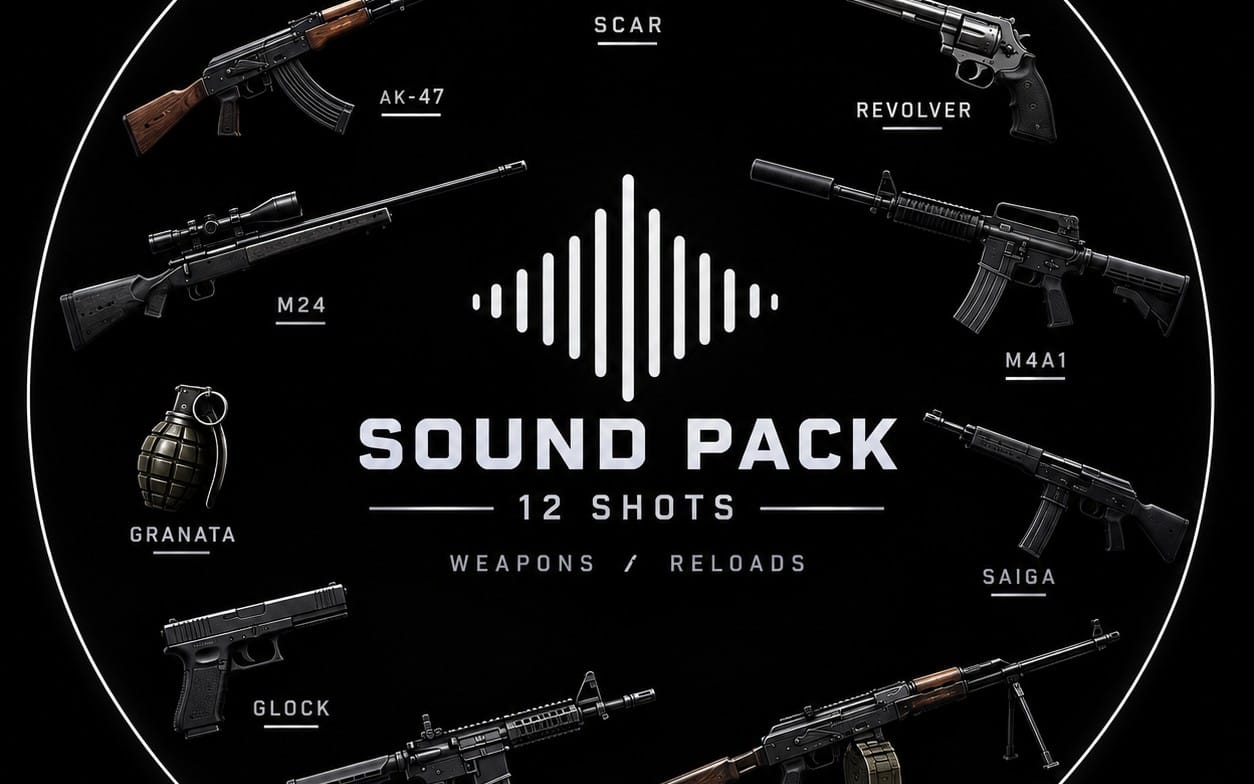
- Weapons Foley SFX when you need layered realism in one category.
- Inventory Sound for UI-style feedback moments.
- Gore SFX if your project needs intense effects. Use carefully and check license scope for your target audience.
Music and vibe starters for backgrounds and themes
Background music and intro themes work best when you choose them for the role you need: intro identity, emotional bed, or a rhythmic foundation for editing. Pick a few styles and keep them consistent across your episodes.
- Professional stonic beat for energetic bed-style usage.
- Late Night Tutorial Inspired by Tinashe FLP and Presets + Drums if you want a drum and texture direction for your own theme.
- Ernest john for a named music direction to test in your intro template.
- worship when you need a calmer, mood-first track idea.
Pro tip: Build a “starter kit” folder: 12 SFX (3 whooshes, 3 impacts, 3 UI sounds, 3 foley hits) plus 2 music beds plus 1 intro theme. Your editing speed jumps because you stop re-searching for every new episode or scene.
FAQ about free sound effects download and royalty free music
Are free sound effects downloads automatically royalty free music-style safe?
No. Price does not equal permission. You still need to read the license field for each asset and ensure it matches your distribution (personal, commercial, client work, or other terms).
If the license field does not show on the listing, do not assume commercial rights. Message the seller for clarification before you release publicly.
Can I use free podcast intro music free in monetized episodes?
You can only do that if the license allows the use you plan. Podcast monetization counts as public distribution, and some licenses restrict usage to personal or non-commercial contexts.
Check the product listing license before you publish. Then keep your intro template consistent so you can swap tracks without rebuilding mixes.
What makes a good game sound effects pack?
A good game sound effects pack has consistent behavior and predictable layering. Look for assets that handle transients well (impacts), motion cues (whooshes), and groupings that work together (like weapon foley sets).
Test assets in your engine or preview mix. You want SFX that cut through music and voice without clipping.
How do I avoid licensing mistakes when downloading free background music?
Verify the license field each time you download. Create a spreadsheet or notes doc with the asset name, license type, intended project use, and where you stored the file.
When you reuse music across multiple projects, confirm the license still covers each scenario, especially if you shift from personal to commercial distribution.
What format should I download for royalty free SFX and music?
Use formats your workflow accepts without extra conversion. Consistency matters more than perfection. If you plan loops, choose files that loop cleanly. If you plan real-time playback, choose assets that behave well under pitch or time changes.
Before production, test a small set in your mix so you catch artifacts early.
- “Free sound effects download” covers cost, not rights. Licenses decide what you can publish in 2026.
- Pick SFX by function (whoosh, impact, foley, UI) and audition them together to avoid masking.
- Pick background music by role (intro hook, bed support, transitions) and protect speech intelligibility.
- Structure your library once. Then reuse an intro template and an SFX routing plan across episodes and videos.
If you want one quick next step, start a “starter kit” download list today: 3 whooshes, 3 impacts, 3 UI/inventory sounds, and 1 intro theme. When you have the basics in your folder, you will spend less time searching and more time shipping better audio.
Soft call-to-action: Browse Getly for SFX and music assets that match your categories, then verify the listing license before you publish.
Getly Support