 Getly
Getly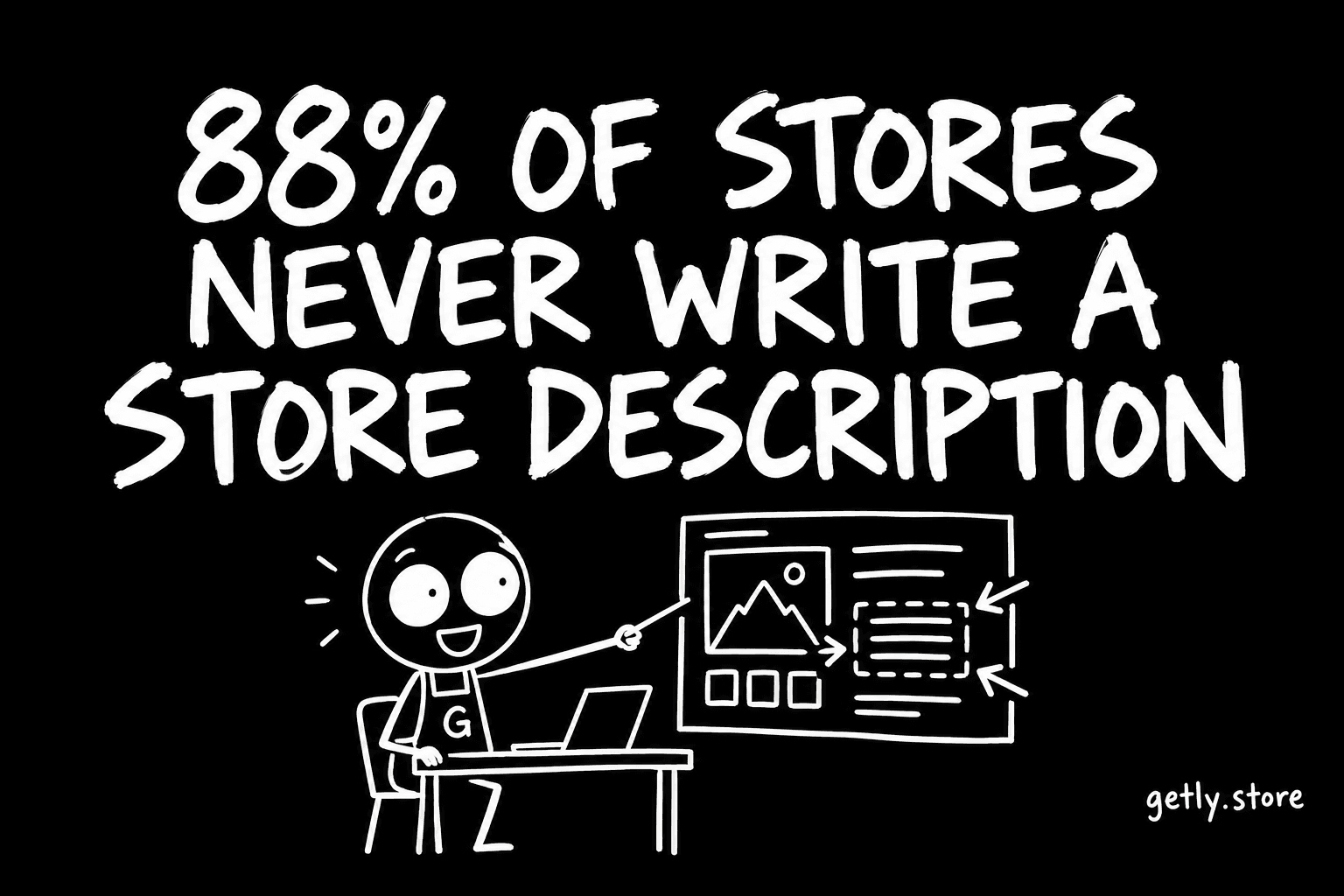
Every Getly store has a description field. On 14 September 2026, 87.8% of live stores had left it empty or filled it with fewer than fifty characters — closer to nine in ten than to eight.
This is not a small oversight on a decorative field. The store description is the only place on the platform where a seller gets to say who they are in their own words, and it is doing more work than most sellers realise.
Where the text actually appears
Three places, and two of them are outside the site.
On your storefront, under the name — the first thing a buyer reads after arriving from a product page and deciding to look at what else you make.
In search engine results, as the snippet under your store's link. When the field is empty we have to build that snippet from facts about the store instead. Those facts are true, but they are the same category of sentence every other store gets.
In link previews, when someone pastes your store URL into a chat or a post. The description is what appears under the title in the preview card.
So a field most sellers skip is the text that represents them in the three contexts where a stranger first encounters the store.
What a useful one contains
Not a mission statement. Three facts, in whatever order suits you:
- What you make, specifically enough to exclude things you do not make.
- Who it is for — the buyer needs to recognise themselves.
- One thing that is true of your work and not of the category — a tool you specialise in, a constraint you keep, an output format you guarantee.
Two sentences covers all three. "Print-ready coloring books for classrooms and care homes. Every set ships US Letter and A4, with a licence that allows unlimited printing on one site." That is 152 characters and it answers every pre-purchase question the category generates.
The related field nobody fills either
Only 5% of stores list a single social link — one in twenty. Those links are not decoration. A buyer deciding whether to trust an unfamiliar seller with twenty dollars is looking for evidence that a person exists behind the store, and a profile with a posting history is the cheapest evidence available.
The two fields work together. The description says what you do; the link lets someone check. Filling both takes under five minutes and moves a store from anonymous to identifiable.
Why it stays empty
Because it is not blocking. You can create a store, upload a product and make a sale without ever opening the settings page. Every field that is required gets filled; the optional ones get filled by people who have already thought about how their store looks from outside.
That is the actual reason to do it: almost nine stores in ten have not, so the ones that have are immediately distinguishable. This is rare in marketplace advice, where most improvements are things your competitors are also doing. Here the competition is genuinely not showing up.
Do it now, badly
A rough description beats an empty one by a wide margin and can be improved any time. Open your store settings, write two sentences about what you make and who buys it, add one social link, and save. You will have done something the overwhelming majority of stores have not.