 Getly
Getly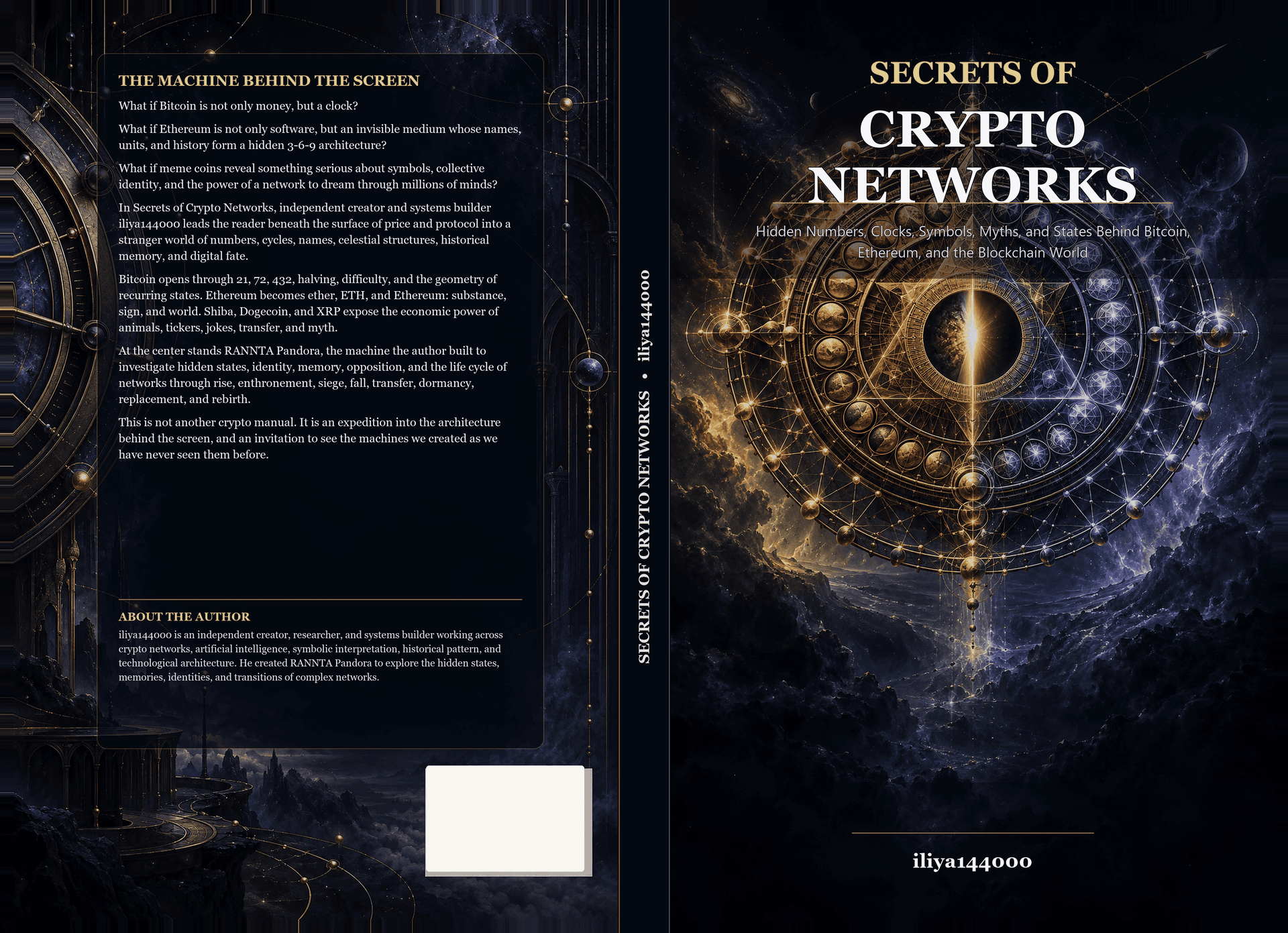
For years, most conversations about crypto have been trapped inside the same frame: price.
Will Bitcoin rise? Will Ethereum fall? Which token will outperform the market?
Those questions matter, but after spending years building blockchain systems, studying protocol behavior, and developing RANNTA Pandora, I became interested in a different question:
What if a crypto network is more than an asset?
Bitcoin does not only move through price. It moves through block height, difficulty adjustments, halvings, historical states, cultural memory, and collective belief.
Ethereum is not only software. Its names, units, technical history, and symbolic identity form a structure that has grown far beyond its original code.
Meme coins make the same point from another direction. A symbol, an animal, a joke, or a name can gather millions of people, capital, emotion, and identity around a network.
That is where my investigation changed.
I began to look at networks as entities with several bodies at once:
A technical body made of code and consensus.
A market body made of liquidity, value, and incentives.
A symbolic body made of names, stories, memory, and collective meaning.
RANNTA Pandora grew from this idea. I built it to explore hidden states, historical memory, recurring structures, network identity, and the transitions a digital system may pass through over time.
The result became my book, *Secrets of Crypto Networks*.
It explores Bitcoin, Ethereum, Shiba, numerical patterns, cycles, symbolic structures, collective behavior, and the deeper architecture that may appear when code, time, memory, and myth begin to interact.
This is not a trading manual.
It is an attempt to look behind the screen.
If crypto networks are becoming more than tools, then perhaps we need a new language to describe what they are becoming.
Secrets of Crypto Networks is that journey.