 Getly
Getly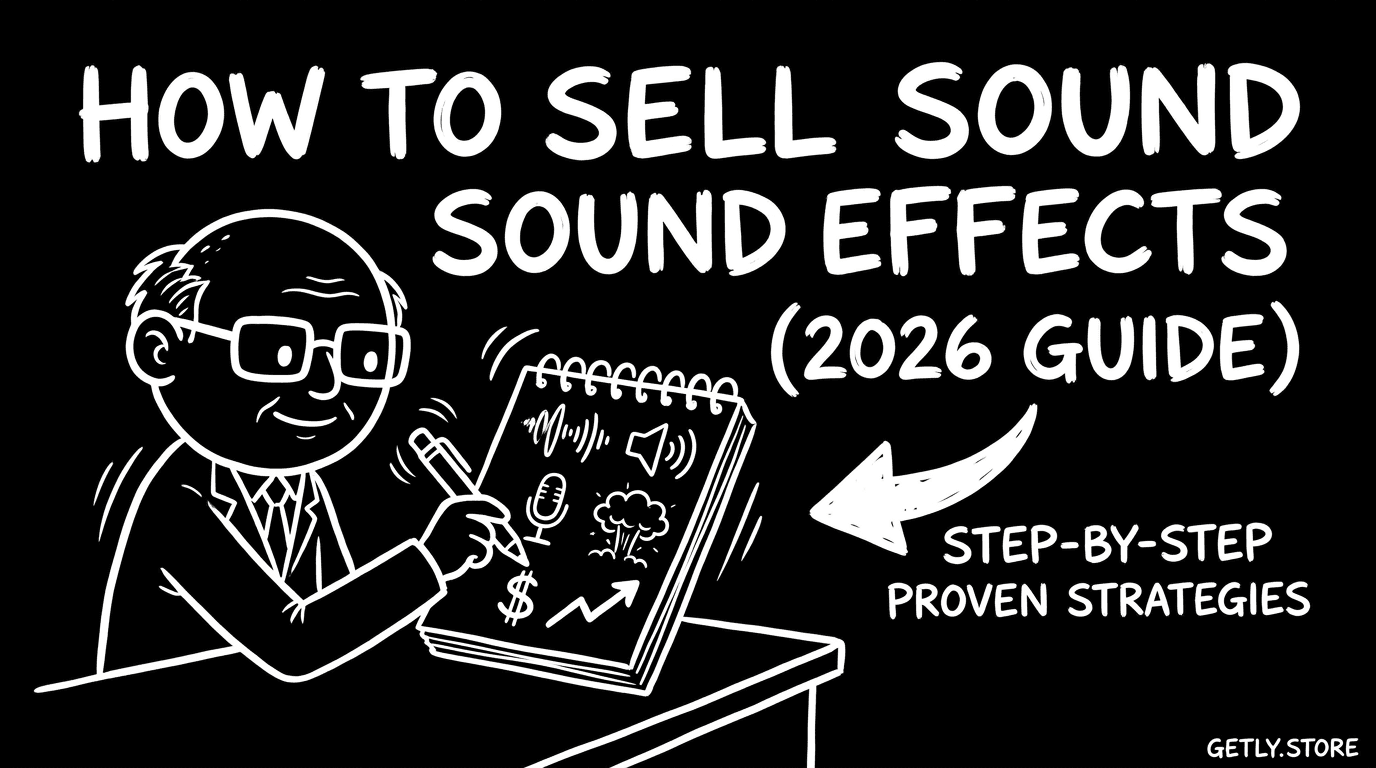
How to sell sound effects — a 2026 guide for creators. You will learn what buyers expect from sound effects packs, how to package files and licenses so people can use them fast, and a pricing structure that matches real buying behavior. You will also get practical distribution ideas for the sound effects niche, plus a marketplace checklist for launching on Getly. If you want a path from “I recorded audio” to “someone bought it,” this guide gives you the steps you can execute this week.
Who's selling sound effects right now?
You usually see solo creators who record audio in the real world, then clean and organize it into themed packs like UI clicks, sci-fi impacts, or footsteps. They often build a reputation by releasing consistent libraries and clear licensing so game and video creators can drop assets into projects without friction.
Agencies and small audio studios also sell sound effects libraries, especially game-dev ready packs. They tend to focus on production workflow, repeatable naming standards, and versioning when they expand a catalog.
Side-project creators enter sound effects too, often starting with a few niche themes where they already have access (music production sessions, film editing recordings, Foley work). They win early when they publish readable previews and documentation instead of long descriptions that buyers must decode.
What buyers expect
Sound effects buyers expect usable audio, not “close enough.” They want clean loudness, consistent naming, and files that work in common editors and game pipelines without extra guesswork.
Most buyers also expect documentation that answers licensing and setup quickly. If you include a simple README with how to use the pack, you reduce support messages and refunds, because buyers feel confident before purchase.
- Common audio formats inside the pack (include WAV, and add MP3 only if you use it for preview or convenience)
- Clear file naming that stays consistent across folders and variants
- Preview assets that match what buyers get after purchase
- A license description per license tier (for example, personal vs commercial)
- A short README that tells buyers what they received and how to integrate it
Pricing playbook
Sound effects packs sell best when the price matches the scope. Many creators price themed packs around $15 to $80, then reserve higher pricing for larger “library” releases.
For game-ready libraries, creators often price in the $200 to $600 range, because buyers expect breadth, organization, and production-ready content. You can structure this using three tiers.
- Intro tier. Price a focused theme for quick sampling. Keep the scope tight and the pack easy to preview.
- Mid tier. Expand with variants, intensities, and multiple categories inside one theme.
- Premium tier. Publish a library that targets game use, with strong organization and documentation so buyers can build content workflows around it.
Use license tiers to match buyer intent. Personal licenses fit small creator projects, while commercial licenses fit product use, ads, and monetized releases. Also bundle related packs when it reduces buyer friction. A bundled “core + variants” library often converts better than forcing a buyer to purchase every sub-theme separately.
Packaging your sound effects
Package your library like a tool, not like an attachment. Buyers care about what they can open immediately, how fast they can find assets, and what rules they must follow for licensing.
- Include the main audio files in a consistent format and structure (WAV as your primary deliverable, with MP3 for preview if you use it)
- Use a clear folder structure (by category, by intensity, or by event type)
- Add preview assets that reflect the exact files you sell
- Ship a README file with what the pack contains, how to navigate folders, and any usage notes
- Ship a license file that states the rules for each license tier you offer
- Add version notes when you update a pack, so buyers understand what changed
- Document your update policy in the README so buyers know what to expect from future releases
Marketing channels that actually work
Sound effects buyers cluster where they plan production. You will get faster traction when you show work that game devs and editors can evaluate quickly.
- YouTube tutorial ecosystem. Post short “pack walkthrough” videos that demonstrate how you organize files and how the sounds behave in a simple demo scene.
- Game-dev communities. Share themed releases in game audio and implementation discussions where developers ask for asset packs.
- Sound design communities. Publish breakdowns that show how you recorded, processed, and layered sounds into usable categories.
- X and creator circles. Post before and after clips and quick preview timelines so buyers can judge quality in seconds.
- Discord servers. Join audio-focused rooms and provide pack demos, not just links. Answer “what formats do you include” and “how is licensing handled” in your posts so the conversation stays useful.
Why Getly?
Getly pays creators in USDT/USDC stablecoins (alongside Stripe fiat). That matters for creators in regions where other payment setups fail, and it gives you a payout path that does not rely on card-based payouts.
Getly also uses an 80% revenue share by default, and you can choose crypto stablecoin payouts (USDT or USDC). Both Stripe Connect and crypto payouts follow the same 1st and 15th monthly schedule, with minimum payout thresholds and your crypto wallet details stored in your seller settings.
Start small: publish one clean themed pack, package it with a README and license file, and price it for quick sampling. Then build toward a larger game-ready library once buyers start asking for specific categories. If you want to track long-term demand, keep releasing in consistent themes and update your documentation each time you refine the pack.