 Getly
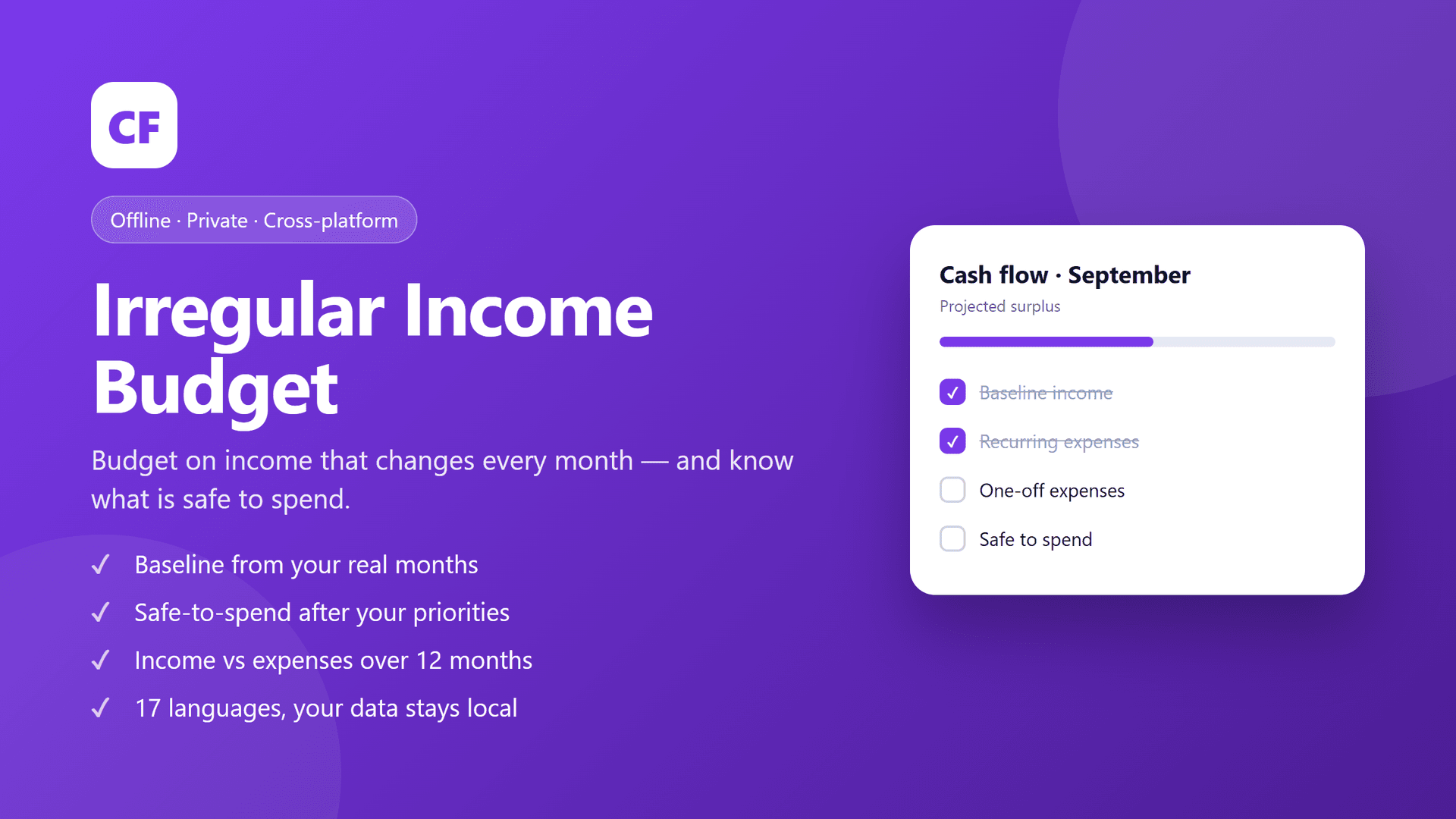
A monthly budget assumes a monthly paycheque. If your income arrives as three invoices, one deposit and a good week in February, the spreadsheet you downloaded is not slightly wrong - it is describing a different life.
The fix is not a better spreadsheet. It is a budget with two layers: a floor you never spend below, and a buffer that absorbs the shape of the month.
Why the monthly model breaks
A monthly plan has one assumption baked in: money arrives before it is needed. When income is irregular, three things happen that the model cannot express:
So the goal changes. You are not dividing income into categories. You are answering one question each month: how much of what arrived is actually available to spend?
Layer one: the floor
The floor is the smallest amount your life can run on for thirty days: rent or mortgage, utilities, food, transport, insurance, debt minimums, and the subscriptions you would not cancel in a crisis. Not the gym you use, the gym you intend to use.
Write that number down. It is the only figure in the whole system that must be accurate. Everything else is planning.
Then the rule: money that is not needed for the floor this month goes into the buffer, not into spending.
Layer two: the buffer
The buffer is a category that behaves like a person - it has a balance, it receives money in good months, and it pays the floor in bad ones. Practically:
The moment you can see "months of floor covered" instead of "money in the account", irregular income stops feeling like weather and starts feeling like a runway.
Three months of floor is a comfortable place. One month is already a different life from zero.
Layer three: the irregular categories
Some costs are not monthly: insurance once a year, tax, equipment, a domain renewal. Do not smooth them into twelve invisible amounts. Give each one a small standing amount per month whose whole job is to be boring when the bill arrives.
A useful split for most people:
Adjust the numbers. Keep the four jobs. A plan with four buckets can be recalculated on the back of an envelope.
The monthly review, in three minutes
Once a month, regardless of what arrived:
1. Enter what actually came in.
2. Pay the floor and note how many months of floor the buffer now holds.
3. Look at the sinking funds. Something is always short - fix it next month, not this.
That is the whole ritual. It is short because it has to happen in a bad month too.
What it does not do
What is in the download
Three formats, one purchase: Windows (runs from a folder, no installer), Android, and web/PWA for a tablet or browser. Seventeen languages, no account, no subscription, everything stored locally on your device. If the paperwork side of the business is the messy part, the [small-business paperwork toolkit](https://www.getly.store/product/small-business-paperwork-toolkit-offline-receipts-ledger-orders-quotes-windows-a-mvcjaymq) covers quotes, orders, receipts and a ledger, and it uses the same idea of one local data file.
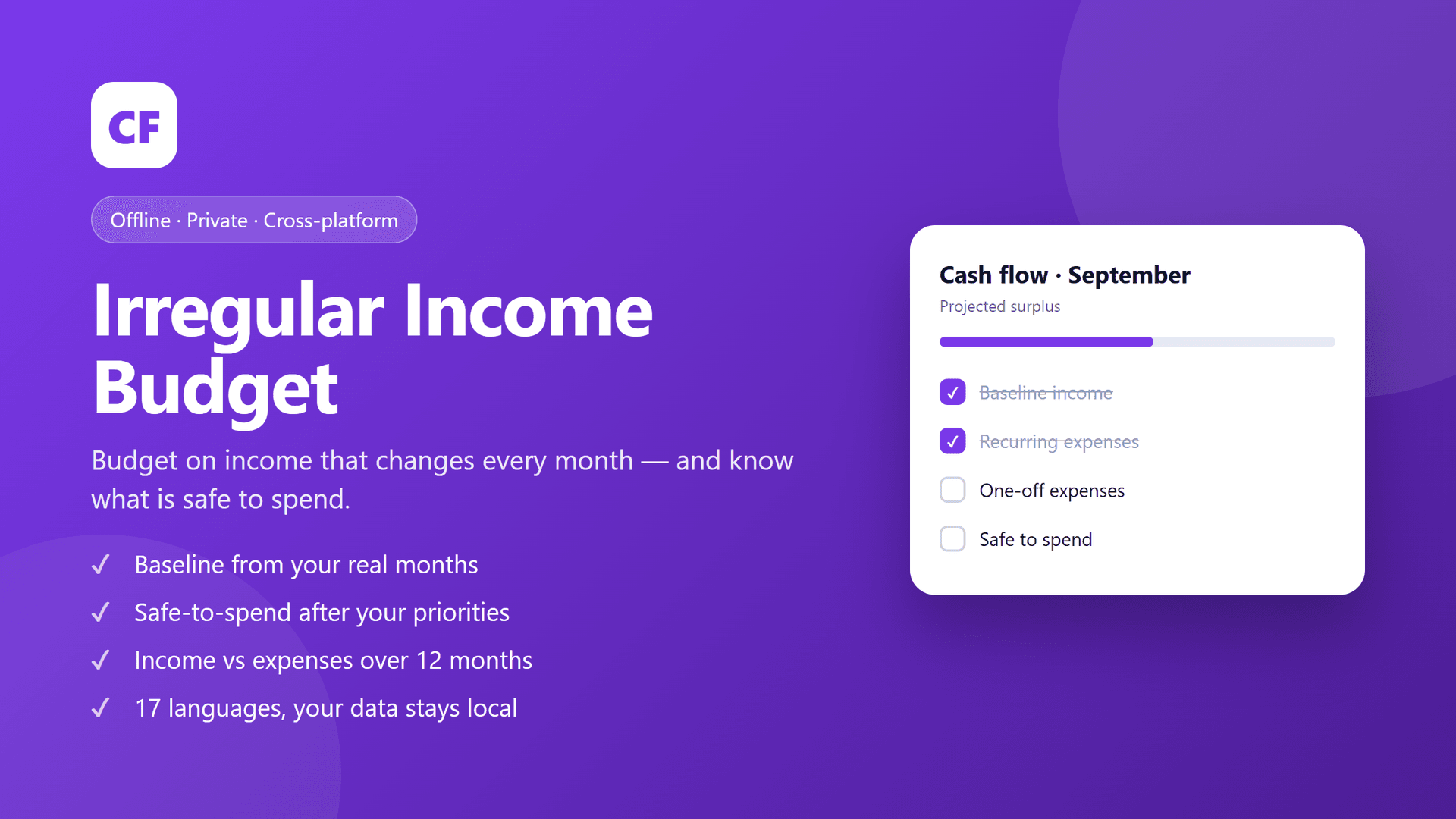
Irregular Income Budget - Offline Budget App for Freelancers (Windows, Android, Web)
$14.00
Questions people ask before buying
How many months of income do I need to enter before it is useful? One. The next month is when it starts earning its keep.
Is it for a family or an individual? One budget per file, so one person or one household. Two separate businesses means two files.
Can I use it for a small business rather than personal money? Many people do, especially when business and personal money arrive in the same week. The buffer concept works the same way.
What if I have debt? Put minimums in the floor, and any amount above the minimum in the sinking funds with the name of the debt. Paying down debt is a bill you have already decided to pay.