 Getly
Getly
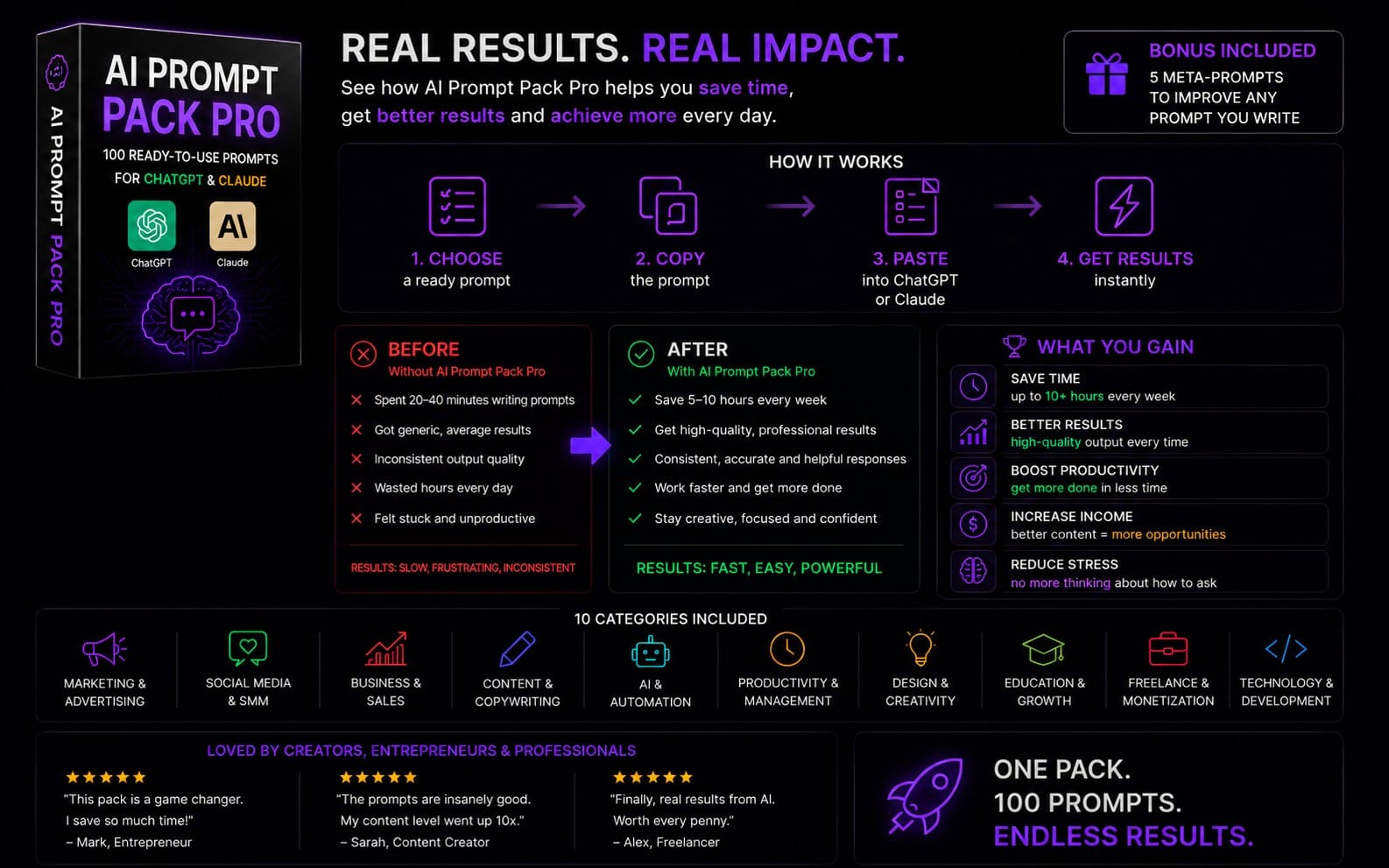
AI prompts moved from “nice-to-have” to a real product category in 2026. If you’re wondering where money is made—midjourney prompts pack, AI art prompts, and AI workflow templates—this guide breaks down what’s selling, why it sells, and how to package prompts so buyers actually trust and reuse them.
We’ll cover prompt types for Midjourney, DALL·E, ChatGPT, and Stable Diffusion, plus a practical publishing checklist for how to sell AI prompts on Getly without guesswork.
1) AI prompts marketplace trends in 2026 (what buyers pay for)
The biggest shift in the AI prompts marketplace in 2026 is buyer intent. People aren’t just collecting clever strings of text—they want outcomes: consistent character style, repeatable compositions, faster production, and fewer iterations. That’s why “workflow templates” and “prompt systems” outperform single-use prompts.
Another trend: buyers increasingly pair prompts with tools they already use (prompt + workflow). For example, artists want prompts that work cleanly with their generation settings, and developers want prompts that produce structured outputs they can paste into a pipeline.
What sells across all models
Regardless of whether a buyer uses Midjourney, ChatGPT, DALL·E, or Stable Diffusion, these prompt categories consistently monetize:
- Style + consistency packs (repeatable look, character sheet prompts, palette guidance)
- Task-specific prompts (product mockups, book covers, UI illustrations, album art, concept art)
- Workflow templates (prompt-to-story, prompt-to-brief, prompt-to-iteration loop)
- Structured outputs (JSON, tables, checklists, shot lists, scene breakdowns)
- Prompt “recipes” (inputs you can swap + fixed parameters that hold quality)
If your prompts don’t reduce friction for the buyer, they tend to be treated as disposable. Your goal is to make them feel like a repeatable shortcut.
Pricing psychology: packs beat single prompts
In 2026, buyers prefer predictable value. A single prompt feels like a lottery ticket. A pack feels like a toolkit. That’s why midjourney prompts pack and AI workflow templates command higher perceived value.
Creators who do well typically bundle prompts in “tiers” (e.g., 20 prompts free-sample style, 80 prompts premium, plus extra “iterations” or “negative prompt” libraries). Even if you don’t show tier pricing publicly, the product structure should reflect how buyers think: start small, then go all-in.
Pro tip: Write prompts like software functions: clearly name variables (subject, style, lighting, camera), lock stable “parameters,” and document what to swap. Buyers trust systems, not mysteries.
2) Midjourney prompts pack: the highest-demand art prompt formats
Midjourney prompt packs remain one of the most popular items in AI art prompts because Midjourney users quickly see visual payoff. But what sells isn’t “pretty prompts”—it’s prompts that reliably reproduce a look and reduce trial-and-error.
The best midjourney prompts packs usually include a consistent style foundation (e.g., character construction, lighting rules, lens/camera cues) and then variations for different scenes, angles, and compositions.
Prompt structure that performs
Use a repeatable template so buyers can remix without breaking quality. A simple, effective structure:
- Subject: the concrete character/object
- Style: references and art direction cues
- Environment: setting and mood
- Lighting: time-of-day + key light description
- Camera: lens, angle, distance, motion cues
- Composition: framing, depth, background detail level
- Constraints: what to avoid (often via negative cues)
Midjourney users love when you include “rules” for consistency (e.g., “eyes always catch a bright specular highlight,” or “avoid muddy backgrounds”).
Examples of Midjourney packs buyers want
Think in categories that map to how people buy art assets: marketing, entertainment, and social content. Common pack themes in 2026 include:
- Anime hero / toon shader packs (character variations + lighting variants)
- Product showcase packs (clean studio lighting + multiple angles)
- Album cover concept packs (same artist “world,” different cover concepts)
- UI illustration packs (consistent icon style + background patterns)
If your pack supports consistent character generation, mention it explicitly. Buyers want “same face, different pose” more than they want random results.
Success pattern: Creators who add 1–2 “iteration loops” (e.g., prompt A + two follow-up prompts that fix common issues) consistently outperform packs that only list prompts.
3) DALL·E and Stable Diffusion: prompt packs for precision, control, and automation
DALL·E and Stable Diffusion users often care about controllability and output repeatability. In 2026, that means prompts that work like production tools: predictable style, clear composition, and—especially for Stable Diffusion—clean negative prompt logic.
Many buyers also want prompt packs that fit into workflows with other steps: generating references, producing multiple variants, then selecting or refining with additional tools.
DALL·E: clarity wins (and “prompt cards” sell)
DALL·E tends to reward specificity and structured art direction. Rather than writing one long prompt, many successful creators use “prompt cards”:
- Card 1: subject + style reference + background
- Card 2: same subject, different angle
- Card 3: same subject, different lighting
Include a short “how to modify” section so buyers know what they’re allowed to swap. That turns your pack into a reusable system.
Stable Diffusion: negative prompts + parameter guidance
Stable Diffusion packs do best when they include negative prompts and guidance that prevents common artifacts (bad hands, over-sharpening, inconsistent textures, blown-out highlights). Even if you don’t list every parameter, give the buyer enough to produce stable outputs.
Here’s the type of information that buyers consider “professional”:
- Negative prompt library (hands, text, watermark, weird anatomy, low detail)
- Style consistency cues (material, texture, line weight, color grading)
- Resolutions / aspect targets (so the output matches intended usage)
- Variant strategy (seed or sampler suggestions if you use them)
Common mistake: Selling a pile of prompts without telling buyers what problem each prompt solves. If your pack doesn’t reduce iteration time, people treat it like entertainment—not a production asset.
4) ChatGPT prompts: workflow templates that save time (not just “ask better”)
ChatGPT prompt packs sell well when they’re task-based: customer support scripts, marketing briefs, lesson plans, SOP generation, content calendars, and creator workflows. In 2026, buyers increasingly want templates they can run repeatedly.
Think of your ChatGPT products as “mini departments.” A good pack includes: the system role, the input variables, and the expected output format.
Prompts that perform: structured deliverables
Instead of “Write a blog post about X,” use prompts that demand a format. For example:
- Tables (features, benefits, comparison points)
- Checklists (launch readiness, QA steps)
- Scripts (email sequences, DM scripts)
- Briefs (creative direction + constraints)
Structured outputs reduce editing time. That’s the real value.
AI workflow templates for creators and studios
One reason AI workflow templates keep winning is they connect multiple steps. For example, a creator might need a concept → script → shot list → caption variations. Your job is to package that flow.
Here are workflow templates that fit the 2026 creator economy:
- From idea to content pack: title variants, hooks, outline, CTA, hashtags
- From prompt to production brief: audience, tone, visual style, constraints
- From assets to marketing copy: product page copy + FAQ + objections handling
- From draft to localization: rewriting prompts per language tone
If you sell prompts for multimodal workflows, explicitly list what the buyer should paste and what the model should return.
- In 2026, buyers pay for repeatable outcomes: consistency, reduced iteration, and structured outputs.
- Midjourney prompts packs win when they include rules + variations—not just single renders.
- Stable Diffusion packs win when they include negative prompts and artifact prevention guidance.
- ChatGPT packs win when they behave like workflow templates with clear input variables.
5) How to write AI prompt product descriptions that convert
Most creators underestimate product copy. But in any AI prompts marketplace, buyers can’t “test drive” your prompts the same way they can test software. Your description must make the value obvious.
In 2026, conversion tends to correlate with clarity: what you get, who it’s for, what problems it solves, and what results are realistic.
Use a buyer-focused checklist
Write your description like an onboarding page. Include:
- Best use cases (e.g., “book cover concepts,” “character consistency,” “UI illustrations”)
- Model compatibility (Midjourney, DALL·E, Stable Diffusion, ChatGPT—list explicitly)
- Included materials (prompt cards, negative prompt library, iteration loop scripts)
- Skill level (beginner-friendly, intermediate, advanced)
- Output expectations (e.g., “consistent character look,” “4K-ready composition guidance”)
If you can, show 1–3 screenshots or render examples and explain what prompt variation produced them.
Package formats: from “prompt pack” to “prompt system”
A strong packaging strategy increases perceived value. Consider selling prompts in formats like:
- Prompt pack: a library of prompts with short usage notes
- Prompt system: templates + variables + iteration loops
- Workflow templates: multi-step instructions and copy/paste prompts
- Negative prompt packs: Stable Diffusion artifact prevention libraries
This also helps you scale: you can reuse the “system” structure while updating examples for new art directions.
6) How to sell AI prompts on Getly: listing, tiers, and delivery that buyers trust
Now let’s get practical. If you want to sell AI prompts on Getly in 2026, your biggest lever is trust: clear compatibility, clean organization, and delivery that’s instantly useful.
Getly supports bundles, multi-license tiers, embed widgets, and automated DMCA protection—use these features to make your prompts easier to adopt and harder to misuse.
Step-by-step: publish an AI prompt product that performs
Here’s a straightforward workflow you can follow:
- Choose a niche outcome: “anime character consistency,” “product mockups,” “logo variations,” or “studio workflow SOPs.”
- Select the model scope: list which models your prompts target (Midjourney, DALL·E, Stable Diffusion, ChatGPT).
- Organize assets: use folders like /Midjourney, /StableDiffusion, /ChatGPT, /Negative Prompts.
- Write usage notes: for each prompt card, add a one-line “what this fixes.”
- Create tier licenses: personal vs commercial vs studio/team (don’t bury this—be explicit).
- Set expectations: include an examples section (“Results depend on your settings and references”).
This is also where you add trust elements: show prompt-variable inputs and what outputs the buyer can expect.
License tiers that match buyer intent
Most prompt buyers fall into two groups: creators who want personal/portfolio use, and businesses who need commercial outputs. Your license tiers should mirror that reality.
- Personal: portfolio, learning, and non-commercial projects
- Commercial: client work and monetized content
- Studio/Team: shared internal use and multiple seats
When your tier language is clear, fewer customers ask questions—and fewer disputes happen.
Pro tip: If your prompt pack is tied to specific production workflows, add a short “pipeline” doc. For example, if you generate references for 3D work, include a section on how to translate the look into materials, UVs, and LOD strategy (even if it’s just guidance).
Use visual/3D-adjacent prompt systems to stand out
If you’re in design or 3D, you can differentiate your AI prompt products by connecting them to asset workflows. Many creators sell “AI art prompts” but buyers truly value prompts that slot into production.
For instance, if your prompts aim to create stylized anime visuals, you can align them with toon/anime shading workflows. A natural adjacent product example is AnimeForge Pro - Ultimate Anime & Toon Shader System, which can help customers translate “look” into consistent shader pipelines.
Similarly, if your pack is focused on asset preparation for games or real-time engines, you can pair guidance with tools like Skava Game Asset Validator Pro (even if you’re not directly selling it). The key is not to market the tool—it’s to show buyers you understand how their final pipeline works.
7) Promotion that doesn’t feel spammy: bundles, proof, and iteration loops
In 2026, “promotion” is mostly about proof and packaging. Instead of relying on hype, you’ll convert better by demonstrating how your prompts perform over multiple attempts.
Bundles and iteration loops are a huge part of that. When customers can see “Prompt → fix → improved output,” they’re more likely to buy a pack because they trust it will work for their specific use case.
Build bundles around real workflows
Bundle prompts so buyers can move from concept to deliverables without hunting for extra packs. For example:
- AI art bundle: Midjourney character pack + Stable Diffusion negative prompts + DALL·E cover variations
- Marketing bundle: ChatGPT product brief template + ad copy variants + brand tone guide prompts
- Creator bundle: story prompt workflow + shot list template + caption and CTA generator
Bundles increase average order value and reduce buyer anxiety (“Will I need another purchase?”).
Show iteration loops (this is where you earn trust)
Upload examples of what happens when the buyer needs to adjust outputs. For example:
- Initial render: “great pose, hands are off.”
- Fix prompt: “same character, improved hands, simplified glove details.”
- Final render: “hands corrected, texture refined, consistent lighting.”
This turns your prompt pack into a troubleshooting guide. That’s far more valuable than listing prompts in random order.
Also, keep your product materials clean. Use consistent naming, include a short README, and add a FAQ section for compatibility (“Works best with these aspect ratios,” “Designed for these styles,” “How to modify without breaking the look”).
- Use bundles tied to workflows, not just collections of prompts.
- Include iteration loops and fix prompts for common failure modes.
- Organized assets + clear license tiers reduce buyer friction.
Conclusion: Build a prompt product people can reuse (and sell)
The top AI prompts marketplace winners in 2026 aren’t the ones with the most “cool” prompts—they’re the ones with systems. Midjourney prompts pack creators succeed by delivering consistency rules and variations; Stable Diffusion sellers win with negative prompt libraries and artifact prevention; ChatGPT prompt authors stand out by packaging real workflows into copy/paste templates.
If you want a soft next step, browse Getly to see how prompt products are structured and what buyer expectations look like—then build your next release with a clearer outcome, tighter formatting, and one iteration loop that saves customers time. When you’re ready, you can also start selling and apply the packaging strategies above to your first prompt system.