 Getly
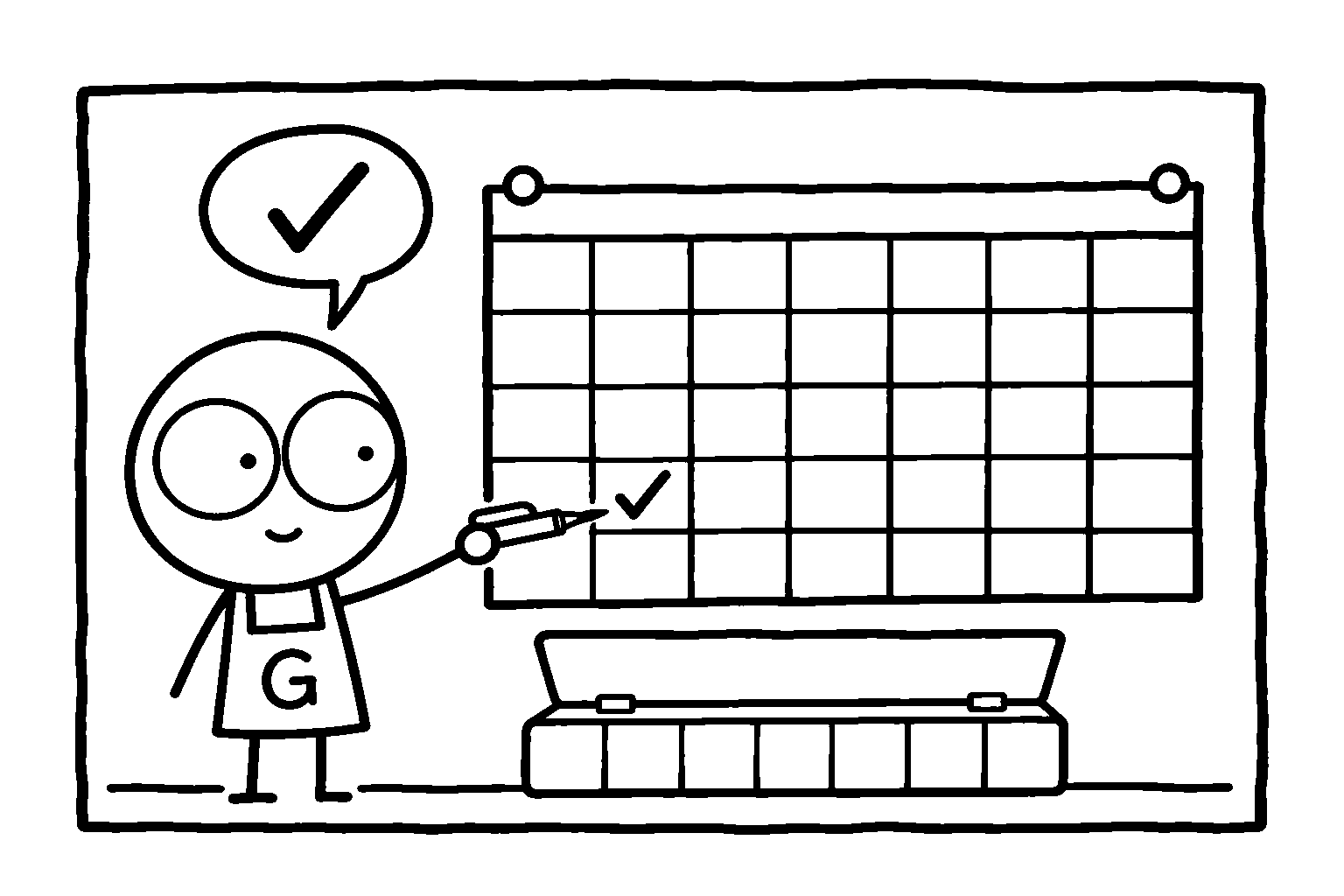
A medication log printable is a one-page chart where you write down each dose: the medicine, the amount, the time it is due, whether it was taken, and a note. Caregivers use it so that two people never give the same dose twice and nobody has to remember whether the evening tablet happened. On Getly, listings with medication, caregiver or health tracker in their name have a median price of $7.99, measured November 17, 2026. This guide covers the columns a daily log needs, paper size, PDF versus an editable file, and what to check before you buy. It is about paperwork, not medicine: doses and schedules come from the doctor or pharmacist.
What printable trackers cost today
We measured four Getly categories together on November 17, 2026: Journals and Trackers, Medical and Health Templates, Daily, Weekly and Monthly Planners and health and wellness nonfiction. Inside that shelf, a small group of listings is named for this exact job. Both views:
| Whole shelf (four categories) | Listings with medication, caregiver or health tracker in the name | |
|---|---|---|
| Active listings | 309 | 10 |
| Free listings | 0.6% | 0% |
| Lower quarter of prices | $3.45 | $5.49 |
| Median price | $5.99 | $7.99 |
| Upper quarter of prices | $10.35 | $11.50 |
| Personal-use licence | 60.2% | 100% |
The upper quarter of prices starts at $10.35 on the whole shelf and at $11.50 on the named medication and caregiver listings. So a dedicated caregiver tracker costs a couple of dollars more than a general planner page, and you get a layout built for doses instead of to-do items. All ten named listings carry a personal-use licence. That covers printing as many copies as your family needs. It does not cover handing them out to every patient in a care home; for that, ask the seller.
If none of the named trackers fits, a general daily or weekly planner page with a table can work. It will need more hand-writing, because you add the medicine names and times yourself each week.
The columns a daily medication log needs
A good log is boring on purpose. Each row is one dose, and anyone in the family can read it in five seconds. Look for these columns in the preview:
| Column | Why it matters |
|---|---|
| Medicine name and strength | The full name and strength from the box, not "the white one". Two similar pills get confused. |
| Dose | How many tablets, drops or units, as the prescription says. |
| Scheduled time | Morning, noon, evening, night, or exact clock times. |
| Taken (check box) | The core of the sheet. One tick per dose. |
| Time actually given | Useful when a dose was late, so the next one is not given too early. |
| Initials | Who gave it. Essential when two or three people share the care. |
| Notes | Refused, vomited, side effect noticed, given with food. |
Extra pages worth having in a set: a medication list (all current medicines, prescriber, start date, purpose), an as-needed log for pain relief and similar medicines with the reason for each dose, a refill tracker with pharmacy dates, and a contact page with the doctor, pharmacy and emergency numbers. Some caregivers also want a simple symptom or vitals page for blood pressure, blood sugar or temperature.
Daily, weekly or monthly layout
- Daily page: one sheet per day, lots of room for notes. Best when there are many doses or many people giving them.
- Weekly grid: medicines down the side, seven days across. Fewer sheets, and you see a missed dose at a glance. Works for up to about eight to ten doses a day.
- Monthly chart: one row per medicine, 31 small boxes. Good for one or two medicines taken once a day, less good for complex schedules.
Many sets include all three. Start with the weekly grid on the fridge and keep the medication list in a folder you can take to appointments.
A4 or Letter, PDF or editable
Check the paper size before you pay. US Letter is 8.5 x 11 inches; A4 is 21 x 29.7 cm, a little narrower and taller. A Letter PDF printed on A4 usually scales down with small white margins, which is fine. An A4 file on Letter may clip the bottom row unless you choose "fit to page" in the print dialog. Good sets ship both sizes.
- PDF to print: the simplest. You write by hand. Fine for most families.
- Fillable PDF: you type medicine names once, then print a stack. Saves time when the list is long.
- Editable document or spreadsheet (DOCX, XLSX, or a Google Sheets link): you change columns and add rows. Useful if the schedule changes often.
Read the file list on the product page. Getly shows the number of files, their formats and their combined size in a short FAQ under the listing, so you know before paying whether you get a fillable file or only a flat PDF.
Practical tips for caregivers
- Copy the medicine list from the pharmacy label or the prescription, not from memory. Spell names the way the box spells them.
- Use one pen colour per person if several people give doses. Initials still go in the column.
- Keep last month's sheets and take them to the next appointment. A doctor can read a pattern faster than a story.
- Print a few spare weeks so nobody improvises on the back of an envelope when the stack runs out.
- Put the sheet where the medicines are, on the cupboard door or in the box lid, not in another room.
A log records what happened. It does not decide what should happen. Questions about a missed dose, a double dose or side effects go to the doctor, the pharmacist or your local health line.
Paying and downloading on Getly
You can pay by card (Apple Pay or Google Pay where your device supports them) or with USDT or USDC stablecoins. PayPal is not accepted. No account is needed, card orders deliver the files right after payment, and the purchase stays in your library so you can print fresh sheets any month. Every store has a refund window of at least 30 days, and a Getly admin reviews each refund request.
Start in Medical and Health Templates and Journals and Trackers, search for medication or caregiver, and compare the column layout in the previews with the list above. If you only need a plain weekly grid, the planner category has cheaper general pages.