 Getly
Getly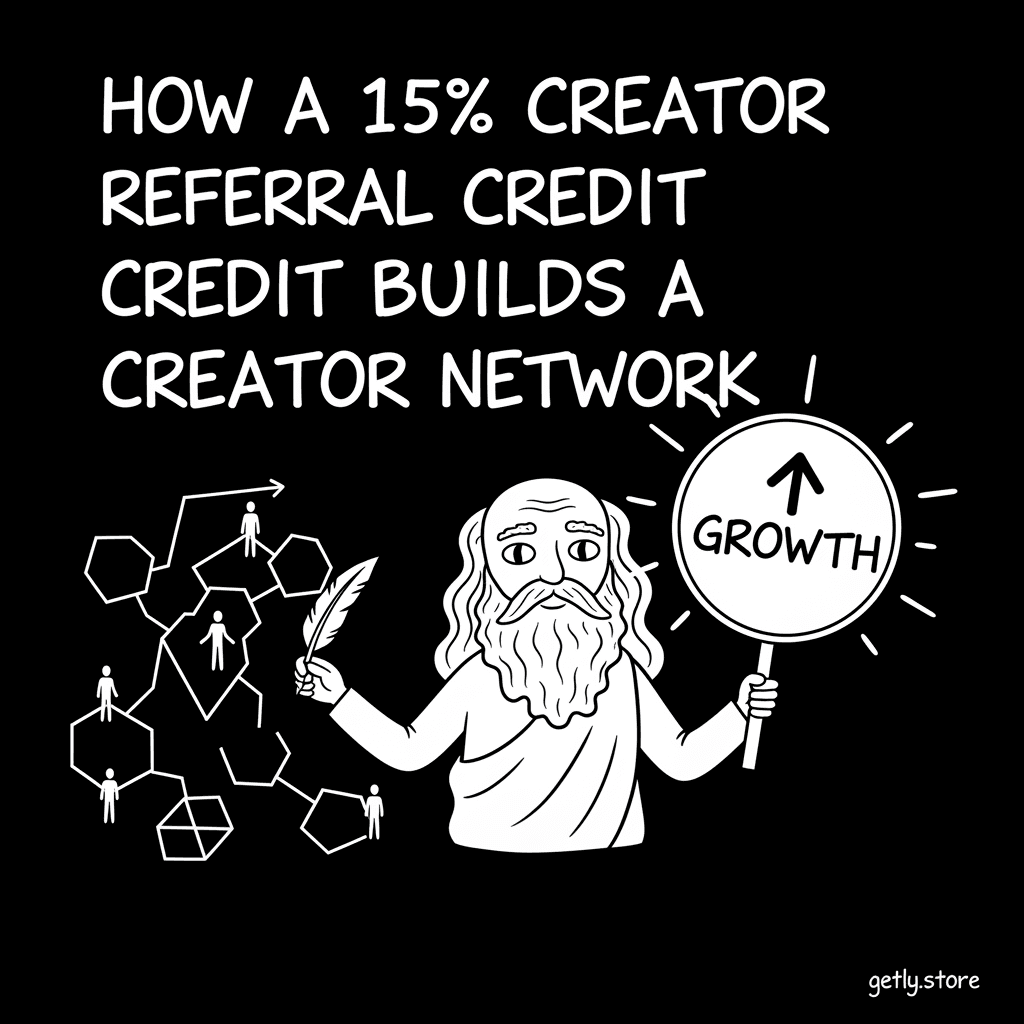
Creator networks do not grow from ads alone. They grow when your best partners bring new buyers, and buyers get a reason to try creators from day one. In this guide, you will learn how a 15% referral credit on a friend’s first purchase can help you build a community-driven marketplace that scales through trust.
If you run a creator program, manage a marketplace, or just want a healthier community flywheel, you can apply the same mechanics: clear incentives, fast onboarding, and product matching that feels personal.
Referral program for creators: the simplest growth loop
A referral program for creators turns “sharing” into measurable acquisition. One referral credit gives your community a tangible payoff when a friend buys a first digital product.
In 2026, the best referral programs build momentum on two fronts at once: creators attract new customers, and customers discover creators faster. That double benefit matters because digital goods purchase decisions often depend on social proof, not just search rankings.
- Use a creator referral program that credits 15% of a friend’s first purchase.
- Design incentives for the “first purchase” moment, not for repeat buys only.
- Pair referral links with community-building actions (content, collections, product bundles).
- Make product discovery frictionless so referrals convert.
What “first purchase” incentives change for creators
First-purchase credits reduce the risk your referred buyer feels. They also reduce the social pressure the referrer feels, because the buyer gets an immediate benefit from trying something new.
For creators, this changes the economics. You do not need to wait for a long “education cycle.” Instead, the referral credit focuses on the highest-friction step: the first checkout.
Why this works in a community-driven marketplace
Community-driven marketplaces thrive on shared identity. Your members want to recommend creators that “match their taste,” and they want that recommendation to feel rewarding.
When your program credits first purchases, your community learns quickly which categories perform well. Over time, creators share more targeted links, and buyers discover better-fit products.
How a 15% referral credit for first purchases drives trust
A 15% referral credit for first purchases works because it aligns three incentives at once: the referrer wants reward, the buyer wants a deal, and the marketplace wants new buyers.
On many marketplaces, referrals feel like a “discount code.” On a good referral program, the credit feels like recognition from a friend. That emotional framing matters because digital goods often get evaluated through reviews, previews, and recommendations.
A healthy referral program doesn’t just pay out. It rewards good curation. When your best creators recommend consistently, your marketplace catalog looks more trustworthy to new buyers.
Trackable attribution makes creators share more
Creators share more when they trust attribution. When the program credits purchases made within an attribution window after a click, the referrer can post without worrying that timing will break the commission.
Getly’s referral mechanics credit a referrer with 15% of a referred user’s first purchase. This creates a direct “reward loop” that supports creator network building through social channels.
Design the message so the buyer feels safe
A referral link performs best when the creator explains the outcome. Instead of saying “buy this,” the creator communicates who the product helps and what result the buyer gets.
For example, a creator posting about Instagram growth can frame Rapid Instagram profits around clear weekly outcomes, not vague marketing promises.
- State the buyer profile (solo creator, marketer, beginner, agency).
- State the problem (visibility, workflow chaos, tracking uncertainty).
- State the product format (template, toolkit, Notion OS, sheet).
- State the next step (use it today, copy the structure, start tracking).
Grow creator community with product-matching campaigns
Referral programs convert when your creator network building strategy includes product matching. Instead of random sharing, you route referrals to the product types that a specific community segment already wants.
In 2026, buyers expect relevance fast. A creator referral should lead to a landing experience that feels chosen, not scraped. You can make that happen with campaign templates: “Best for beginners,” “Best for EU compliance,” “Best for Web3 launches,” and so on.
Create 4 campaign lanes that map to buying intent
Build lanes so creators can choose the lane that fits their audience. Each lane includes example products so your community learns what “good referrals” looks like.
- Launch & momentum: toolkits and ready-to-use templates.
- Workflow systems: operational dashboards, Notion systems, and process templates.
- Compliance & risk reduction: checklists, playbooks, and documentation templates.
- Tracking & decision support: spreadsheets and trackers that reduce uncertainty.
Use product examples creators can recommend immediately
When you give creators concrete examples, you lower their effort and improve their conversion. Here are product ideas that work well for referrals because they map cleanly to an outcome.
Social-first outcome products help creators share on Instagram, TikTok, X, and YouTube Shorts. Example: Rapid Instagram profits.
Workflow system products help creators share to Notion communities and ops-focused groups. Example: FactoryOS™ Plant or FactoryOS™ Starter.
Launch kits and founder templates fit Web3 and entrepreneurship communities. Example: Web3 Founder Launch Kit A complete, ready-to-use toolkit for Web3 founders to plan and present a launch professionally.
Pro tip: ask top creators to run “referral seeding.” They post one recommendation plus a second follow-up 24 to 72 hours later that explains how they used the product. The second post increases buyer confidence and boosts conversions from the same link.
Community driven marketplace growth strategies beyond the credit
A referral credit builds the incentive, but marketplace growth strategies require better discovery and faster “time to value.” Your program should support creators with the assets and context that help buyers decide.
Most referral disappointments happen because the buyer never reaches the “aha” moment. Fix that with product positioning, structured previews, and creator content that answers practical questions.
Make the referral landing experience match the creator’s claim
Your buyer clicks a referral because the creator promised a result. The product page needs to show proof quickly: previews, deliverables, license tiers, and how the product solves the problem.
When creators recommend a template, the buyer should quickly understand what they get. When creators recommend a system, the buyer should see what the system controls, what inputs it expects, and what outputs it produces.
Bundle the referral with “next action” content
Give creators a simple way to close the loop after a link share. The best “community-driven marketplace” move is to pair the referral link with a short setup instruction so buyers start using immediately.
- For spreadsheets, include a “first row to fill” instruction.
- For Notion systems, include a “set up this view first” step.
- For launch toolkits, include a “complete this page today” checklist.
- For compliance guides, include a “read this section before selling” reminder.
Referral credits create the incentive, but practical onboarding creates the habit. Habit is what turns a one-time buyer into a repeat buyer and a future referrer.
How to measure creator network building with referral signals
You can grow creator network building without guessing. Measure the referral signals that show whether the incentive turns into purchases and whether creators keep sharing.
Start with a small scoreboard. You do not need 20 metrics. You need a few indicators that connect creator activity to buyer conversion.
Referral program dashboard signals that matter
Use these signals to understand your loop from click to first purchase.
- Referral click volume by creator or channel.
- First-purchase conversion rate from referred visitors.
- Time to first purchase after a referral click.
- Top converting product categories (templates, trackers, systems).
- Creator retention, meaning who shares again after their first payout.
Adjust the program using what the data tells you
If clicks are high but first-purchase conversion stays low, the issue often sits in the product fit. Creators might share products that look good but do not match the buyer’s current need.
If conversion stays strong but clicks remain low, your community content might lack clarity. Try shorter posts, better before-and-after framing, and “what I did today” updates.
Common mistake: changing the credit rate before you improve product fit. A small relevance tweak often beats a large incentive change because first purchases happen when buyers trust that the product solves their exact situation.
Referral program for creators FAQ: community growth answers
Referral programs feel simple until you run them across a diverse creator community. These answers help you avoid confusion and keep your referral program for creators consistent.
How does a 15% referral credit work for first purchases?
It credits the referrer with 15% of the referred user’s first purchase. This structure focuses your incentive on the highest-friction step, the first checkout, and helps you grow creator community faster.
Why target the first purchase instead of repeat purchases?
First purchases determine whether a referred buyer joins the marketplace habit. A credit at that moment lowers risk for the new buyer and gives creators a clear reason to keep sharing.
How do you encourage creator network building in practice?
You set campaign lanes, provide product examples, and help creators share content that includes a “setup first step.” That combination reduces buyer uncertainty and increases first-purchase conversion from referral links.
What should creators post to improve referral conversions?
Creators should post a problem-to-outcome explanation, show the product format clearly, and include a next action like “use this sheet today” or “set up this Notion view first.” That framing increases trust and improves conversions.
What’s the fastest way to improve results from referrals?
Measure clicks and first-purchase conversion together. Then adjust product matching to the audience lane. Most referral lift comes from better fit, not from changing the credit before you fix discovery and onboarding.
- A 15% referral credit for first purchases gives creators a fast, motivating reason to share.
- Creator network building accelerates when you match products to audience intent.
- Track referral clicks and first-purchase conversion to find where the funnel breaks.
- Help creators post outcome-based content and a practical “first step” for buyers.
Community-driven marketplace growth strategies work when you treat referrals like a system, not a coupon. A 15% first-purchase credit gives you the fuel. Product matching, clear onboarding, and tight measurement turn that fuel into a creator network that keeps expanding through trust.
If you want to support your community with product recommendations that convert, pick one creator lane and run a week of targeted referral posts featuring your strongest-fit digital goods.
Getly Support