 Getly
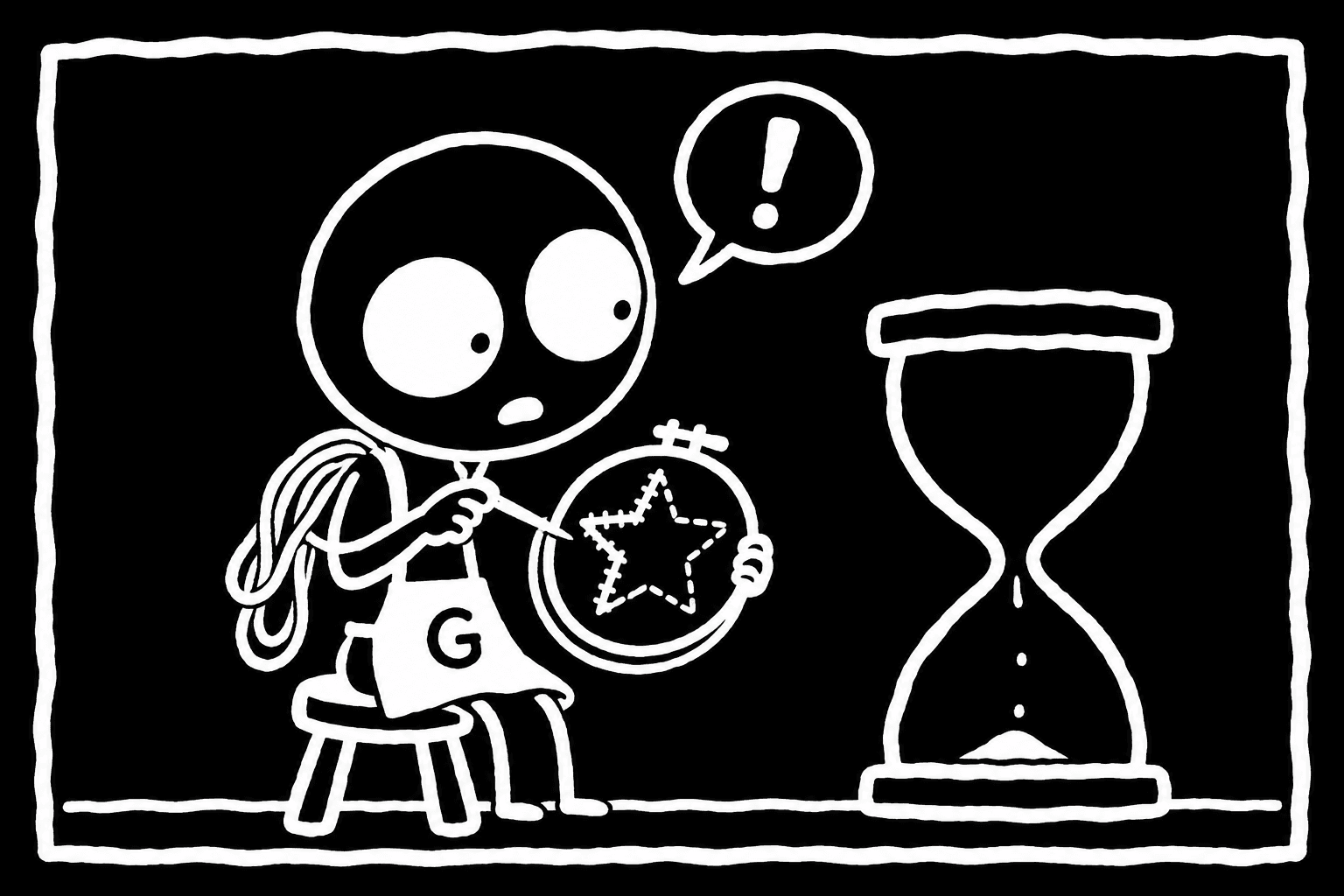
The right Christmas cross stitch patterns for this year are the ones you can actually finish by December 25. That depends less on the design than on two numbers printed on every good chart: the stitch count (width by height) and the number of thread colours. This guide shows how to turn those numbers into a finished size and a time budget, what a downloadable chart should contain, what Christmas patterns cost on Getly, and what the licence lets you do with the finished piece.
What the Christmas shelf looks like today
We measured the cross stitch shelf on Getly on November 4, 2026. The part we write about here is the Christmas and winter part: listings whose name contains "christmas", "winter", "santa" or "snow". That part holds 8 listings. Their median price is $5.50, and the middle half costs between $5 and $7. 12.5% of them are free. Every one of them ships a PDF chart inside a ZIP archive, and every one carries a personal licence.
For context, the whole cross stitch shelf holds 65 listings with a median of $6 and a middle half between $5 and $10.75. There, 72.3% of listings carry a personal licence, 1.5% a commercial one, and 24.6% state no licence at all. So a Christmas chart costs about the same as any other chart. You are paying for a few evenings of design work, not for a brand. You can browse the full shelf in Cross Stitch Patterns.
Stitch count first, picture second
A chart's stitch count is its size in squares, for example 80 x 100. The finished size depends on the fabric you stitch on. Aida is sold by "count": the number of stitches per inch. The formula is simple: stitches divided by fabric count equals inches.
| Stitch count | 14-count Aida | 16-count Aida | 18-count Aida | Good for |
|---|---|---|---|---|
| 30 x 30 | 2.1 x 2.1 in (5.4 cm) | 1.9 x 1.9 in (4.8 cm) | 1.7 x 1.7 in (4.2 cm) | Tree ornaments, gift tags |
| 50 x 70 | 3.6 x 5 in (9 x 12.7 cm) | 3.1 x 4.4 in (7.9 x 11.1 cm) | 2.8 x 3.9 in (7.1 x 9.9 cm) | Cards, small hoops |
| 100 x 100 | 7.1 x 7.1 in (18.1 cm) | 6.25 x 6.25 in (15.9 cm) | 5.6 x 5.6 in (14.1 cm) | A 7 or 8 inch hoop, a small frame |
| 150 x 200 | 10.7 x 14.3 in (27.2 x 36.3 cm) | 9.4 x 12.5 in (23.8 x 31.8 cm) | 8.3 x 11.1 in (21.2 x 28.2 cm) | Framed pictures, a long project |
Add at least 3 inches (7.5 cm) of fabric on every side for framing or a hoop. A 100 x 100 design on 14-count needs a piece of Aida about 13 x 13 inches, not 7 x 7.
Size is not the same as work. A 100 x 100 chart has up to 10,000 full stitches if the whole area is filled. A design with a lot of empty background may have half that. Good charts state the stitched area or the number of stitches; if the listing does not, look at the preview and estimate how much of the grid is filled.
Time your own pace, then pick the chart
Nobody can tell you how fast you stitch. Your speed depends on the fabric, how often the colour changes and how many evenings you really have. The honest way is to measure it:
- Stitch one 10 x 10 block (100 full stitches) of a mid-difficulty area, with two or three colour changes.
- Note the minutes. That is your pace per 100 stitches.
- Count your free evenings until the day you want to give the piece away, and the minutes per evening.
- Multiply. Total minutes divided by your pace, times 100, is the number of stitches you can afford.
- Take 70% of that number. The rest is for backstitch, mistakes, washing, pressing and framing.
Then choose a chart whose filled stitches fit that budget. If the design you love is too big, look for the same motif at a smaller stitch count, or stitch only the central part and frame it in a smaller hoop.
What eats time besides full stitches
- Colour count. Every colour change means ending a thread and starting another. A 10-colour chart moves faster than a 35-colour chart of the same size.
- Confetti. Single stitches of one colour scattered across an area are slow. Photo-style charts are full of them.
- Fractional stitches. Quarter and three-quarter stitches give round shapes, but each one takes longer than a full stitch.
- Backstitch. Outlines and lettering are done last. On a detailed design they can take a whole evening.
- Specialty threads. Metallic gold and blending filaments look festive and tangle more. Use shorter lengths.
- Dark fabric. Navy or black Aida for a snowy night looks great and is harder to count on in the evening light.
What the PDF should contain
Every Christmas listing we measured ships a PDF. A PDF is only as useful as what is inside it, so check the description and the preview images for these parts before you pay:
- A stitch count and a finished size for at least one fabric count.
- A symbol chart in black and white, readable when printed. Many good patterns include a colour-block version too; it helps to see the picture, the symbol version helps to count.
- A key that matches each symbol to a thread number from a named brand (DMC is the most common), with the number of strands for full stitches and for backstitch.
- A thread list with lengths or skein counts, so you can buy everything in one trip.
- Bold gridlines every 10 stitches and numbered rows and columns. Without them, counting a large chart is slow and errors creep in.
- A page split with overlap. A large chart split over several pages should repeat a row or two at the edges, so you can line the pages up.
- A preview that is the chart itself, or a real stitched photo. A mock-up made from a digital image can look smoother than the stitched result.
The ZIP archive usually holds the PDF in more than one version (for example, symbols only and colour), sometimes in several sizes. Open the file list on the product page to see what you get.
Licences: what you may do with the finished piece
All Christmas listings we measured carry a personal licence. For a cross stitch chart, that normally means you may stitch the design for yourself and give the finished piece as a gift. It does not let you sell finished pieces, sell or share the chart, or print copies for a class. Read the licence text in the listing: the seller's wording decides.
If you plan to stitch ornaments for a holiday market, look for a listing that says commercial use is allowed for finished items, or ask the seller before you buy. On the whole cross stitch shelf only 1.5% of listings carry a commercial licence, so asking is often the faster route. Where a listing states no licence at all, as 24.6% of the whole shelf does, treat it as personal use until the seller tells you otherwise.
A calendar backwards from December 25
Work backwards from the day you hand the gift over, not from the day you start.
| When | What to do |
|---|---|
| Now to mid-November | Time your pace on a test block. Choose the chart. Buy fabric and thread from the key. |
| Mid-November to mid-December | Full stitches, centre outwards. Mark finished 10 x 10 blocks on a printed copy. |
| December 14 to 18 | Backstitch, fractional stitches, metallic details. |
| December 18 to 20 | Wash if needed, press face down on a towel, frame or finish as an ornament. |
| Before December 20 | If the gift travels by post, it should leave now. |
If you start in December, choose an ornament-size chart (30 x 30 to 50 x 50) with few colours and no fractional stitches. Several small ornaments are also a safer plan than one large picture: each one is finished on its own, and you can stop at any time with gifts ready.
Buying a chart on Getly
You do not need an account to buy. Pay by card, with Apple Pay or Google Pay where your device supports it, or with USDT/USDC stablecoins. PayPal is not accepted. Card orders deliver the files right after payment, and the receipt email carries a download link for every file. Every purchase has a refund window of at least 30 days, so if the PDF is missing the key or does not match the listing, ask for a refund.
Before you pay, do three quick checks: the stitch count fits your time budget, the key names a thread brand you can buy locally, and the licence covers what you plan to do with the finished piece. Then open the Cross Stitch Patterns shelf, search for Christmas, winter, Santa or snow, and pick the one you can finish. Free charts exist there too, which makes a good test of a designer's chart style before you buy a larger one.