 Getly
Getly
By the end of this guide, you can choose voice descriptors that produce repeatable writing, turn vague tone requests into usable instructions, and revise an AI draft without flattening its personality. You will also have a short workflow for testing tone across product pages, emails, captions, and buyer guides.
1. Start with the reader and the job
Pick the reader before you pick the voice. A first-time buyer needs clear definitions and visible next steps. A repeat customer may prefer a shorter message that assumes product familiarity. A creator selling a design template needs a different tone from a creator selling a tax spreadsheet.
Write one sentence that names the situation: “A first-time buyer needs to decide if this Notion template fits a freelance workflow.” That sentence gives the writing a job. The voice should help the reader complete that job, rather than decorate the copy.
Next, choose two or three tone dimensions. Useful dimensions include formality, energy, warmth, directness, playfulness, and authority. Place each dimension on a simple range, then choose a point on that range.
For example, a budget planner for new freelancers might use low formality, high warmth, and high directness. Those choices point toward short sentences, plain financial terms, and instructions that start with a verb.
2. Turn vague adjectives into observable behavior
Words such as “professional,” “engaging,” and “human” describe an intention. They do not tell a writing tool what to do on the page. Convert each adjective into actions that a reader can see.
| Vague descriptor | Useful instruction | What you can check |
|---|---|---|
| Professional | Use precise terms, calm confidence, and direct recommendations. | Each claim has a reason or example. |
| Friendly | Use contractions, acknowledge the reader's situation, and explain terms without sounding childish. | The copy sounds approachable without using forced jokes. |
| Engaging | Open with a concrete problem, vary sentence length, and add one specific example per main idea. | The introduction gives the reader a reason to continue. |
| Human | Use natural contractions, concrete details, and occasional sentence fragments where they suit the channel. | The copy avoids stock phrases and repeated sentence patterns. |
| Premium | Use restrained language, selective detail, and confident recommendations without inflated claims. | The copy names quality signals instead of announcing luxury. |
Use a descriptor when you can connect it to a visible choice. “Warm” can mean “recognize the buyer's concern before giving advice.” “Confident” can mean “make a recommendation and support it with one reason.” “Playful” can mean “use one light comparison in a caption, then return to the product benefit.”
Ask for behaviors, not moods. A mood gives the tool room to guess. A behavior gives you something to edit.
3. Build a voice brief before you prompt
A short voice brief keeps tone consistent across several drafts. Write it in five parts: audience, purpose, qualities, boundaries, and a sample.
- Audience: Name the reader's experience level, situation, and likely concern.
- Purpose: State the action you want the reader to take or the decision you want the reader to make.
- Qualities: Choose two or three descriptors, then define each one with a behavior.
- Boundaries: List habits to avoid, such as inflated promises, slang, exclamation marks, or long introductions.
- Sample: Add a short paragraph that already sounds close to the target voice.
Keep the brief short enough to reuse. A paragraph usually gives you enough guidance. A page of abstract brand language gives the writing tool more material to imitate than a clear set of priorities.
Here is a practical brief for a digital meal-planning product:
Audience: Busy adults who want a repeatable weekly routine. Purpose: Help the reader decide if the planner suits a household of two to four people. Qualities: Warm, direct, and capable. Use plain language, short explanations, and specific household examples. Boundaries: Avoid guilt, diet promises, fake enthusiasm, and clinical nutrition claims. Sample: “Choose five dinners, add the ingredients to one list, and adjust the portions before you shop.”
The sample matters because readers notice rhythm as well as vocabulary. A voice can use simple words yet still sound wrong if every sentence follows the same pattern.
Name the reader
Describe the buyer's situation and the decision or task the copy should support.
Set two tone ranges
Choose levels for qualities such as warmth, formality, and directness.
Add visible rules
Tell the writer which sentence, word, punctuation, and example choices fit the voice.
Attach a sample
Give one approved paragraph so the rhythm has a concrete reference.
4. Write the prompt in layers
Put the voice brief beside the assignment instead of hiding it inside a single adjective. Start with the role and audience, then state the task, tone behaviors, structure, and review criteria.
Use this structure:
- Role: “Write as a practical editor for independent digital-product creators.”
- Audience: “Address a buyer who understands the problem but has not used this type of product.”
- Task: “Draft a 120-word product description for a budget spreadsheet.”
- Voice: “Sound warm and direct. Use contractions, concrete examples, and calm recommendations. Explain one unfamiliar term. Avoid hype, guilt, and generic claims such as ‘transform your life.’”
- Shape: “Open with the buyer's problem, describe three practical uses, and close with a specific next step.”
- Review: “After the draft, list two sentences that may sound too promotional and offer tighter alternatives.”
This order helps because the tool sees the communication problem before it sees the style preferences. The review request also turns tone into an editing task. You can keep the draft and the review together, or request the review after you inspect the first version.
Ask for one voice at a time. A request for “warm, witty, authoritative, casual, elegant, urgent, and reassuring” creates competing priorities. Choose the qualities that help the reader make the intended decision.
5. Use examples with boundaries
Examples teach rhythm, detail level, and restraint. Supply one short paragraph that matches the desired voice, then explain what the example demonstrates. You might write, “This sample uses short openings, practical verbs, and one mild joke. Keep those habits, but do not copy its wording.”
Use two examples when the channel changes. A product page may use calm explanations, while an Instagram reply may use shorter sentences and a more personal greeting. Keep the underlying qualities stable, then adjust the format for the channel.
Give the tool a bad example only when the contrast teaches a precise boundary. For instance, show a sentence packed with claims such as “effortless,” “powerful,” and “game-changing,” then instruct it to replace those claims with a concrete result or feature. A long list of forbidden phrases can make the copy stiff, so focus on patterns that cause the problem.
Do
- Show a 60 to 100 word sample in the target rhythm.
- Explain the actions behind the sample.
- Set limits for claims, slang, punctuation, and sentence length.
Don't
- Stack six personality adjectives without definitions.
- Ask for “human” writing without naming human choices.
- Paste a famous person's style and ask for imitation.
6. Test tone with a small batch
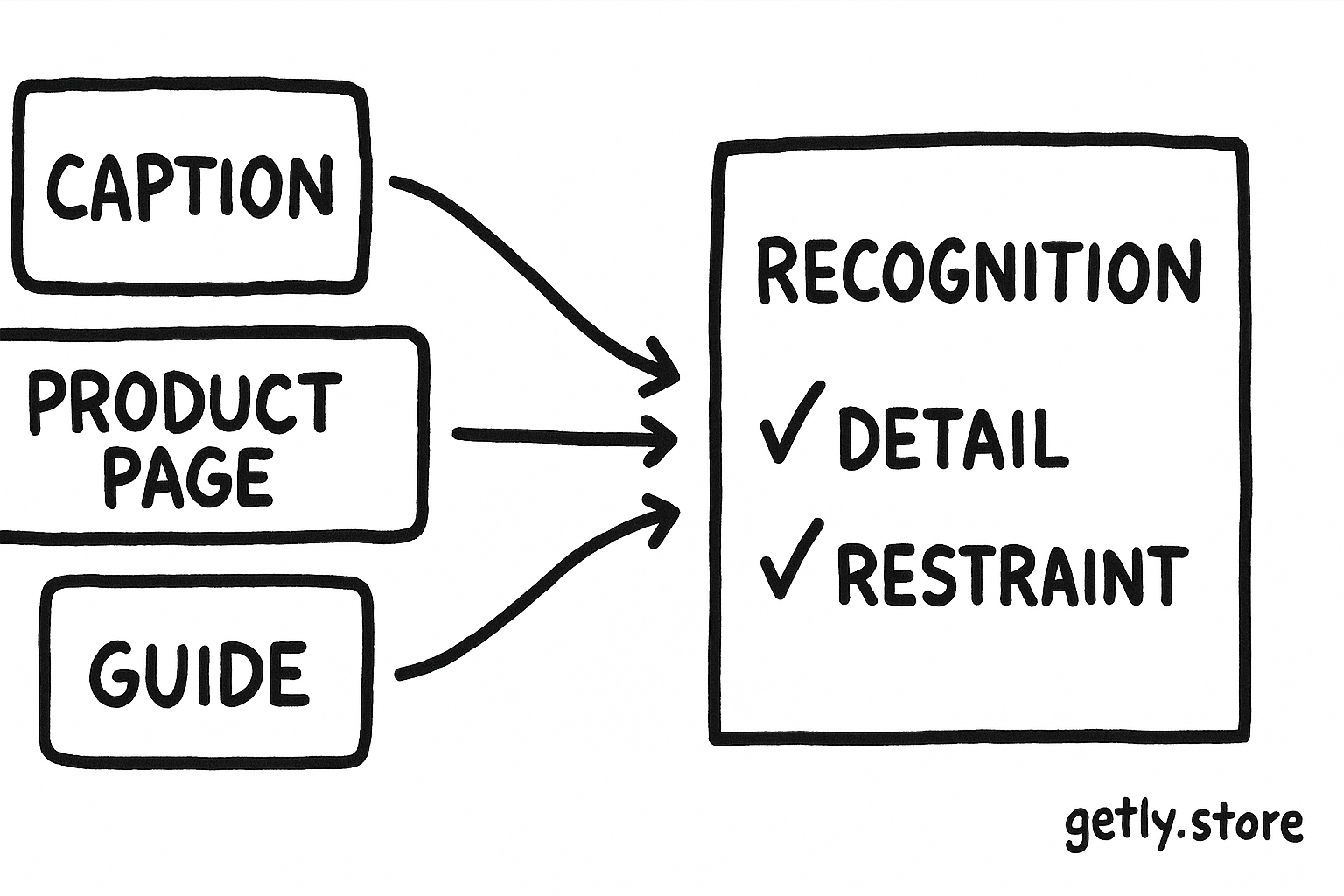
Test the voice on three different pieces before you adopt it for a product line. Choose one short caption, one product paragraph, and one helpful explanation. A voice that works in a caption may sound vague on a sales page, while a voice that suits a guide may feel stiff in a direct message.
Score each sample against the same five checks:
- Recognition: Can you identify the intended reader from the wording?
- Usefulness: Does each paragraph help the reader decide or act?
- Consistency: Do the warmth, formality, and directness stay within the chosen ranges?
- Specificity: Does the copy name a real situation, feature, result, or example?
- Restraint: Does the copy avoid claims that the product cannot support?
Mark the exact sentence that misses the target. Then revise the instruction that should have prevented it. If the copy sounds too formal, add “use contractions and address the reader as you.” If the copy sounds too sales-focused, add “describe the limitation before recommending the product.” A targeted change teaches more than adding another broad adjective.
Keep a small library of approved lines for recurring formats. Store the line with a note about its function, such as “opens a product description with a concrete problem” or “answers a sizing concern without pressure.” These examples give future drafts a reliable starting point.
Common mistakes that flatten a voice
Using “professional” as the whole brief
Professional writing can sound concise, warm, technical, formal, or conversational. State the reader, the subject, and the behaviors you want. “Use calm recommendations, define specialist terms, and support claims with examples” gives you a usable target.
Confusing energy with exclamation marks
Energy comes from verbs, concrete stakes, varied rhythm, and a clear point of view. Five exclamation marks do not create momentum. Ask for active openings and specific examples instead.
Adding rules that fight each other
“Keep every sentence short” can clash with “explain the process in detail.” Set a priority: use short sentences for instructions, then allow longer sentences when a comparison needs context. Clear priorities help you resolve tradeoffs.
Changing the audience halfway through
A draft for experienced designers should not explain basic file formats in every paragraph. A draft for beginners should define the terms that affect a purchase. Name the reader at the top of each new assignment, especially when you reuse a prompt.
Judging tone without reading aloud
Read the draft at normal speaking speed. You will catch stiff transitions, crowded clauses, forced jokes, and repeated openings faster than you will catch them in a silent scan. Mark one or two problem patterns, then revise the voice brief.
A reusable tone prompt
Copy this structure and replace the brackets:
Write for [specific reader] who wants to [specific task or decision]. Create [format and length]. Use a [formality level] voice with [warmth level] warmth and [directness level] directness. Show those qualities through [two to four visible behaviors]. Include [required details]. Avoid [two to four concrete habits or claims]. Follow this structure: [outline]. Before you finish, check each sentence for [specificity, accuracy, and tone fit].
Run the prompt on a small batch, compare the results, and adjust one rule at a time. That method shows which instruction changes the voice, while a large rewrite hides the cause.
Frequently asked questions
Which voice descriptors work best in AI writing prompts?
Descriptors such as warm, direct, calm, playful, and precise work best when you define their visible behaviors. For example, define warm as acknowledging the reader's concern and using natural contractions.
Why does “professional” produce inconsistent writing?
Professional describes a broad intention rather than specific writing choices. Add instructions about formality, sentence length, terminology, evidence, recommendations, and boundaries around promotional claims.
How many tone qualities should a prompt include?
Choose two or three primary qualities. Define each quality with a behavior, then add boundaries for habits that would damage the voice. A short priority list reduces conflicts between instructions.
Should I include a writing sample in a tone prompt?
Yes. A short approved sample shows rhythm, detail level, and restraint. Explain which habits the sample demonstrates, and tell the writer to follow those habits without copying the wording.
How can I tell if an AI draft matches my intended voice?
Test the draft against recognition, usefulness, consistency, specificity, and restraint. Mark the exact sentence that misses the target, then revise the related instruction instead of adding another vague adjective.