 Getly
Getly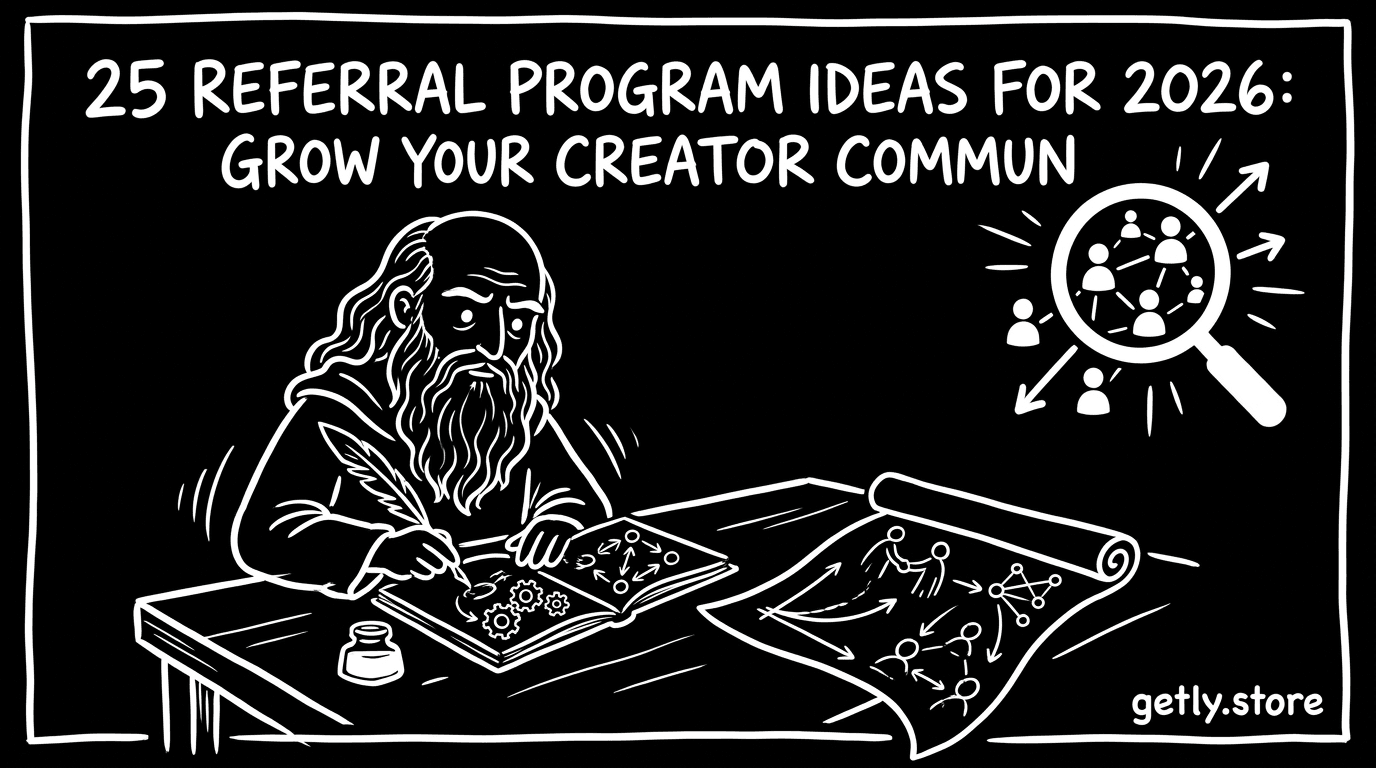
Referral growth feels simple until you try to scale it across a creator network. For 2026, the winning approach blends clear incentives, community-driven momentum, and product experiences that make sharing feel natural.
This guide gives you 25 referral program ideas designed for creators and teams building a community driven marketplace like Getly, plus practical ways to turn referrals into long-term retention.
- Use a referral program for creators that rewards both the referrer and the buyer, with onboarding that removes friction.
- Pair each referral mechanic with a “first value” product moment that makes sharing easy.
- Design creator network building with tiers, challenges, and status perks, not just one-time bonuses.
- Run marketplace growth strategies that connect incentives to content formats, bundles, and multi-license value.
What is a referral program for creators in 2026?
A referral program for creators is a system that turns existing fans or collaborators into invite partners. You give them a trackable invite, and you reward actions that signal real demand, like a first purchase.
In 2026, creators expect the program to feel like part of the community, not like an extra checkout button. They also expect transparent rewards and fast payoff. Your best “referral program for creators” designs include a clear path from invite to first win, like a guided download, a starter asset, or a low-effort upgrade.
Pro tip: Tie each referral incentive to a specific action milestone. “Invite” alone rarely grows creator network building. Reward the moment someone buys, downloads, and uses the product.
How to grow creator community with referral loops
To grow creator community, you need referral loops that repeat. A one-time invite bonus gets you a spike. A loop gets you compounding growth.
Build loops around outcomes creators care about: better results, faster workflows, easier collaboration, and visible progress. The more your referral mechanics reinforce those outcomes, the more partners want to share again.
Make the shareable outcome specific
Creators share what they can demonstrate. If your referral program links to products with a clear “before and after,” your partners can post real proof instead of guessing.
For example, a creator who teaches face-free video editing can point new buyers to Product Title AI Text Animation Mastery: Create Viral Videos Without Showing Your Face. That makes the invite story concrete: new users get a workflow, and the referrer gets credibility.
Use frictionless entry points
Your referral experience should move people from “I clicked” to “I got value” quickly. You can’t ask creators to wait for multiple steps when they plan content on a publishing calendar.
Start with a single product recommendation and a clear next action. If you sell presets, templates, plugins, or blueprints, your invite should land directly on a product moment that delivers value on first use.
Success pattern: When your referral invites match the creator’s niche, newcomers download what they need immediately. That speeds up the second behavior, which fuels retention and future shares.
25 marketplace growth strategies for creator network building
Creator network building works when your referral program also teaches new members how to participate in the marketplace. The referral becomes an invitation to a shared workflow, not just a discount.
Below are 25 referral program ideas you can run in 2026. Each one includes what to reward and what outcome to track.
- Two-sided first purchase reward: Reward both the inviter and the buyer for the buyer’s first purchase.
- Milestone ladders: Give escalating perks after the referrer reaches set numbers of successful referrals.
- Creator “starter bundle” invite: Include a small starter product recommendation for new buyers who came from a referral.
- Verified workflow badge: Award status for partners who send buyers into the right product category.
- Community challenges: Run monthly referral challenges tied to product themes like presets or animation styles.
- Tiered license teaser: Offer early access to multi-license tiers for users who refer.
- Bring-a-collaborator week: Reward creators for inviting other creators to co-create content.
- Profile spotlight rotations: Feature top referrers in community posts or creator updates (manual or automated).
- “Teach the product” content credit: Reward referrers when newcomers create a demo using the purchased asset.
- Referral-to-bundle upgrades: Encourage buying a bundle by offering a reward after bundle purchase from a referral.
- Download streak rewards: Reward referrers when referred users download and come back within a set period.
- Preset and template share packs: Give partners extra value assets to share for onboarding.
- Vertical-specific invite codes: Separate referral tracks by niche so rewards feel relevant.
- Creator network building “climb”: Let partners move from member to mentor based on successful referrals.
- Live workshop invite: Give access to creator workshops for top referrers and new buyers.
- Algorithm-friendly proof requirements: Ask referrers to share a short demo link or screenshot to qualify for rewards.
- Multi-DMU expansion: Reward referrals that result in multi-license purchases (when relevant).
- Affiliate-style transparency: Publish simple dashboards or summaries of referral outcomes.
- Founder circle for early growth: Create an invite-only group for creators who join and refer early.
- Community voting on next drops: Give voting power to referrers and let them influence product themes.
- Retargeting via email marketing: Send onboarding emails to referred buyers with a “next best product.”
- A/B test incentive phrasing: Test different reward descriptions to improve conversion from the share.
- Embed widget onboarding: Provide an embeddable product widget that creators can paste into pages.
- Creator blog paid subscription cross-sell: Reward referrals that also join creator education content.
- Instant utility rewards: Give a helpful micro-tool recommendation after purchase, like a complementary preset or converter.
If you want one guiding rule, use it: every referral mechanic must connect to a creator’s next step. When the referral leads to a workflow improvement, the community keeps sharing.
| Idea | Best for | Primary reward | What to measure |
|---|---|---|---|
| Two-sided first purchase reward | New community onboarding | Referrer + buyer first purchase | Referral-to-first-purchase rate |
| Creator “teach the product” credit | Creator network building | Content participation perk | Demo creation rate after referral |
| Referral-to-bundle upgrades | Catalog expansion | Bundle incentive | Bundle conversion from referred users |
| Milestone ladders | Long-term partner growth | Escalating status or perks | Repeat referrals over time |
Common mistake: rewarding only “clicks” breaks referral quality. Track the actions that signal intent, like first purchase and meaningful engagement.
What rewards work best for grow creator community?
The best rewards feel like momentum, not a raffle. Creators share when they believe the invite helps their audience succeed and when the reward matches the effort.
Use a mix of rewards: direct financial or account value, plus community recognition. Community recognition matters because creators build status by helping others.
Reward types creators actually value
Creators respond to incentives that connect to work outcomes: faster production, clearer results, and less trial-and-error. That’s why product-aligned rewards convert better than generic coupons.
When you market a creator referral program for creators, pair incentives with workflow items your partners can demonstrate.
Examples using Getly-style product moments
Pair referral messaging to product intent. Here are concrete “share angles” that map well to referral campaigns:
- Animation and short-form: Point partners to Product Title AI Text Animation Mastery: Create Viral Videos Without Showing Your Face for face-free video growth stories.
- Motion and presets: Encourage referrals with 99+ Alight Motion Preset XML so newcomers can test quickly and see results in minutes.
- Creative templates and DIY outputs: Promote Perfume Blueprint to creators who turn guidance into content series.
- Game engine workflows: Use Unreal to Unity Material Converter to reduce migration pain for niche audiences.
Each one creates a crisp referral narrative: the audience gets a specific payoff, and the referrer looks helpful, not salesy.
Pro tip: Write your referral landing copy around the first visible result. For presets, that means “import and see.” For converters, that means “convert and test.” For plugins, that means “install and use immediately.”
How to run referral campaigns without killing community trust
Community trust breaks when referral programs feel spammy. You keep trust by limiting noise, rewarding relevance, and designing rules that protect creator time.
In 2026, strong community-driven marketplace behavior looks like: clear expectations, helpful onboarding, and incentives that reward real value. Keep the experience consistent across partners, so members know what to expect.
Set quality rules for partner sharing
Write a short set of guidelines that your partners can understand in one read. The goal is to prevent irrelevant promotions and encourage product-aligned invites.
Quality rules can include: share in-topic, show results, and avoid misleading claims. When creators see other partners follow the rules, they stick around.
Use onboarding messaging that matches the product
Referral invites work better when the next step makes sense. If someone clicks because they want video animation, your follow-up should recommend the animation asset, not a random category.
Send simple onboarding: a recommended “first product,” a suggested workflow, and what to do after download. The more the onboarding mirrors how creators work, the more they complete their first win.
Warning: Don’t overload referred buyers with too many offers. Too many choices increases drop-off. Give one clear next action and one relevant add-on.
How to measure marketplace growth strategies from referrals
You can’t improve a referral program for creators if you only track total signups. Measure conversion and engagement, then connect those signals back to product categories and content themes.
Most teams win by separating metrics into three layers: acquisition, activation, and retention. Referrals often inflate acquisition while leaving activation weak, so you need all three layers.
Set up a practical metric stack
Track these metrics for each referral campaign and creator partner cohort:
- Referral-to-first purchase rate: How many invites turn into the buyer’s first purchase.
- Time to first value: How fast buyers complete the first meaningful action after purchase.
- Second behavior rate: How many buyers download additional items or upgrade licenses.
- Partner repeat referrals: How often the same referrer continues generating successful purchases.
- Category fit: Which product verticals convert best from each creator niche.
This measurement approach helps you tune creator network building. When one incentive mechanic drives more activation, you scale that mechanic.
Run simple experiments to find what converts
Use A/B testing for the incentive description and onboarding message. Small wording changes can reshape conversion because creators share based on narrative, not just reward size.
Then test product alignment. If you target “face-free viral video” content, compare performance for video-first products versus general templates.
- Measure referrals by first purchase and first value, not clicks.
- Use A/B tests on wording and onboarding that match creator workflows.
- Scale the incentives that drive repeat referrals and category fit.
FAQ: Referral program ideas and creator community growth
How do I design a referral program for creators that converts?
Reward the referrer and the buyer for a meaningful action, then connect the invite to a product moment that delivers first value quickly. Creators share more when they can demonstrate a clear outcome for their audience.
What is creator network building in a community driven marketplace?
Creator network building means you grow relationships that keep products moving through the ecosystem. Your referral program should encourage creators to invite collaborators, share workflows, and produce demos that help newcomers succeed.
Which marketplace growth strategies work best for referrals in 2026?
Use milestone ladders, content-aligned challenges, and referral-to-bundle upgrades. Track activation and retention alongside first purchase so you keep the program healthy as it scales.
How can I keep my referral campaign from feeling spammy?
Set clear quality rules, limit the number of offers per message, and keep onboarding product-aligned. Trust grows when creators feel the program helps them teach and their audience feels the purchase actually solves a problem.
Should I promote only discounts in my referral program?
Discounts help conversion, but status and workflow benefits drive ongoing sharing. Pair incentives with recognition and with product experiences that make referred buyers come back.
If you want to turn these referral program ideas into a repeatable system, start by choosing one product theme, one incentive mechanic, and one activation metric. Then improve the next iteration based on results you can measure.
For a soft next step, browse /browse to spot product themes that match your creators’ content styles, then build referral messages around those first-win workflows.
Getly Support