 Getly
Getly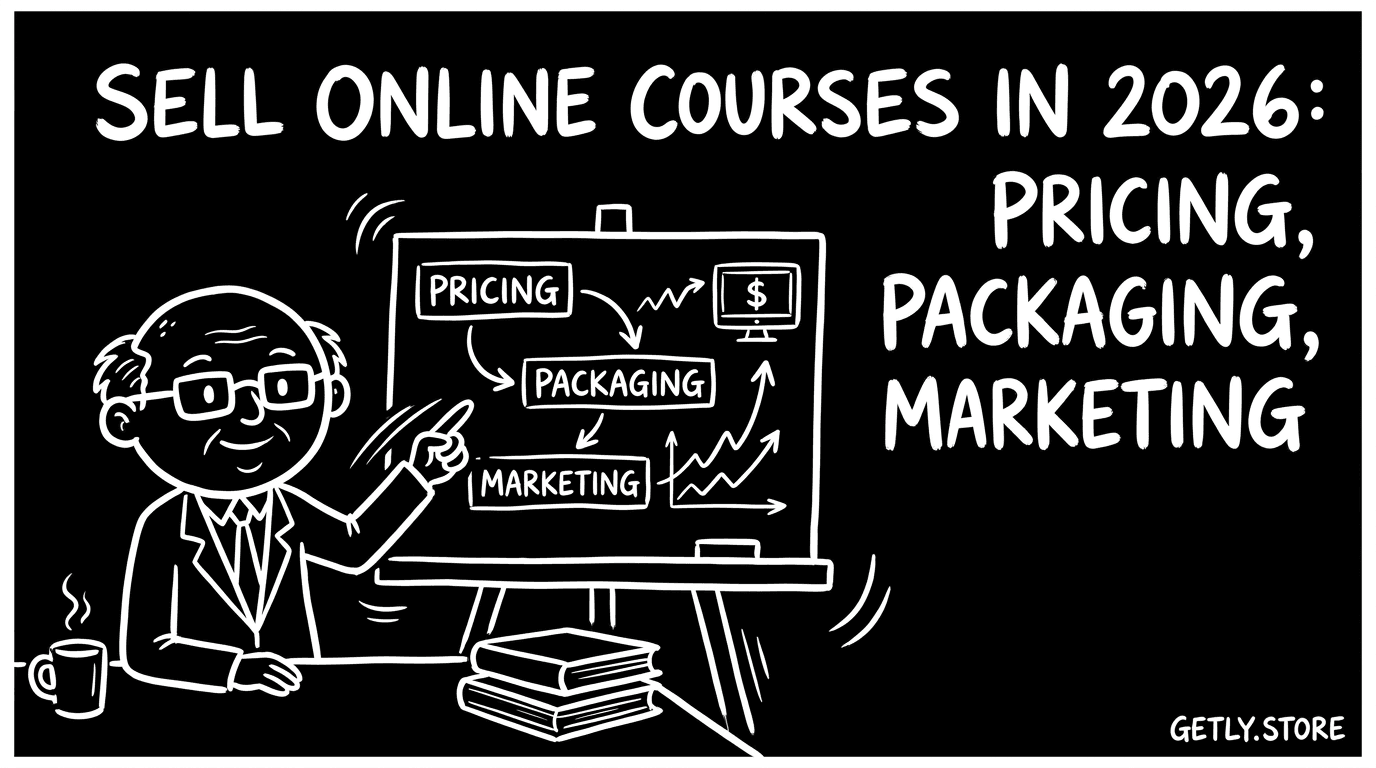
How to sell online courses - a 2026 guide for creators. You will learn who buys online courses, how to price mini and flagship products, and how to package files so buyers trust what they download. You will also get a practical setup checklist for previews, documentation, and license files, plus a marketing plan focused on channels that actually bring course buyers. Finally, you will see how Getly’s payout methods and revenue share work in real terms, including the stablecoin option for creators who need flexibility.
Who's selling online courses right now?
You will mostly see three types of online-courses creators on marketplaces like Getly. First, solo creators who teach a specific skill and sell a focused course with clear outcomes. They often start with a small “get results fast” course and then expand into deeper materials.
Second, you will see agency-style course builders who package expertise into repeatable offers. They may build courses for a niche community, include templates and examples, and update content on a schedule to keep the product relevant.
Third, you will see side-project creators who already have an audience, then turn their best lessons into a course. They typically reuse existing lessons, improve the flow, and add downloadable assets so the purchase feels tangible.
What buyers expect
Buyers expect online courses to feel complete after purchase, not like a half-finished library. They look for organized modules, easy navigation, and materials that support the lessons, not just videos.
Expect documentation to matter. Buyers don’t want to guess how to use files, which license applies, or what version they downloaded.
- Readable course structure (modules, lessons, and a clear learning path)
- Downloadable assets that match the lessons (templates, examples, worksheets, code samples)
- Clear file formats that open on common devices
- Simple “how to use” notes in a README or PDF guide
- License info and any limitations you set for personal vs commercial use
Pricing playbook
You can sell online courses with simple tiering. Many creators price mini-courses in the $50-200 range and flagship products in the $300-1500 range. That structure lets you capture quick buyers and then upsell into deeper programs.
Build three tiers around the learning depth. Use an intro tier for a narrow problem, a mid tier for a full workflow or a longer track, and a premium tier for the most complete “do it end-to-end” experience. Then add a bundle option that groups course videos with downloadable assets.
Also plan your license tiers. Offer personal and commercial licenses so buyers pay based on how they will reuse course assets. If your course includes templates, code, or other reusable files, license clarity reduces refund requests and helps buyers choose faster.
Packaging your online courses
Packaging decides whether a buyer feels confident during checkout. You need to present the course as something they can download, use immediately, and reference later.
- Video files in common formats you can reliably distribute and play
- Readable downloadable assets that support the lessons
- Preview assets (sample lessons, screenshots, or clips) so buyers understand what they get
- A README or documentation file that explains how to use the materials
- A license file that states personal vs commercial rules for the included assets
- Version notes so buyers know which update they received
Marketing channels that actually work
Course buyers often discover products through education content and community recommendations, not only through ads. Use channels where people discuss learning paths, tools, and outcomes for your specific topic.
Start with YouTube tutorials in your niche, then reuse that content into short course teasers and downloadable lead magnets. Use X (Twitter) creator circles for your topic and post learning breakdowns, before-and-after examples, and “what you’ll learn in the modules” threads.
For community traffic, focus on subreddits that match your audience and course theme. Join Discord servers where learners and practitioners ask for resources, then share course samples and answer questions in the same format you teach.
If you want a faster experiment loop, run a small sponsored placement campaign once your product page and preview assets feel solid. Sponsored placements use a bid-per-click and daily budget, and you top up an ads balance to pay for clicks.
Why Getly?
Getly pays creators in USDT/USDC stablecoins alongside Stripe fiat. That matters if you sell digital products and need payout options that work for creators in Russia/CIS and other regions where some payout routes fail.
You also keep 80% revenue by default, and new stores can get a 90% split for the first 90 days after creation. Getly supports card payments via Stripe Checkout, plus crypto stablecoins paid through NOWPayments, and you choose how you receive payouts.
Next step: finalize your course tier (mini vs flagship), package files with clear documentation and license terms, then publish a product page with previews that match your curriculum. After that, test one acquisition channel for a week, then iterate the offer based on the questions you get in buyer messaging and the refund or dispute signals from orders.