 Getly
Getly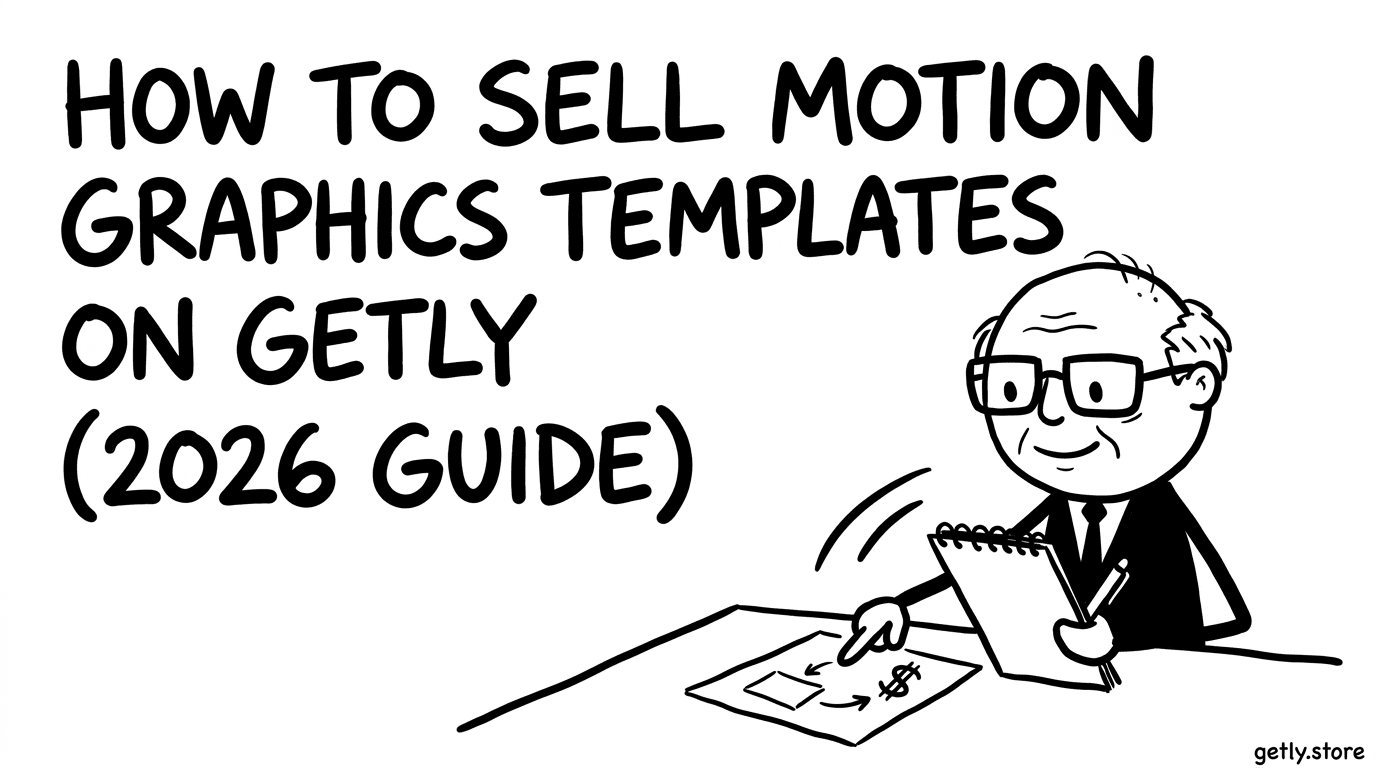
How to sell motion graphics — a 2026 guide for creators. You will learn what motion graphics buyers expect, how to package templates so editors can ship fast, and how to price kits that feel “agency-grade” without guessing. You will also get a practical listing checklist, plus marketing channel ideas that match where motion designers actually hang out. Finally, you will see why Getly’s payout setup and seller splits matter for motion graphics creator income, including options for crypto stablecoin payouts.
Who's selling motion graphics right now?
You are a solo motion graphics creator building After Effects, motion design, and template assets on your own schedule. You may already sell on forums or through direct links, and you now want a motion graphics marketplace that can handle discovery, checkout, and downloads.
You might also run a small agency that turns internal project work into reusable systems. Instead of shipping one-off files, you package repeatable elements: title systems, transitions, lower-thirds, social packs, and brand-motion toolkits.
Or you sit in the “side-project” lane. You pick a niche (sports score bugs, real estate reels, product promos), then you ship consistent template drops that buyers can adapt in minutes.
What buyers expect
Buyers in motion graphics want templates that edit cleanly. They expect predictable controls, organized project structure, and files that open without missing assets. They also expect previews that match the final output so they can judge quality before download.
Documentation matters because most customers do not want to reverse-engineer your setup. Buyers look for a README with what’s included, how to replace text and media, and what render settings you used. If you supply license terms and an obvious way to identify versions, buyers feel safer purchasing.
- Clear included-items list (main project file plus any required assets)
- Working preview exports that demonstrate real results
- Text and media replacement instructions in a README
- Version notes so buyers know what changed
- License tier explanation (personal vs commercial, if you offer multiple tiers)
Pricing playbook
Motion template pricing usually follows a simple structure. Single elements and small packs often land in the $15 to $80 range. Full kits often land in the $200 to $500 range, especially when the kit includes multiple components (headlines, transitions, modular elements, and usage guidance).
Build three price tiers so buyers can self-select. An intro tier works for one hero template or a tight set of related elements. A mid tier fits theme packs and repeatable modules like lower-thirds plus transitions. A premium tier fits complete brand kits that agencies can deploy across campaigns.
Use bundling to raise perceived value without forcing a higher price jump. Bundle complementary pieces into a single “workflow pack,” then price the kit closer to the upper anchor ($200 to $500) when it contains more than one deliverable category.
Pair your pricing with license tiers. If you offer personal vs commercial (and any expanded license tiers you choose), you align buyer intent with usage scope, not just file size.
For income realism, aim your best work at agency buyers who price in outcomes. Brand-grade motion kits sell to agencies at agency prices, which often supports higher-ticket listings than one-off template downloads.
Packaging your motion graphics
You package motion graphics like a product, not like a folder. A buyer should understand what they get, how to edit it, and how it fits their license without messaging you for basics.
- Include the source project files plus any required assets
- Ship exported preview videos or GIF previews that show the full effect loop
- Add a README file with setup steps and a “replace these layers” section
- Include a license file or a clear license section that matches your listing terms
- Write version notes in plain text so buyers can compare updates
- Keep filenames consistent across updates so buyers can spot what changed
Marketing channels that actually work
You market motion templates where designers already browse for references, breakdowns, and plug-and-play assets. Start with YouTube: post short tutorial videos that show exactly how someone edits your template, then point them to the listing for the full kit.
Use X (Twitter) and motion-design creator circles to share breakdowns and before-and-after edits. Show one shot with your template controls, then show the exported result. For community-driven discovery, post in motion design subreddits and share small, practical samples that match what buyers search for inside a motion graphics marketplace.
Also consider Discord communities where After Effects and motion design educators hang out. Drop helpful clips and quick setup tips, then link the template kit only when the post includes a real workflow outcome.
Why Getly?
Getly lets you sell digital goods directly as downloads, with sellers keeping 80% of revenue by default. During your first 90 days after creating your store, Getly applies a new-seller promo where you keep 90% for that period.
If you want flexible payout options, you can choose Stripe Connect for fiat payouts or crypto stablecoin payouts using USDT or USDC. Getly schedules both payout methods for the 1st and 15th of every month at 03:00 UTC, and crypto payouts do not require identity verification on Getly’s side.
Packaging and pricing still drive your results, but Getly’s setup helps you move faster from “template ready” to “template sold,” while supporting motion graphics creator income with a straightforward revenue split and stable checkout methods.
Next, pick one template category, ship a tight intro kit in the $15 to $80 range, then expand into a $200 to $500 complete kit once buyers confirm they can edit it without friction. Tight packaging plus clear previews beats guesswork. Upload your first version, iterate based on what buyers download, and keep version notes so you can improve the kit without breaking expectations.