 Getly
Getly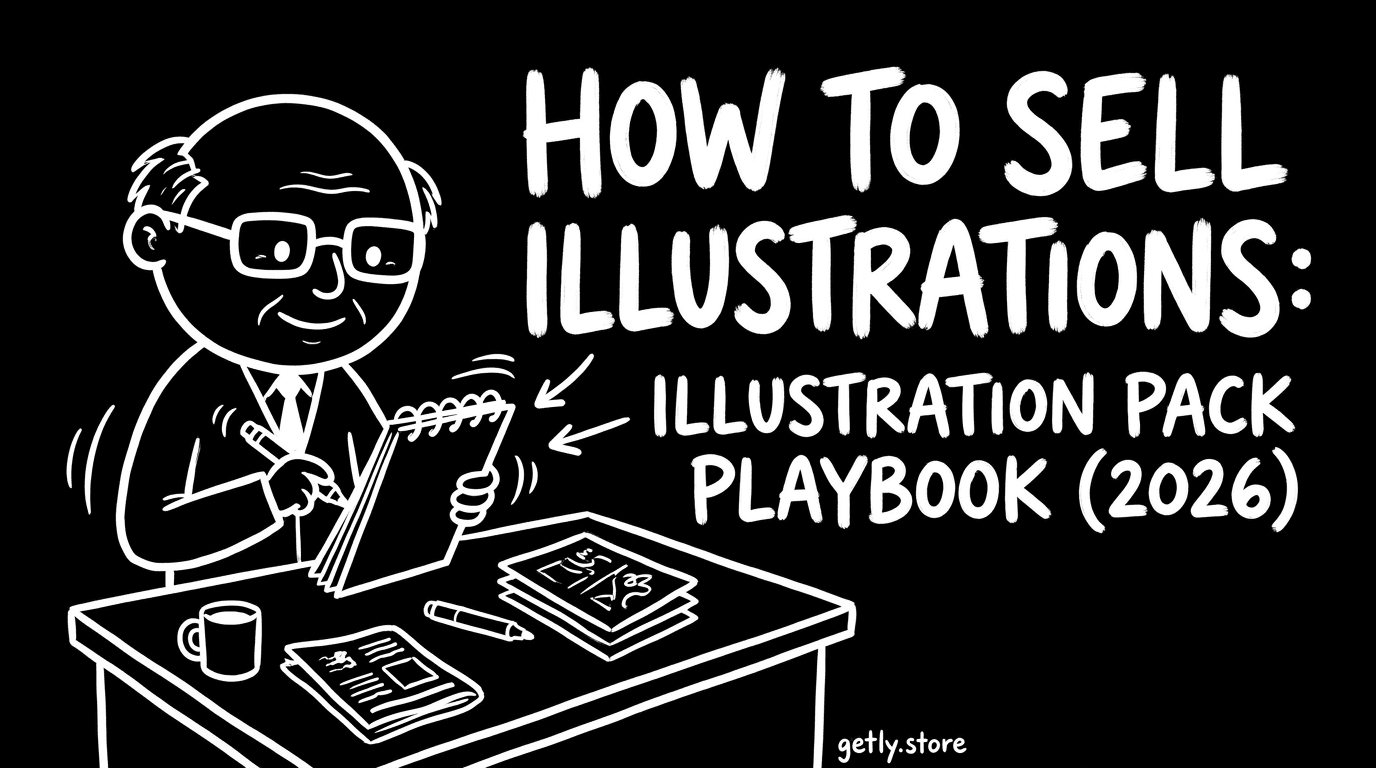
How to sell illustrations - a 2026 guide for creators. You will learn how buyers judge illustration packs, what to include in your files and previews, and how to price themed sets versus brand-ready kits. You will also get a practical packaging checklist so your products publish cleanly with the right assets and documentation. Finally, you will see which marketing channels bring illustrators the most purchase-ready traffic, plus how Getly handles payouts and refunds for digital work.
Who's selling illustrations right now?
You can sell illustrations as a solo creator building a style-consistent catalog. Most successful sellers in this lane ship packs regularly, keep their visual language tight, and avoid reinventing their format every release.
Agencies and small studios also do well when they productize recurring client needs. They bundle assets into themed packs (campaigns, seasonal sets, UI illustration themes) and attach clear usage rules so buyers can evaluate licenses fast.
If you run a side project, you can still win by picking one buyer problem and solving it repeatedly. Examples include stickers for marketing, background packs for landing pages, icon illustration sets, or character kits for pitch decks.
What buyers expect
Buyers expect packs that look cohesive when they land on their screen. They usually scan the main preview image first, then check the downloadable files list, then look for license clarity in the product info and docs.
Your best-performing listings explain what’s inside and how to use it. You should ship consistent formats, include enough variants for the theme to work, and provide a short README so buyers do not guess.
- Clear previews: a main image that matches the pack contents and style.
- Downloadable files that support the buyer’s workflow (include the common formats you want to be judged on).
- Simple documentation: what each file is, how the pack maps to the theme, and any important notes.
- License information included with the purchase so buyers understand allowed use.
- Fast support expectations: buyer requests go through the platform messaging and disputes follow the platform refund/dispute flow.
Pricing playbook
Price illustration packs based on how fast a buyer can drop them into a project. The common starting range for a themed pack sits around $15-60 when you bundle a focused set that matches one clear use case.
Brand-ready kits earn higher prices because they reduce buyer uncertainty. Many creators price polished, production-oriented kits around $80-250 when the pack feels complete for campaigns, decks, or web use.
Use three practical tiers:
- Intro packs: small themed sets that show your style and generate quick trials.
- Mid packs: the core catalog product with more variants and a clear theme.
- Premium kits: “ready to ship” bundles with stronger documentation and more deliverables.
Add multi-license tiers so buyers pay for the usage they need. Keep your commercial rules consistent across products, and set Personal versus Commercial (and any higher tiers you support) so buyers can choose without emailing you.
Packaging your illustrations
Illustration packs sell when the buyer can evaluate the files in minutes. Build your listing so someone can preview the style, open the downloads, and understand licensing without hunting.
- Previews: upload at least one image preview that represents the pack theme and style.
- Downloads: include at least one downloadable file for the pack so the product can publish.
- README: add a short “what’s included” doc. Tell buyers what folders contain and any naming conventions.
- License notes: include a license file or a clear license statement in your documentation.
- Version notes: if you update files, keep a note inside the docs so earlier buyers know what changed.
- Consistency: keep your pack structure similar across releases, so buyers learn how to use your products.
- Watermark your previews when appropriate: protect your work during review workflows.
Marketing channels that actually work
Illustrations buyers often shop where they already discuss visual references, design workflows, and content creation. Your goal is to show your finished packs, not your process alone.
- YouTube tutorials: publish “pack walkthrough” videos where you open the downloads and show how you use them in real designs.
- Twitter/X: post before-and-after mockups using the same pack theme, then link to your Getly listing.
- Design communities: join illustrator and designer Discord servers and share pack-specific results, like “hero illustration kit for landing pages.”
- Illustration-focused subreddits: contribute packs as resources when the group allows self-promo, focus on the theme and deliverables, and answer license questions clearly.
- Listing-backed guides: use buyer-facing guides in your own content to rank for “how to sell illustrations” style searches and direct readers to your store.
Why Getly?
Getly pays creators in USDT or USDC stablecoins through crypto payouts, alongside Stripe fiat options. That matters when you want reliable payouts without adding friction for buyers who pay with card or stablecoins.
Creators also keep a large share of each sale. Getly uses a tiered commission model where sellers keep 80% as a base, can keep more at higher monthly volume tiers, and keep 90% on their own traffic. If you want a marketplace that supports sellable digital illustration packs and stablecoin payouts, Getly fits the workflow.
Next step: pick one illustration theme you can ship consistently, package it with clear previews plus a README and license file, then price it as an intro pack. Publish, watch what buyers download, and iterate toward mid packs and premium kits as your catalog grows. If you plan to scale, aim for style-consistent releases so your catalog becomes a dependable “illustrations marketplace” source for repeat buyers.