 Getly
Getly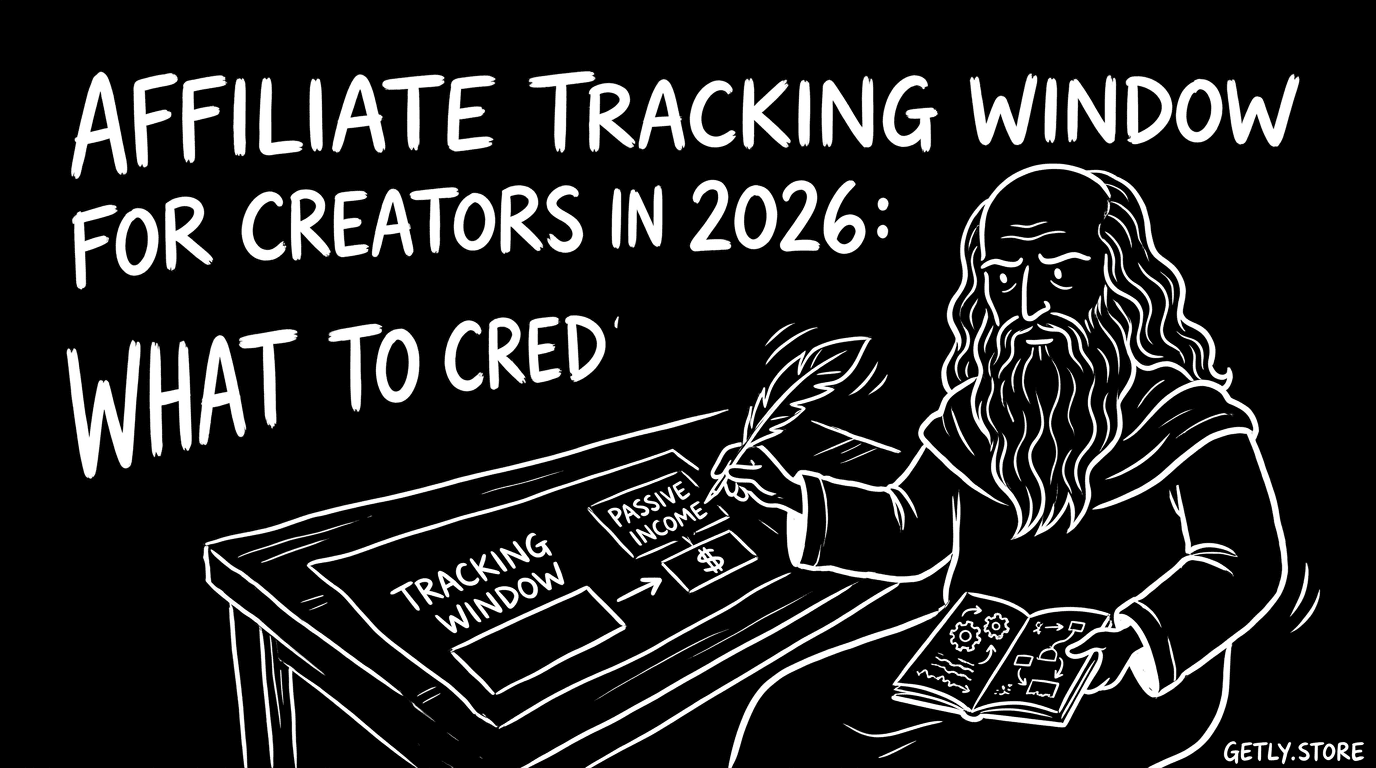
Affiliate marketing for creators lives or dies on one detail: attribution timing. In 2026, that timing affects which sale you can credit to your digital product affiliate marketing and which you cannot. This guide explains how affiliate tracking window rules work, how to choose the right credit strategy, and how to set expectations for passive income digital products.
- Most creator affiliate programs credit purchases that happen within a defined affiliate tracking window after the click.
- On Getly, the affiliate attribution cookie window lasts 90 days from the referral click.
- Platform-wide referrals credit 15% of a referred user’s first purchase.
- Use timelines (click date, purchase date, and payout period) to prevent “late credit” arguments.
- Track content performance with repeatable posting cycles, not guesswork.
What is an affiliate tracking window for creators in 2026?
An affiliate tracking window tells you how long a buyer’s purchase stays linked to your affiliate referral after they click your unique tracking link. In creator affiliate marketing, this window acts like a time fence around attribution: if the buyer purchases after the fence, the system may treat the sale as not yours.
In 2026, creators still manage campaigns across multiple channels. You might post a YouTube tutorial today, drop an X thread tomorrow, and send a newsletter next week. Each channel click can route into the same affiliate system, but the attribution result depends on the tracking window length, not on when you “reminded” your audience.
Why the window matters for passive income digital products
Passive income digital products often sell after the content moment passes. A buyer may watch your clip, bookmark your link, and purchase a month later. If your affiliate tracking window matches that behavior, your revenue model works as planned.
If the window runs out, you still created demand. You just cannot assume the sale counts to you. That distinction changes how you forecast income and how you structure creator monetization strategies around evergreen traffic.
What happens when a buyer purchases outside the window
When the purchase falls outside the tracking window, attribution usually switches to “organic” or to whoever else holds the tracking ID within that time period. You might see conversions in your analytics, but the affiliate program may not credit you.
That mismatch leads to common creator frustration: “I sent the link weeks ago, why didn’t it credit me?” Your job becomes building a credible expectation. You can do that with content calendars, clear timestamps, and consistent use of your affiliate links.
Pro tip: Treat attribution like a contract between clicks and purchases. Keep a simple spreadsheet with click date, platform, asset (link), and purchase date whenever you test a new affiliate channel. You’ll spot window behavior fast.
How does affiliate tracking credit work on Getly?
On Getly, affiliate attribution uses a cookie window tied to the referral click. The program credits a referred buyer’s purchase when that purchase happens within the window after the click.
For creators using digital product affiliate programs on Getly, the key numbers are straightforward: the affiliate attribution cookie window lasts 90 days. That means a purchase that happens within 90 days of the affiliate click gets credited to the affiliate.
How to credit a sale: click date plus 90 days
Use this rule for your 2026 credit decisions: if a buyer clicks your affiliate link on day X, your attribution covers purchases made on day X through day X + 90 days.
In practice, you should credit yourself for sales that happen inside that window, regardless of whether the buyer waited for the “perfect moment” to purchase. That matches how passive income digital products typically convert.
How referral commission math actually lands
Getly applies the seller-set commission percentage as the affiliate’s rate, but it also caps that commission at 50%. Then the system calculates it against the seller’s share of the sale. On standard sales, sellers keep 80% of revenue (platform keeps 20%).
So the affiliate payout depends on three layers: seller-set commission, cap at 50%, and the underlying seller revenue split of 80%. During the first 90 days after a store is created, the seller split can change to a 90% creator share, while the platform portion stays unaffected.
| Affiliate rule | What to use for credit decisions |
|---|---|
| Affiliate attribution cookie window | 90 days from referral click |
| Commission cap | Seller-set rate capped at 50% |
| Seller revenue share baseline | 80% to seller (platform keeps 20%) |
| New store promo effect | For first 90 days after store creation, seller keeps 90% |
Creators often focus on the tracking window and forget the payout math. When you align both, you avoid “it credited but the amount looks wrong” conversations with yourself and your audience.
30-day affiliate tracking window vs 90-day window: what to credit
A 30-day affiliate tracking window means you only credit sales that happen within 30 days of the referral click. A 90-day window credits sales for a longer period, which better matches evergreen discovery and “later purchase” behavior.
In 2026, the most important step for creators involves matching the tracking window to the program you joined. For Getly affiliate attribution, you should not assume a 30-day window. You should use the actual 90-day cookie window for credited purchases.
How to handle the “I thought it was 30 days” scenario
When you see late purchases credited after day 30 but within day 90, your best move is to update your own internal policy. Your public claims should reflect the real window, not a memory of a different platform.
When you see purchases that did not credit after day 90, you should treat that as outside attribution. Keep it consistent so you can forecast passive income digital products without confusion.
Credit decisions using a simple timeline
Here’s a practical timeline method that works for most creator monetization strategies. Write down three dates: the affiliate link click date, the purchase date, and the “credit cutoff” date based on the program’s window.
Then compare. If the purchase date falls on or before the cutoff date, credit. If it falls after, do not credit.
- Click date: day X (the buyer clicks your unique link)
- Credit cutoff: day X + 90 days (Getly affiliate cookie window)
- Purchase date: the day the buyer buys the digital product
- Credit rule: purchase date ≤ cutoff date = credited
- Out of scope: purchase date > cutoff date = not credited to you
Common mistake: Creators often mix up “email engagement window” with “affiliate tracking window.” An open or click on your follow-up email does not reset attribution unless the affiliate link click happens again.
Creator monetization strategies that match the affiliate window
You can build creator monetization strategies around the reality that people buy later. A 90-day attribution window rewards content that stays useful longer than a single day’s hype cycle.
So instead of designing your affiliate push like a one-week sprint, design it like a library. Your audience finds the content now, but buys later. That pattern maps well to passive income digital products.
Best content formats for long-tail affiliate attribution
Long-tail performance comes from content that solves a repeated problem. For example, a “template bundle walkthrough,” a “how to set up your workflow,” or a “case study” keeps value for weeks.
Digital product affiliate programs reward the referrals that happen because the content reduces uncertainty. People buy after they trust the outcome.
- Step-by-step setup videos that show time saved in the first session
- Workflow guides that map inputs to deliverables
- Use-case comparisons for different buyer skill levels
- Outcome checklists (what to have ready before you start)
- Monthly “what to download” posts for evergreen audiences
How to structure a 90-day affiliate campaign
Use a cycle that keeps your audience warm without spamming them. Start with a launch moment, then follow with refreshes. The refreshes serve as reminders and new proof, not as “begging.”
Since your attribution window covers 90 days, you can schedule content with staggered value. That increases the odds that at least one of your posts triggers the click within the right period.
Affiliate tracking windows reward consistent usefulness more than “one big push.”
How to test affiliate tracking window expectations in 2026
You can test attribution behavior with small, controlled experiments. The goal is to stop guessing how credit works for your audience and your links.
Testing matters more in 2026 because creators run campaigns across channels, languages, and discovery paths. A buyer may find your link through a short clip today and purchase later after a second touch.
Run a controlled “click now, buy later” test
Pick one digital product you plan to promote and one channel where you can reliably observe clicks. Then create a timeline in your notes.
Make the purchase yourself or ask a friend to purchase using your affiliate link. Record the click date and the purchase date. Compare credited results to your expectation.
Pro tip: Use one affiliate link per experiment. If you paste multiple links into one post, you lose clarity on which click gets credited.
Decide what you will and won’t claim publicly
Once you observe the window behavior, update your public language. Creators who promise “30-day credits” but operate on a 90-day window risk disappointment when analytics disagree.
Better language focuses on results, not guarantees. You can still show confidence, but you should tie claims to the affiliate program rules.
FAQ: affiliate tracking window and creator credits
What is the affiliate tracking window for creators on Getly?
Getly uses a 90-day affiliate attribution cookie window. The system credits a referred buyer’s purchase when it happens within 90 days of the affiliate click.
Do I credit myself for purchases that happen after 30 days in 2026?
If you use an affiliate system with a 90-day window, you can credit purchases up to day 90 after the referral click. A 30-day rule only applies to programs that actually use a 30-day window.
How does Getly calculate affiliate commission for digital product sales?
The seller sets an affiliate commission percentage per product, and the program caps it at 50%. The affiliate commission applies to the seller’s revenue share, where sellers keep 80% by default (with a 90% promo during the first 90 days after a store is created).
What if a buyer purchases multiple times?
Affiliate attribution follows the cookie window based on the click that drove the referral purchase. Also note that Getly has a platform-wide referral rule that credits 15% of the referred user’s first purchase.
How do I prevent “late credit” confusion with my audience?
Use a documented timeline based on the affiliate tracking window and avoid claiming that credits follow your email schedule or posting frequency. Test your links with a small purchase timeline so your expectations match how the system actually attributes.
- For 2026 creator affiliate tracking, use the program’s real window. On Getly, that window equals 90 days.
- Credit sales when purchase date falls within the click date plus the window. Do not credit purchases after the cutoff.
- Remember commission math: affiliate rate capped at 50%, applied against the seller’s share (80% standard).
- Design your affiliate content like an evergreen library, since many buyers purchase later.
If you want to build a passive-income setup that holds up across 90 days, start by aligning your expectations to the actual affiliate tracking window, then structure content refreshes that keep intent moving. When you’re ready, pick one evergreen product niche and test one affiliate channel for a full 90-day cycle so your creator monetization strategies stay grounded.
Getly-related note: Affiliate attribution rules discussed here follow Getly’s documented behavior for 2026. If you promote any digital product affiliate programs on the platform, follow the 90-day cookie window for credit decisions.