 Getly
Getly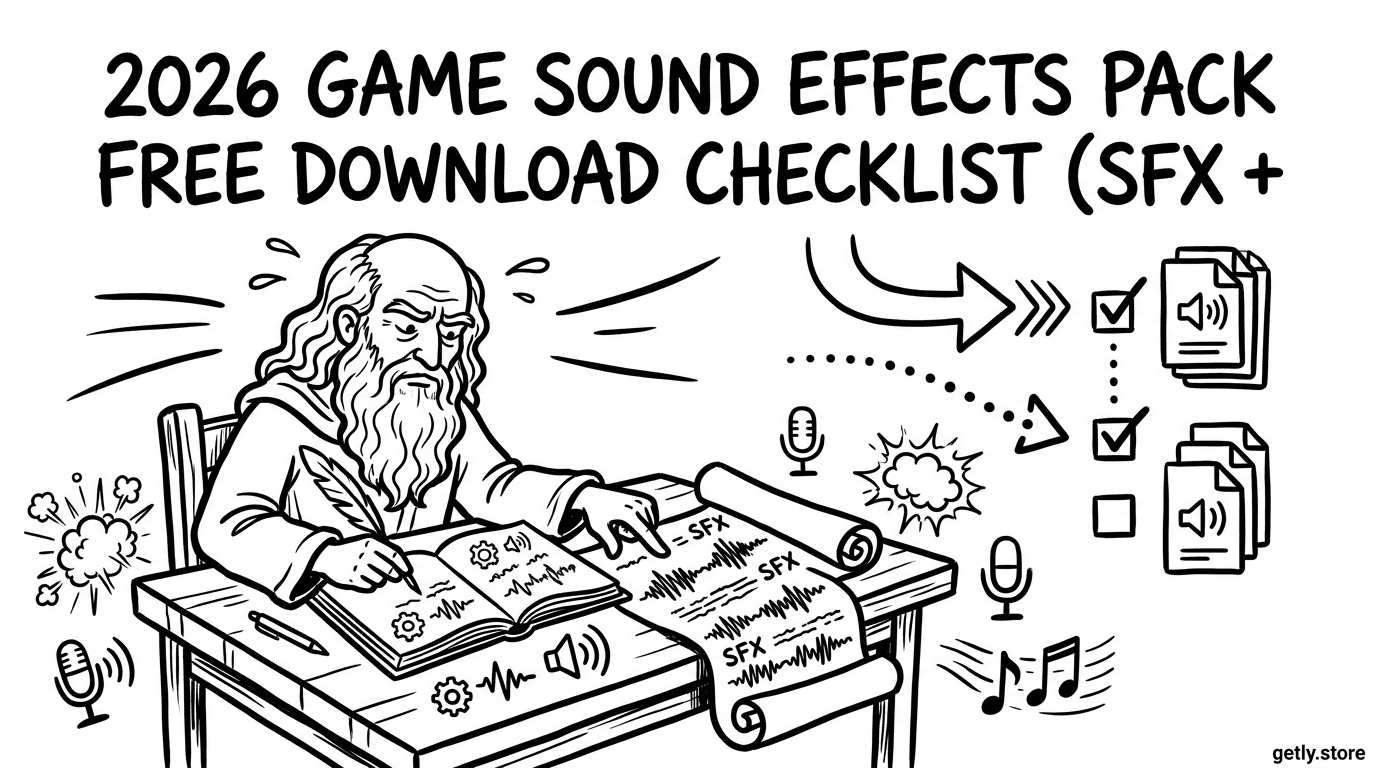
Need a game sound effects pack fast for a build in 2026? The hardest part usually comes after the downloads: choosing files that fit your project, sound consistent, and stay safe on licensing. This checklist helps you plan a clean audio drop-in workflow: SFX first, then loops, then intros.
If you ship games, apps, or interactive audio experiences, you know how quickly audio debt piles up. A good pack helps you move on to gameplay tuning instead of hunting for “maybe-royalty-free” files.
- Build your free sound effects download checklist around use cases: UI, gameplay, ambience, and transitions.
- Confirm license rules (commercial use, revenue use, modifications) before you drop sounds into a released build.
- Use consistency passes: levels, naming, sample rate, and one “style anchor” loop.
- For royalty free music, prioritize packs that clearly state what “free” allows.
- Podcast intro music free assets work well for game menus, but only when the license matches.
What is a game sound effects pack in 2026?
A game sound effects pack is a curated set of audio files built for interactive use. Most packs group sounds by role, like UI clicks, hit reactions, footsteps, reloads, ambient beds, and menu transitions. A strong pack also gives you the engineering-friendly extras: consistent naming, clean tails, and sensible loudness.
In 2026, teams often mix multiple sources: one pack for core gameplay, another for UI, and a loop library for background layers. Your goal stays the same. You want predictable behavior in your game engine and repeatable results during playtests.
What should your pack include for real gameplay?
Start with the sounds that players hear constantly. Those assets reveal whether your game feels polished or unfinished within minutes.
- UI SFX: button press, toggle, confirm, back, scroll, hover, error.
- Combat and actions: hits, misses, criticals, impacts, reload, item use.
- Movement: footsteps (per surface), jump, land, stamina ticks.
- Transitions: scene change, menu open, inventory open, loading.
- Ambience: wind bed, crowd layer, room tone, loopable foley.
How to avoid mismatched sound design
Even if every file sounds good alone, inconsistent mix choices make the game feel patchy. Watch for different loudness targets, different reverb “spaces,” and different sample rates that complicate your import workflow.
Pick one “style anchor” layer and build around it. For example, choose a beat or lo-fi loop as your rhythmic reference, then design or match SFX to it. That one decision reduces endless tweaking later.
Pro tip: Before you download anything, write a quick list of your core interaction sounds. When you shop for a pack, match items on that list instead of picking by vibe alone.
How to do a free sound effects download checklist safely?
You can download plenty of audio for free, but licensing decides whether you can ship. Your free sound effects download checklist should start with permission, then move to technical quality.
Many creators upload “free” audio that only works for personal projects, while others allow commercial use with clear restrictions. Treat every pack as unique and verify the license for your exact use case: game type, monetization, and distribution.
License checks that actually matter for games
When you evaluate royalty free music or SFX, look for these specific answers. If you cannot find them on the product page, do not assume.
- Commercial use: Can you use the sound in a sold game or for ads?
- Distribution: Are builds downloadable on Steam, itch.io, mobile stores, or web?
- Revenue use: Is the pack allowed in monetized experiences or only free demos?
- Modification: Can you edit files, trim silence, layer sounds, or change tempo?
- Attribution rules: Do you need credit in the game or description?
- Redistribution: Can you include the files inside your game installer only, or can you share them as raw audio?
Technical checks before you import
Audio gets painful when you mix incompatible formats. Your checklist should protect your timeline.
- Sample rate and bit depth: Prefer consistent exports to minimize resampling artifacts.
- File type: Make sure you can use the format in your engine toolchain.
- Loopability: Ambiences and background music should loop cleanly.
- Tail behavior: UI clicks should not carry long reverb unless that matches your UI style.
- Noise and clipping: Watch for harsh peaks and hiss that become obvious in quiet gameplay.
Common mistake: Downloading a “free” pack, trimming a few sounds for testing, then realizing the license forbids commercial distribution after the game reaches beta. Verify licensing before you integrate.
Which royalty free music fits gameplay and menus?
For royalty free music, the best choice depends on how your game uses music. Games need either loopable beds for exploration, rhythmic layers for combat, or short stings for UI feedback and transitions.
If you only download full tracks, you lose flexibility. A good music pack includes stems, sections, or loop-focused assets that match moment-to-moment gameplay.
Pick a loop style that matches your mechanics
Match musical energy to player actions. If your game spikes intensity often, use shorter loop sections you can swap or layer rather than one long track.
- Cozy exploration: lo-fi or ambient loops with gentle transients.
- Action combat: beats with clear kick and snare placement.
- Horror moments: UI and texture layers that support tension.
- Stylized anime scenes: melodic loops with identity, not generic pads.
Use free background music like a system, not a single asset
Free background music works best when you treat it like a set of building blocks. Layer one rhythm, then add one texture, then trigger small stingers for key actions.
If you build your audio system this way, you can reuse the same musical palette across multiple levels. You also avoid the “same track, same moment” feeling that breaks immersion.
Success pattern: Teams often start with one loop pack, then add 2-3 stinger sounds for inventory open, quest complete, and low-health warnings. The game feels more intentional even before you replace everything else.
How to choose podcast intro music free for game UI?
Podcast intro music free sounds great for menus and loading screens because it already has a hook. You just need to pick the right kind of intro: short, recognizable, and license-compatible for interactive distribution.
Many podcast intros include strong branding signatures. For games, those signatures can help identity, but they can also distract if you hear them constantly.
Turn an intro into a menu loop
Use the intro as a one-shot and then crossfade into a calmer continuation. If the intro includes vocals or copyrighted-like melodic hooks, you still need to confirm the license covers game distribution.
- Extract the first section (the hook) as a short stinger.
- Crossfade into a loopable bed or instrument-only continuation.
- Match loudness so UI interactions do not fight the music.
- Trigger it sparingly: new game, major screen changes, key notifications.
Guardrails that keep UI from feeling noisy
Keep UI audio readable by managing frequency overlap. If your intro music uses strong midrange leads, duck it when menus open and let SFX handle the transient details.
This approach also helps accessibility. Players with headphones notice clutter quickly, and clean ducking keeps the experience comfortable.
Best starter picks from Getly for 2026 audio kits
If you want fast momentum, start with one SFX pack category and one music loop category. Then add a few targeted one-shots for the moments you care about most: horror UI feedback, a rhythmic beat bed, and a style-specific layer.
Below are example products you can use as building blocks for your checklist workflow. Use them as “style anchors,” not as a complete audio strategy.
Example SFX packs and beat anchors
- Horror UI SFX: Horror UI SFX (use for menu tension, warning pings, and stylized navigation).
- Smooth trap beat: Smooth trap (use for menu ambience or battle-phase layers).
- Professional stonic beat: Professional stonic beat (use as a rhythmic base for action UI).
- Anime character layer: Anime character (use for character moments, voice-safe textures, and stylized UI responses).
Example ambient or special-topic layers
- Worship: worship (use for cinematic mood beds, if your project tone fits).
- Lo-fi royalties bundle songs: Lo-fi free royalties bundle songs (use for exploration loops and menu backgrounds).
For special use cases, pair one music pack with a matching SFX mood. This combination makes your audio feel coherent even before you expand your library.
Pro tip: Build a “starter bundle” playlist folder. Add 1 loop pack, 1 UI SFX pack, and 6-10 one-shot SFX you can reuse across scenes. Then iterate instead of constantly changing sources.
How to validate and QA your audio pack before release
Once you download a game sound effects pack and a loop library, your job shifts to QA. You want audio that survives real play: explosions in loud moments, UI feedback in quiet rooms, and smooth loop transitions during navigation.
QA also prevents the most common audio shipping problems: clips that distort under certain volumes, loops that reveal their seam, and mismatched timing that makes animations feel late.
In-game tests that catch problems early
Run the same audio tests every time you add new sounds. Consistency saves hours.
- Loudness pass: Check levels on headphones and speakers.
- Latency pass: Trigger SFX on the exact animation frame you use in the engine.
- Loop pass: Listen for seams at normal gameplay speed.
- Mute pass: Turn off music or SFX and confirm important feedback still lands.
- Spam pass: Rapidly trigger UI buttons and confirm sounds do not clip or overload.
Name, organize, and document for fast iteration
Audio organization looks boring until you need to fix something at 2 AM. Use a simple naming scheme that maps to your engine’s triggers.
Document your decisions: which loop you use for calm exploration, which SFX you use for confirm actions, and which file formats you standardize on. Future you will thank you.
| Audio asset type | QA focus | Integration tip |
|---|---|---|
| UI click SFX | Transient clarity, no long tails | Duck music during menu actions |
| Combat impacts | Clipping, layer balance | Layer short hit plus longer body tail |
| Ambience beds | Loop seam and noise floor | Crossfade between zones |
| Background music | Seamless transitions, ducking | Swap sections on gameplay states |
FAQ: free SFX download, royalty free music, and game audio
How do I know if a free sound effects download is royalty free?
Check the license details on the product page for commercial use, distribution rights, and modification rules. “Free” usually means price, not rights. If the license does not clearly cover game distribution, treat it as restricted.
Can I use podcast intro music free assets in a released game?
You can use them only if the license explicitly allows game use, monetization, and distribution. Many intros include branding or licensing terms tied to another medium, so verify the permissions before shipping.
What makes royalty free music work better in games?
Look for loop-friendly formats and sections you can trigger. Games need flexible audio layers more than long linear tracks, and loopability helps you avoid audible seams during menu navigation or exploration.
What should my game sound effects pack checklist include?
Include license checks, technical checks (format and loop behavior), and gameplay QA tests (loudness, latency, loop seams). You also want consistent naming so you can wire audio triggers quickly.
Where should I start if I only have a week for audio?
Pick one UI-focused SFX pack and one loop or beat pack, then add a small set of stingers for transitions and warnings. This approach produces a coherent first version you can expand after release.
- Use a structured checklist: license first, then technical quality, then in-game QA.
- Treat free downloads as building blocks, not a final audio system.
- Choose loop styles that match gameplay states for smoother immersion.
Audio libraries get addictive. Pick a few assets, test them in real gameplay, then iterate. If you want a focused place to start exploring packs for game sound effects pack workflows, browse the catalog and build your own short list from there.