 Getly
Getly
By the end of this guide, you will know how to assess an AI draft against a clear target, identify the changes that matter, and write a revision prompt that produces a stronger result. You will also have a repeatable workflow for comparing versions without losing useful details.
1. Define the target before you judge the draft
Critique works best when you know what the output must accomplish. Write a short brief before you generate anything. Include the audience, purpose, format, tone, required points, and limits such as word count or reading level.
For example, a creator who wants a product description could set this target:
- Audience: freelance designers who sell downloadable templates.
- Purpose: explain the product and encourage a purchase.
- Format: 120 words with a short opening, three benefits, and a clear action.
- Tone: practical and confident, without exaggerated claims.
- Required details: file types, software compatibility, and the number of included templates.
This brief gives you something concrete to inspect. Without it, you may reject a useful draft because you prefer a different style, or accept a polished draft that misses a required detail.
Set the purpose
Name the action or decision the reader should take after reading.
List the constraints
Record the format, length, tone, audience, and details the output must include.
Choose quality criteria
Decide how you will check accuracy, clarity, usefulness, and style.
2. Read the draft in four passes
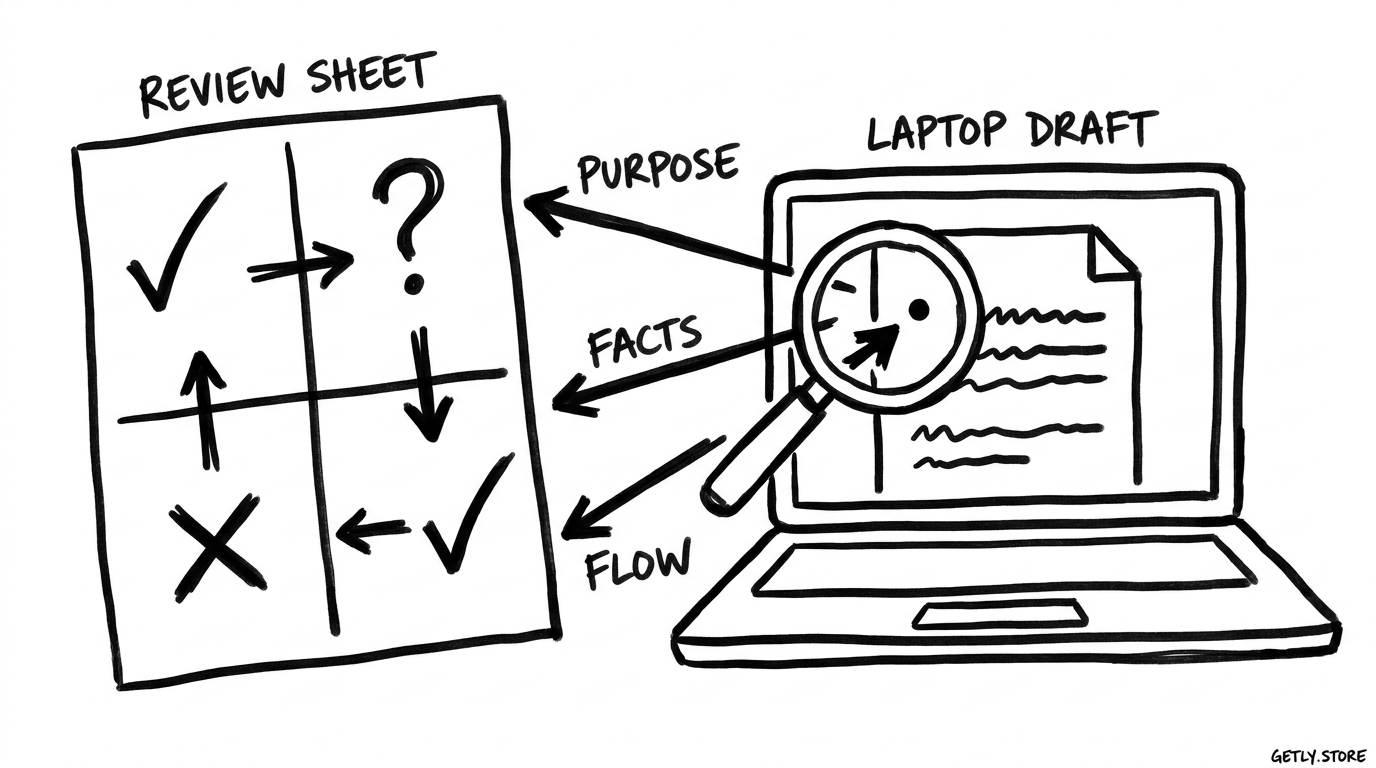
Read the output more than once, with a different question in each pass. This method keeps a vivid phrase from distracting you from a missing fact or a weak structure.
Pass one: purpose
Ask whether the draft serves the reader's next step. A tutorial should help someone complete a task. A sales page should explain the offer and its fit. A social post should make one idea easy to notice and remember.
Pass two: facts and coverage
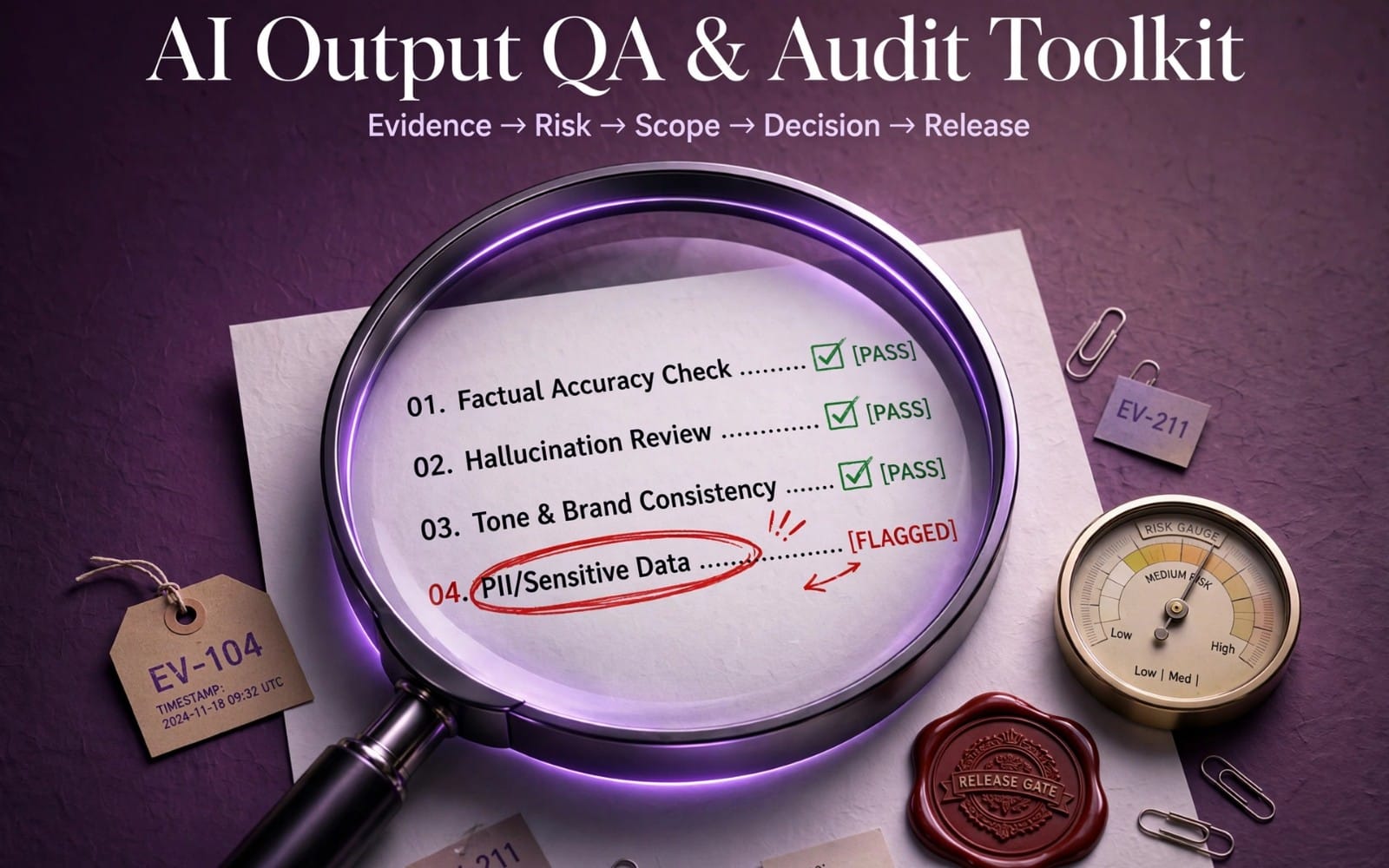
Check every claim against your source material, product details, or professional knowledge. Mark invented figures, unsupported promises, missing requirements, and statements that need a source. Give each required point a simple checkmark as you find it.
Pass three: structure
Follow the order from the reader's point of view. Look for a clear opening, useful progression, and a logical finish. Move or remove paragraphs that repeat an earlier point. Break dense sections into headings, steps, or examples when the format allows it.
Pass four: language
Circle vague words such as “effective,” “seamless,” or “high quality” when the draft gives no evidence or example. Replace them with a specific result, feature, action, or measurement. Check sentence length, jargon, repetition, and tone.
Use a simple score only after you inspect the details. A draft with a strong tone and weak coverage needs a different revision than a complete draft with awkward sentences. Numbers help you compare versions, but your notes should explain the reason behind each score.
3. Turn reactions into precise critique
“Make it better” gives the next generation no useful direction. Name the problem, show its location, explain the effect, and state the change you want.
Use this pattern:
- Location: identify the paragraph, sentence, heading, or section.
- Problem: describe the exact issue.
- Effect: explain how the issue affects the reader or goal.
- Revision: specify the change you want.
For example: “In the second paragraph, the phrase ‘save time’ lacks a concrete explanation. Add one example that shows how a buyer uses the template in a real project. Keep the paragraph under 45 words.”
Separate essential changes from preferences. An incorrect file type belongs in the first group. A preference for shorter sentences belongs in the second group unless the audience or format demands it. This distinction prevents you from spending several rounds on small style choices before you fix a serious gap.
Do
- Point to a specific sentence or section.
- Describe the reader's problem.
- Give a measurable revision target.
Don't
- Use “make it more engaging” as the full instruction.
- Request five unrelated changes in one vague sentence.
- Ask for a rewrite before you identify the failure.
4. Write a revision prompt that preserves what works
Tell the tool what to keep before you list the changes. This protects strong sections from unnecessary rewriting and gives the next draft a stable base.
A useful revision prompt contains five parts:
- Role and task: “Act as an editor revising this product description.”
- Keep: name the accurate details, structure, or tone that already works.
- Change: list the problems in priority order.
- Constraints: repeat the length, format, audience, and required content.
- Output format: ask for the revised draft, a short change log, or both.
Here is a complete example:
“Revise the product description below for freelance designers who sell downloadable templates. Keep the practical tone, the opening sentence, and all accurate product details. Add the missing software compatibility information in the second paragraph. Replace the phrase ‘save time’ with a concrete use case. Remove repeated claims about convenience. Keep the description between 110 and 130 words, use one heading and three bullet points, and finish with a direct action. Return the revised description first, followed by four bullets that explain your changes.”
Paste the original draft with the revision prompt when the tool needs exact wording. Paste only the relevant section when the rest of the draft might distract it. Keep your brief and source details nearby so you can verify the new version after each round. A structured prompt reference such as this prompt cheat sheet can help you build reusable patterns for different tasks.
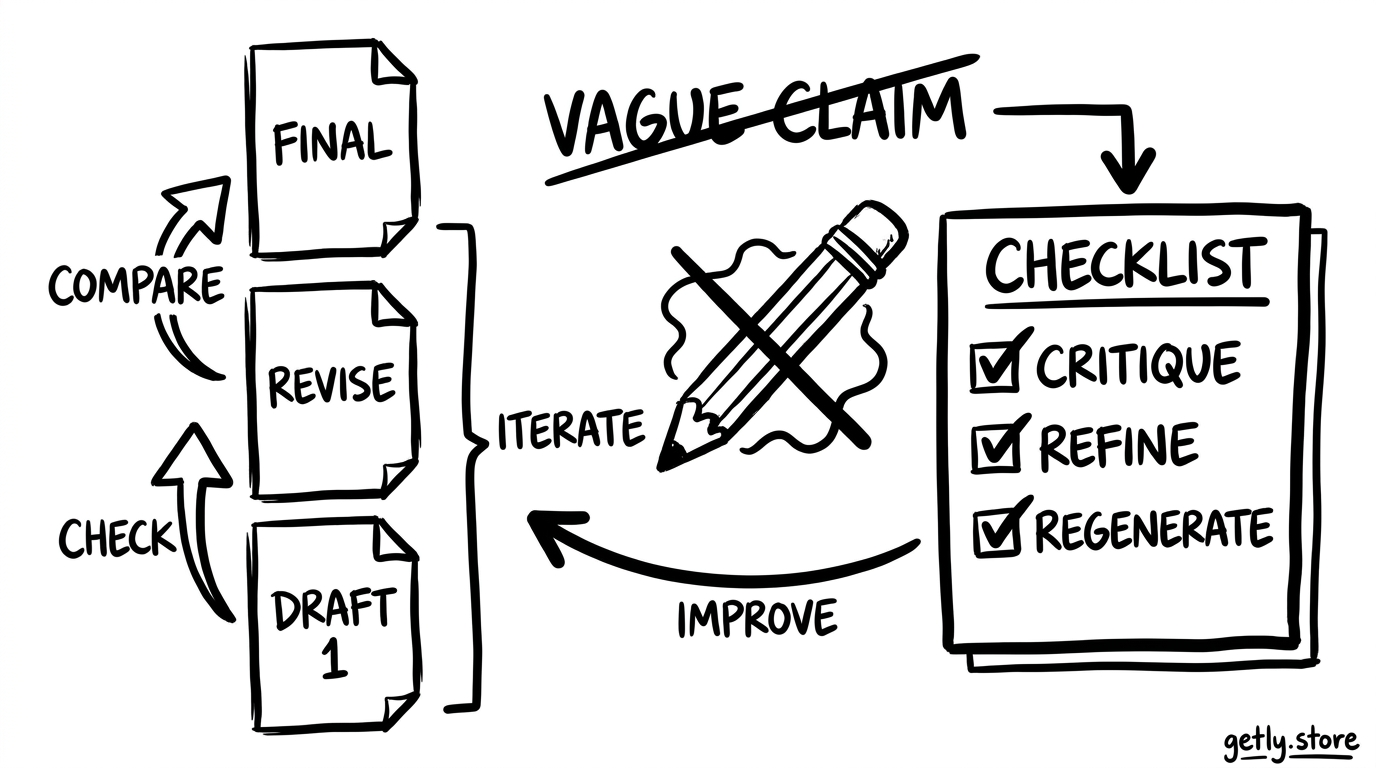
5. Regenerate in focused rounds
Ask for one category of change at a time when the draft needs major work. Start with accuracy and missing content, then fix structure, then refine the language. A tool may satisfy one instruction while weakening another when you combine too many priorities.
Use a focused sequence:
- Coverage round: add missing facts and remove unsupported claims.
- Structure round: reorder sections, shorten repetition, and improve transitions.
- Style round: adjust tone, rhythm, vocabulary, and sentence length.
- Format round: apply headings, bullets, metadata, or platform limits.
After each round, compare the new draft with the previous version. Keep a sentence from the older draft if the revision made it weaker. You can combine the strongest sections yourself instead of forcing another full regeneration.
Ask for alternatives when you face a genuine choice. Request three openings with different levels of directness, or two calls to action aimed at different buyer motivations. Ask the tool to label the differences so you can choose based on the brief rather than on novelty.
6. Verify the final version by hand
A polished revision still needs a human check. Read it aloud to catch stiff phrasing, inspect every number and proper noun, and test each instruction as a reader would. Confirm that the final format survives the platform where you plan to publish it.
Use this final checklist:
- Does the opening match the reader and purpose?
- Does each required detail appear in the correct place?
- Can you trace every factual claim to a reliable source?
- Does the draft make one clear promise instead of several competing ones?
- Can a reader complete the next step without guessing?
- Does the length, format, and tone meet the brief?
Save the brief, critique, prompt, and chosen draft together. That record helps you reuse a successful process for a product page, email sequence, lesson, or visual prompt. Creators who sell digital products can also study specialized prompt collections such as Учебник промтов для Claude when they want examples of structured instructions.
Common mistakes
Changing too much at once
A large rewrite hides the cause of improvement or decline. Group related changes and compare each round with the prior draft.
Confusing polish with accuracy
Smooth wording can disguise a missing condition or an invented detail. Check facts before you spend time on rhythm and word choice.
Giving feedback without an audience
“Make it friendlier” means different things to a first-time buyer and an experienced professional. Name the reader and show one sentence that matches the intended tone.
Accepting the newest version automatically
Later drafts do not earn trust through recency. Keep the version that best meets the brief, even if that means restoring a paragraph from an earlier attempt.
FAQ
How many times should I regenerate an AI draft?
Use as many rounds as the draft needs, but change your method when two rounds produce the same problem. Narrow the instruction, supply a missing example, or revise the brief instead of repeating “try again.”
Should I ask for a critique before requesting a rewrite?
Ask for a critique first when you cannot identify the main weakness. The critique can rank problems by impact. If you already have precise notes, send those notes with the revision request.
How do I stop a revision from removing good details?
List the details that must stay and ask for a change log. Compare the revised draft with the original before you approve it, then restore any useful wording that disappeared.
What should I do when two versions have different strengths?
Describe the strength you want from each version and request a combined draft. You can also merge the sections yourself, then ask for a light edit that preserves your selected wording.
Frequently asked questions
How many times should I regenerate an AI draft?
Use as many rounds as the draft needs, but change your method when two rounds produce the same problem. Narrow the instruction, add an example, or revise the brief.
Should I ask for a critique before requesting a rewrite?
Ask for a critique when you cannot identify the main weakness. If you already have precise notes, send those notes with the revision request.
How do I stop a revision from removing good details?
List the details that must stay, ask for a change log, and compare the revised draft with the original before you approve it.
What should I do when two versions have different strengths?
Name the strength you want from each version and request a combined draft. You can also merge the sections yourself and request a light edit.