 Getly
Getly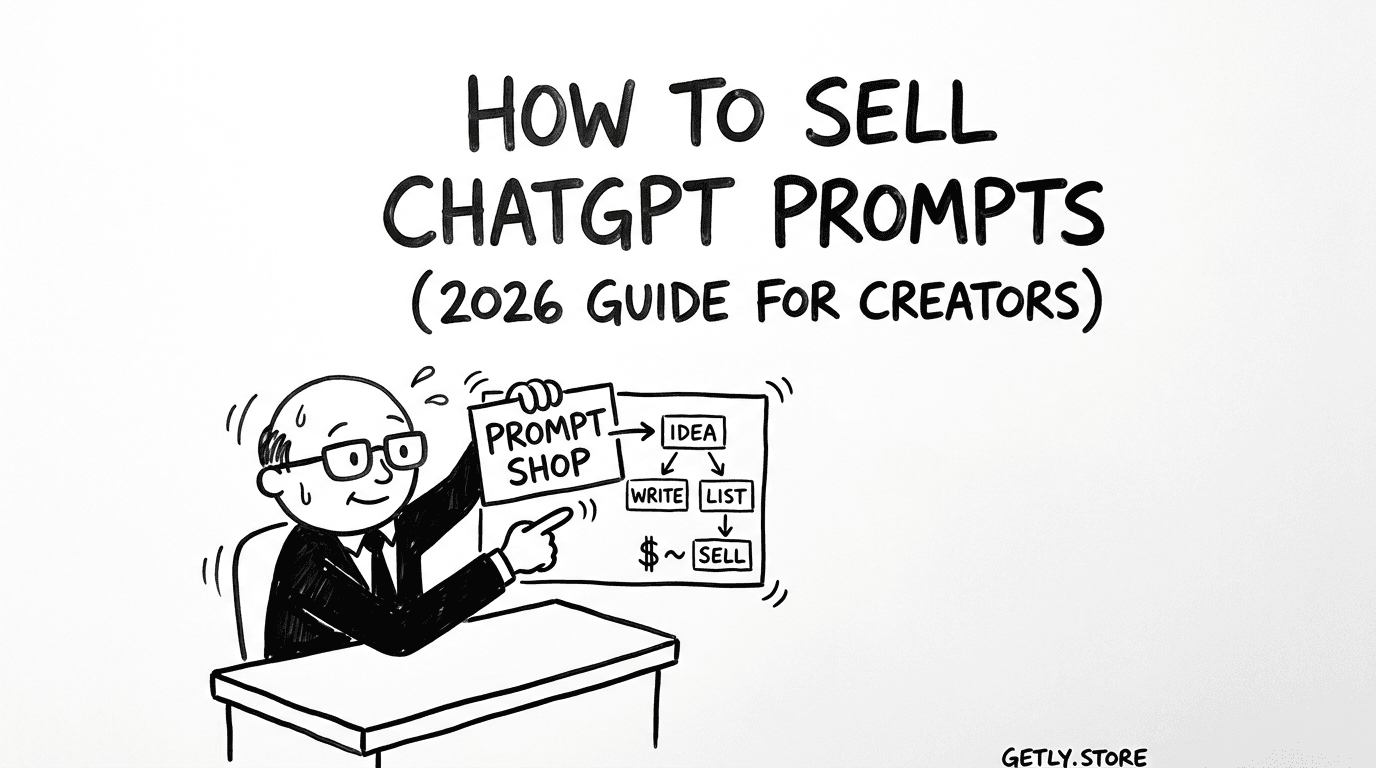
How to sell chatgpt — a 2026 guide for creators. This step-by-step walkthrough shows how to package prompts so buyers can use them immediately, what quality bar to hit, and how to price using realistic tiering. You’ll also learn how to market prompts in the exact places ChatGPT users hang out, plus how to set up license tiers and documentation that reduce refunds. Finally, we cover the practical “first sale” playbook and how to use Getly’s built-in tools (including crypto payouts where they matter). By the end, you’ll have a clear system to turn your prompt collection into a sellable chatgpt product.
Who's selling chatgpt right now?
Right now, most successful “sell digital chatgpt” sellers are solo creators with a repeatable workflow: they build prompts for a specific job-to-be-done (e.g., lesson planning, customer support, study guides, outbound outreach), then refine based on what fails in real use. They ship fast, iterate, and treat prompts like mini products—not casual copy/paste notes.
You also see agencies and small teams selling prompt systems for clients or vertical niches (HR, legal intake, ecommerce ops, fitness coaching). Their advantage is domain knowledge and structured versions: they separate “starter” from “full workflow,” add templates, and document how to run the system end-to-end.
Side-project creators do well when they pick one audience and one outcome, then publish consistent improvements. The key is narrowing your promise: buyers don’t want “good prompts,” they want a specific result (faster drafting, clearer answers, fewer rewrites, better structure) with predictable inputs.
What buyers expect
ChatGPT prompt buyers expect prompt quality that works on the first try for their use case. That means prompts should include: clear role/instructions, input fields (what they should paste), expected output format, and guardrails (what to avoid). Buyers also expect that the prompt won’t require “magic settings”—it should be runnable from the prompt text alone.
Documentation level matters. Good sellers include a short README explaining how to use the prompt, what inputs are required, how to customize tone/length, and example outputs. File formats should be easy to copy into ChatGPT and other tools, and previews should match the real result.
- Copy-ready prompts (no missing sections, no broken formatting)
- Structured outputs (headings, bullets, tables, or JSON when relevant)
- Usage notes (what to paste as input, optional parameters, common troubleshooting)
- Examples (2–5 example runs to set expectations)
- Support clarity (what you’ll help with: setup, clarifying instructions; and what you won’t: guaranteed results)
Pricing playbook
Use pricing tiers that match buyers’ risk: smaller purchases for single outcomes, and higher prices for full systems. A realistic anchor for this niche is $5–25 for single prompts and $50–150 for full prompt systems (workflows, packs, or multi-step prompt libraries).
Then split each release into intro / mid / premium versions. Intro is one “winning” prompt with clear instructions. Mid adds variants (different tones/lengths), input examples, and output formatting options. Premium includes a complete workflow: multiple prompts, a setup prompt (to configure context), and an output checklist so buyers can consistently get the same structure.
Finally, add license tiers so business buyers can use the system commercially while keeping personal use affordable. A common setup is “Personal” vs “Commercial,” with commercial unlocking rights for client work, products, or paid marketing usage. Bundle related prompts to raise perceived value: “Prompt Pack + Workflow + Examples” tends to convert better than unrelated one-offs.
Packaging your chatgpt
Your product should feel like a tool, not a text file. The goal is to minimize buyer effort: download, read the README, copy the prompt, run it, and get the expected structure. Include version notes so updates don’t confuse buyers.
- Prompt files in copy-friendly formats (plain text is the safest baseline)
- Preview assets that show the output structure (screenshots or sample output blocks)
- README / quick start (how to use, what to paste, optional settings)
- Examples with realistic inputs and outputs
- License file that clearly states Personal vs Commercial terms
- Version notes (changelog) so buyers understand what changed
- “Input checklist” for workflow prompts (fields the user must provide)
Marketing channels that actually work
To sell chatgpt prompts, market where ChatGPT creators and prompt users already compare results. In practice, that means: (1) posting prompt screenshots with before/after structure, (2) sharing short “how it works” threads, and (3) creating proof via example runs. You’ll get more traction when you publish outcomes (the formatted result) rather than only the prompt text.
Good places to start in 2026:
- Reddit (targeted communities): r/ChatGPT, r/PromptEngineering, r/Entrepreneur, r/smallbusiness—share one result + the exact prompt workflow context.
- Twitter/X creator circles: follow and engage with prompt engineers, AI productivity builders, and ops/automation creators; post “prompt-to-output” threads.
- Discord communities: join ChatGPT/prompt-engineering servers and contribute prompt reviews (ask what output format they want, then tailor and share).
- YouTube tutorials: create short videos showing a workflow (e.g., “turn messy notes into a structured email”); link to your store listing in the description.
- Creator lead magnets: offer a free mini prompt pack (1–2 prompts) to email-capture and then upsell to your paid system.
Why Getly?
On Getly, creators keep 80% of every sale (a 20% platform fee). Payouts run on the 1st and 15th of each month, which helps you plan launches and inventory updates.
Getly also supports Stripe Connect payouts plus crypto payouts (USDT/USDC on Tron, BSC, Polygon, Solana, Ethereum). That’s especially important if you’re outside Stripe-supported countries—crypto can be the difference between getting paid and not being able to sell digital chatgpt products at all.
To get your first sale, ship one tight prompt or mini pack, package it like a tool (README + examples + license terms), then promote proof: share the structured output your buyers will get. Next, list it with a clear intro tier and a stronger system tier so you capture both casual buyers and workflow buyers. After you sell a few copies, reinvest into a premium version and document your updates so buyers trust the next release. Start small, measure conversions, and iterate.