 Getly
Getly
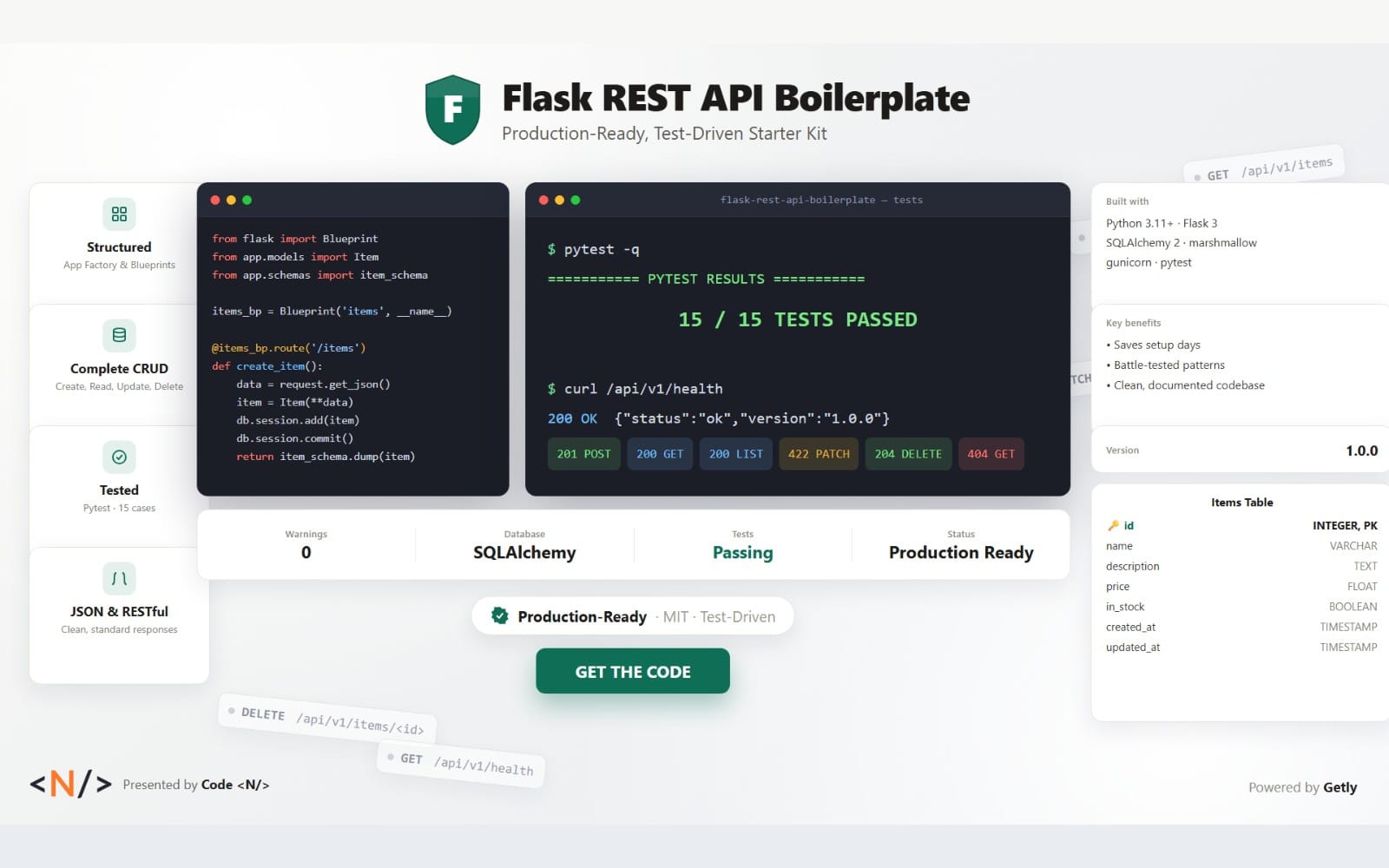
Если вы начинаете проект и тратите недели на маршруты, авторизацию и структуру, вы теряете скорость - а конкуренция не ждет. API boilerplate template в 2026 году должен не просто «заводить сервер», а помогать стабильно выпускать REST API: валидация, логирование, конфигурации, тесты и предсказуемая архитектура.
В этом материале вы получите практичный обзор того, как выглядит лучший REST API starter template для Node.js, Python и Go, и как превратить шаблон в продаваемый актив - с правильной упаковкой, документацией и проверкой качества.
TL;DR: как выбрать API boilerplate template для 2026
Лучший выбор - тот REST API starter template, который сокращает рутину и оставляет вам контроль над архитектурой. Ниже - короткий чек-лист, который можно использовать прямо в магазине, репозитории или при оценке чужого шаблона.
- Смотрите на качество «скелета»: маршрутизация, обработка ошибок, конфиги, логирование, CORS, базовые health-check.
- Наличие тестов (минимум smoke + unit) и схемы валидации входных данных - обязательны.
- У шаблона должна быть понятная структура папок и конфигурация через env.
- Лучший вариант - шаблон с расширяемыми слоями: routes → controllers → services → repositories.
- Для коммерческой продажи важны: лицензия, порядок обновлений, README, примеры запросов и чек-лист компоновки.
Что такое API boilerplate template и зачем он нужен в 2026
API boilerplate template - это готовая основа проекта REST API, где уже реализованы базовые требования: каркас приложения, соглашения по структуре, слой обработчиков и «скелет» инфраструктуры. В 2026 году он нужен не «для красоты», а чтобы быстро запускать сервисы без случайных архитектурных долгов.
Реальная причина, почему команды возвращаются к шаблонам: REST API почти всегда повторяет одни и те же задачи. Авторизация, валидация, единый формат ошибок, логирование запросов, генерация документации и health-check - это стандарт. Шаблон превращает стандарт в процесс.
Какие проблемы шаблон закрывает сразу
Хороший REST API starter template экономит время на «непроизводственных» задачах. Например, вы не должны вручную каждый раз продумывать формат ошибки и тестировать крайние случаи валидации.
- Единый формат ошибок (например, JSON с кодом, сообщением и полями validation).
- Валидация входных данных (схемы, типы, ограничения длины/формата).
- Логирование запросов и ошибок с корреляцией (request-id).
- Проверки здоровья сервиса и простые endpoint’ы для мониторинга.
- Конфигурация через env и разделение окружений (dev/stage/prod).
Когда шаблон реально ускоряет разработку
Шаблон ускоряет, если вы используете его как систему соглашений. Если в коде нет единого стиля ошибок/валидации, то скорость «утечет» обратно в исправления и расхождения.
В 2026 году лучшие стартеры поддерживают «быстрый путь к качеству»: автогенерация схем/типов, понятные точки расширения и быстрый прогон тестов перед релизом.
Pro tip: выбирайте API boilerplate template, в котором есть не только роуты, но и «жизнь вокруг роутов»: обработка ошибок, валидация, тесты, Docker/Makefile и быстрый запуск одной командой. Это и есть разница между шаблоном и просто «скриптом-сервером».
Best API boilerplate template: Node.js REST API starter в 2026
Node.js backend template в 2026 чаще всего строят вокруг быстрых фреймворков и строгой типизации (TypeScript). Лучший старт - тот, где маршруты не смешиваются с бизнес-логикой, а ошибки везде приводятся к единому формату.
При оценке Node.js варианта смотрите на три вещи: (1) порядок слоев, (2) качество валидации, (3) готовность к расширению (добавление сервисов, миграции, интеграции).
Рекомендуемая структура проекта для Node.js
Структура - это способ «не ломать голову» при расширении. Универсальная схема выглядит так: маршруты → контроллеры → сервисы → репозитории → интеграции.
- routes/ - HTTP-эндпоинты (минимальная логика)
- controllers/ - сбор входных параметров, вызов сервисов
- services/ - бизнес-правила
- repositories/ - работа с БД/хранилищем
- schemas/ - DTO и схемы валидации
- middleware/ - auth, request-id, error handler
- tests/ - unit + integration (хотя бы базовые)
Что должно быть внутри REST API starter для Node.js
Минимальный «взрослый» набор: health-check, единый error handler, логирование, CORS, rate limit (опционально), swagger/openapi для документации и простые примеры запросов.
Если вы продаете шаблон, добавьте в комплект примеры: как запустить локально, как поднять БД, как выполнить миграции и как проверить endpoints curl’ом.
Типичная ошибка: шаблон, где в одном файле лежат роуты, валидация, запросы к БД и форматирование ответов. Такой «стартер» невозможно поддерживать без переписывания - и он быстро превращается в техдолг.
Как выбрать REST API starter template для Python
REST API starter template для Python лучше всего раскрывается, когда он дает аккуратную модель данных и воспроизводимую схему обработки ошибок. В 2026 многие выбирают подход “schema-first”: DTO задают контракты заранее, а маршруты используют их напрямую.
Сила Python-стартеров в том, что валидация и сериализация легко приводятся к единому виду. Но важно, чтобы слой сервисов оставался отдельным - иначе вы потеряете чистоту архитектуры.
Схема слоев, которая работает на практике
Практичный компромисс для большинства команд: контроллеры тонкие, сервисы содержат бизнес-логику, а репозитории прячут детали БД. Это упрощает тестирование и замену хранилища в будущем.
- HTTP слой: обработка входа, вызов сервиса, маппинг результата.
- Сервисный слой: правила домена, транзакции на уровне бизнес-операции.
- Инфраструктура: адаптеры к БД/очередям/файлам.
Документация и контракты
В 2026 документация - это не «приложение», а часть API. Поэтому лучший Python-стартер содержит автоматическую генерацию OpenAPI/Swagger, примеры запросов и четко описанные схемы.
Также добавьте миграции и команду “start clean”: чтобы новый разработчик поднял сервис за 5–10 минут, а не за 2 часа поиска проблем.
Go REST API starter template: быстрый, надежный, поддерживаемый
Go REST API starter template в 2026 чаще всего выбирают команды, которым важны стабильность, простая компиляция и предсказуемое поведение под нагрузкой. Лучший старт для Go - тот, где структура папок и обработка ошибок организованы строго.
С Go легко добиться эффективности, но сложно - поддерживаемости без дисциплины. Поэтому важно, чтобы шаблон включал единый подход к error wrapping, middleware и конфигам.
Что важно в каркасе Go для REST API
Обычно это сочетание роутера/мидлвари, единого формата ошибок и четкого слоя для бизнес-логики. В идеале стартер включает также контракты для тестирования handlers.
- Middleware: request-id, логирование, восстановление после паник, CORS.
- Ошибки: единый формат ответа + поддержка классификации (validation/not found/internal).
- Конфиг: env + валидация конфигурации при старте.
- Тестирование: unit-тесты для сервисов и минимум integration для handlers.
- Документация: OpenAPI или хотя бы генерация схем/примеры.
Как добиться «правильной» расширяемости
Один из лучших способов - включить в шаблон интерфейсы для хранилища (repository interface) и бизнес-сервисы, чтобы вы могли заменить реализации в тестах.
Если вы продаете шаблон как developer tools free или платный код, такие детали сильно повышают ценность - покупатели получают не «скелет», а рабочую модель разработки.
- Лучший API boilerplate template задает единые правила: валидация, ошибки, конфиги, логирование.
- REST API starter template должен отделять HTTP слой от бизнес-логики.
- Документация (OpenAPI) - часть продукта, а не отдельная «галочка».
- Для Go важна дисциплина ошибок и middleware; для Node/Python - четкие слои и контракты.
Как превратить шаблон в актив: sell code online без лишних рисков
Если ваша цель - sell code online, то API boilerplate template нужно упаковать так, чтобы покупателю было легко оценить качество до покупки. В 2026 выигрывает тот, кто продает “систему”, а не просто репозиторий.
Плохая упаковка приводит к разочарованию: люди ожидают документацию, примеры, обновления и понятную лицензию, а получают хаос. Хорошая упаковка превращает ваш стартер в «быстрый старт» для других разработчиков.
Чек-лист продаваемого REST API starter template
Сделайте так, чтобы покупатель мог повторить результат. Вот базовый набор, который воспринимается как профессиональный standard:
- README: установка, запуск, переменные окружения, структура проекта.
- Примеры запросов: curl/HTTPie/Postman коллекции (минимум 5–10 endpoint’ов).
- Контракты: схемы DTO и единый формат ответов.
- Тесты: команды для запуска, хотя бы smoke + несколько unit примеров.
- Список фич: что включено и как расширять.
- Roadmap: какие улучшения вы планируете на 2026 и дальше.
Лицензия, поддержка и обновления
Покупатели редко читают длинные юридические тексты - но они всегда замечают отсутствие обновлений. Ваша задача: договориться “по-человечески” через описание товара.
Добавьте понятную политику обновлений (например, право на будущие мажорные/минорные релизы) и правила поддержки. Это снижает возвраты и улучшает репутацию на рынке.
Успешный подход: продавайте API boilerplate template в виде набора “starter + учебный слой”: например, после установки пользователь проходит короткий сценарий “создать ресурс → добавить валидацию → подключить БД → поднять тесты”. Такой сценарий повышает конверсию, потому что демонстрирует ценность за 15 минут.
REST API starter template vs «просто репозиторий»: сравнение
Сравнение показывает ключевое различие: репозиторий может содержать код, но шаблон - это оформленный процесс разработки. В 2026 пользователи выбирают то, что снижает неопределенность: команды запуска, примеры, единые ответы и стандарты ошибок.
Ниже - таблица, которую удобно использовать как критерии оценки при покупке или создании собственного API boilerplate template.
| Критерий | Просто репозиторий | REST API starter template |
|---|---|---|
| Структура проекта | Не всегда описана | Явные слои и соглашения |
| Обработка ошибок | Разрозненно по файлам | Единый формат ответов |
| Валидация | Частично или отсутствует | Схемы DTO + примеры ошибок |
| Документация | README без контрактов | OpenAPI + примеры запросов |
| Тестирование | Может отсутствовать | Smoke/unit минимум |
| Запуск | Инструкция неполная | Одна команда, env, health-check |
Почему это важно для developer tools free
Даже если вы делаете demo или “developer tools free”, критерии остаются теми же. Бесплатный starter должен демонстрировать архитектуру, иначе пользователь не понимает, что покупает в расширенной версии.
В 2026 лучший free-уровень - это маленький, но «правильный» пример: 3–5 endpoint’ов, валидация, единый формат ошибок, документация и тесты на минимальном наборе.
Предупреждение: не добавляйте в шаблон «магические» зависимости без объяснения. Если пользователь не может понять, откуда берутся ошибки/логи/конфиги, то вы потеряете доверие и увеличите число вопросов в поддержке.
Как ускорить разработку REST API с помощью шаблонов и workflow
В 2026 скорость разработки REST API - это не только фреймворк, но и процесс: как вы собираете контракты, тесты и документацию. Лучший API boilerplate template становится центром вашего workflow: от идеи до релиза.
Один практичный путь - связать шаблон с методикой “источники → требования → реализация”. Когда требования упакованы, вы меньше спорите внутри команды и быстрее закрываете edge-cases.
Мини-стратегия: контракт сначала, код потом
Начинайте с описания сущностей и форматов ответов. Затем подставляйте DTO в шаблон и только после этого пишите сервисы. Такой порядок заметно снижает количество правок API после интеграции.
- Опишите вход/выход каждого endpoint’а.
- Задайте DTO и правила валидации.
- Согласуйте формат ошибок заранее.
- Добавьте 2–3 тест-кейса на каждый endpoint до полной реализации.
- Подключите документацию (OpenAPI) как результат вашего контракта.
Как оформить ваш “AI-помощник” для требований
Если вы используете AI для проектирования API, вам нужен не «чат», а повторяемый workflow. Например, вы можете собрать требования из нескольких источников, а затем сформировать единую спецификацию и список изменений.
Вот полезный подход к workflow с агрегацией идей: The SIGNAL ARCHITECT - The AI-Powered Workflow to Turn 100 Sources into 1 Master Insight.
Это не заменяет код, но помогает быстрее приходить к четкому контракту API - а значит, снижает стоимость изменений.
В завершение - один мягкий вывод: когда вы выбираете REST API starter template, выбирайте тот, который поддерживает ваш стиль разработки и делает качество воспроизводимым. И если вы продаете свой код, думайте как продукт: README, примеры, тесты и политика обновлений продают лучше, чем «просто работоспособно».
- API boilerplate template в 2026 - это система: контракты, ошибки, тесты, документация и структура.
- Node.js, Python и Go требуют разного «акцента», но логика слоев должна быть общей.
- Для sell code online важна упаковка: сценарии запуска, примеры запросов, понятные ответы.
- Workflow вокруг требований ускоряет API сильнее, чем любая одна библиотека.
FAQ по API boilerplate template и REST API starter template
Какой REST API starter template лучше для команды из 3–5 разработчиков?
Лучший - тот, где заранее заложены единые ошибки, валидация, конфиги и тесты, а HTTP слой отделен от сервисов. Это снижает количество “стилей” внутри команды и ускоряет онбординг.
Нужно ли добавлять OpenAPI в шаблон, если документация будет позже?
В 2026 OpenAPI желательно включать сразу: он помогает согласовать контракты и автоматически генерирует примеры/схемы. Если документация откладывается, часто приходится переделывать ответы и DTO.
Что важнее: Node.js, Python или Go REST API starter template?
Важнее архитектура шаблона, а не язык. Выбирайте по вашим целям: Go - для предсказуемой надежности и деплоя, Node/Python - для скорости итераций и экосистемы.
Можно ли продавать API boilerplate template как “developer tools free” и все равно монетизировать?
Да. Сделайте free-уровень демонстрационным: 3–5 endpoint’ов, тесты и документация, а платный вариант - расширяемые модули (аутентификация, шаблоны для БД, дополнительные интеграции и пакеты лицензий).
Какие критерии качества проверить перед покупкой шаблона?
Проверьте: единый формат ошибок, корректность валидации, тесты, команды запуска, структуру папок и наличие примеров запросов. Если этого нет, возрастает риск техдолга.
Если хотите, я помогу выбрать конкретный тип шаблона под ваш стек и цели - напишите, какой БД и формат авторизации планируются (JWT/OAuth/сессии) и сколько endpoint’ов на релиз.